
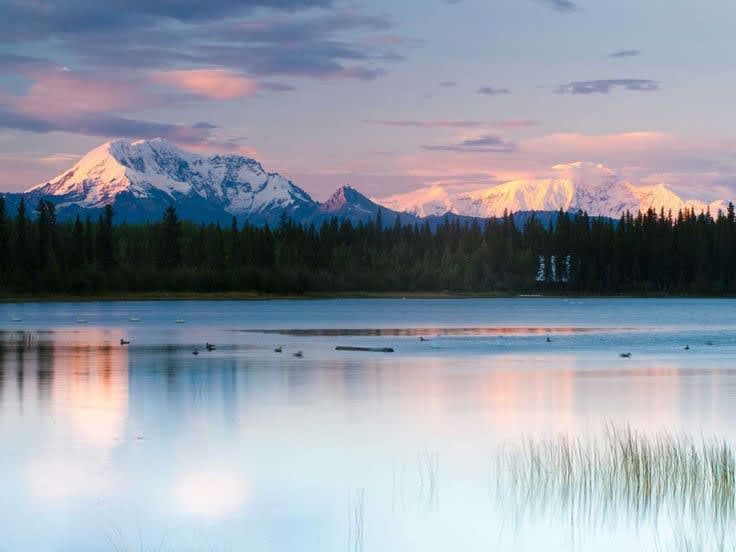
Wrangell-St. Elias National Park and Preserve
AK · Copper Center / Nabesna / McCarthy gateways
Mile 106.8 Richardson Hwy, Copper Center, AK 99573
Wrangell-St. Elias is the kind of place that immediately changes the tone of a travel conversation. At 13.2 million acres, it is so large that ordinary park language starts to feel inadequate. This is not a casual trail park, and it should never be marketed like one. It is a destination for riders who are drawn to scale, remoteness, and the romance of truly enormous country—glaciers, braided rivers, mountain passes, old mining districts, and long distances between services. That honesty is what gives it its luxury appeal. In editorial terms, Wrangell-St. Elias is not polished because it is easy. It is premium because it is rare, immense, and emotionally unforgettable for the traveler who wants the biggest possible Alaska story.
Riding guide
Highlights
America's largest national park sells best as a true horse-packing expedition—vast, remote, and unforgettable when the promise is kept honest.
Riding
The riding experience is closer to horse packing or expedition travel than conventional trail riding. The Park Service notes that there are no maintained trails in the backcountry, with maintained trails largely limited to frontcountry areas near Nabesna and McCarthy. That may sound intimidating, but it is also exactly what makes the destination extraordinary for the right audience. Wrangell works best for guests who understand that the reward is not tidy infrastructure. It is the privilege of moving through one of the most expansive landscapes in the United States on horseback, with a level of quiet, scale, and freedom that few destinations can match.
Rideable terrain
2,000,000 acres
Trailer parking
Logistics are area-based rather than centralized. Riders should choose a gateway such as Nabesna or McCarthy first, then build parking, shuttle, or pack-trip plans around that exact corridor.
Horse regulations
Rules and preparation matter enormously. The National Park Service notes that backcountry permits are not required, but optional itineraries are encouraged, bear-resistant food containers are required for backcountry trips, and commercial horse packing and horse rides operate under park-specific stipulations. Those stipulations include operational requirements around rider safety, manure management, and feed standards for authorized horse operations. In practice, this is a destination where professionalism counts. Whether the trip is guided or self-directed, riders need excellent maps, realistic expectations, strong wilderness judgment, and respect for both the park’s scale and its regulations.
Getting here
Arrival requires real intention. National Park Service trip-planning materials emphasize that visitor services are limited, access can be challenging, and park facilities can be separated by as much as 260 miles. The first planning decision is therefore geographic: Nabesna, McCarthy, Copper Center, and other access corridors each create a very different horseback experience. For riders, that means building the trip around a chosen zone rather than the park name alone. Once the area is selected, the logistics become clearer—where to stage, where to camp, whether a guide makes sense, and how much self-sufficiency the group truly wants. That specificity is essential here.
Planning your visit
I would market Wrangell-St. Elias as a pinnacle destination for experienced riders and ambitious travelers who want horseback travel to feel genuinely expeditionary. It is not the right fit for everyone, and that selectivity is part of the value. The guests who choose it are choosing immensity, isolation, and a style of riding that feels closer to exploration than recreation. The key takeaway is to keep the promise focused and exact. Pick the access zone first, plan meticulously, and present the experience as a rare Alaska horse-packing story rather than a generic ride. That is how Wrangell feels elevated, responsible, and unforgettable.
Where to stay
Stays here should be framed with complete clarity. Some itineraries will lean on roadside campgrounds, public-use cabins, or gateway communities, while others may be true backcountry horse camps. The best travel copy should make that distinction explicit rather than blurring everything into one romantic idea of “wilderness lodging.” Done well, that actually strengthens the sale. Guests can decide whether they want a guided horse-packing experience, a frontcountry-based ride with more comfortable nights, or a deeper expedition format. Wrangell is compelling precisely because it can support more than one level of immersion.
Trails
No trails synced for this park yet.
Campgrounds
No campgrounds listed for this park.
Photos
Stay near this park
No horse-friendly stays listed near Wrangell-St. Elias National Park and Preserve yet. Know a great barn or property? Help fellow riders by listing it.
List your property