
Danger
Campfires, charcoal fires, or other open fires are not allowed
As of Friday June 26, Bryce Canyon is in Stage 2 Fire Restrictions. No setting, building, maintaining, attending, or using of open fires of any kind in the park. This includes campfires and charcoal fires in park campgrounds. Stoves fueled by petroleum or liquid propane gas are allowed. Smoking is not permitted, except inside an enclosed vehicle. Fireworks are never permitted at Bryce Canyon National Park.
Information
Temporary Wall Street Closures
Beginning Monday June 15, the Wall Street side of the Navajo Loop will be closed Monday - Thursday from 6 AM to 12 Noon for critical trail stabilization work. The Two Bridges side of the Navajo Loop will remain open. This work will continue through the 2026 season.
Bryce Canyon National Park
UT · Bryce
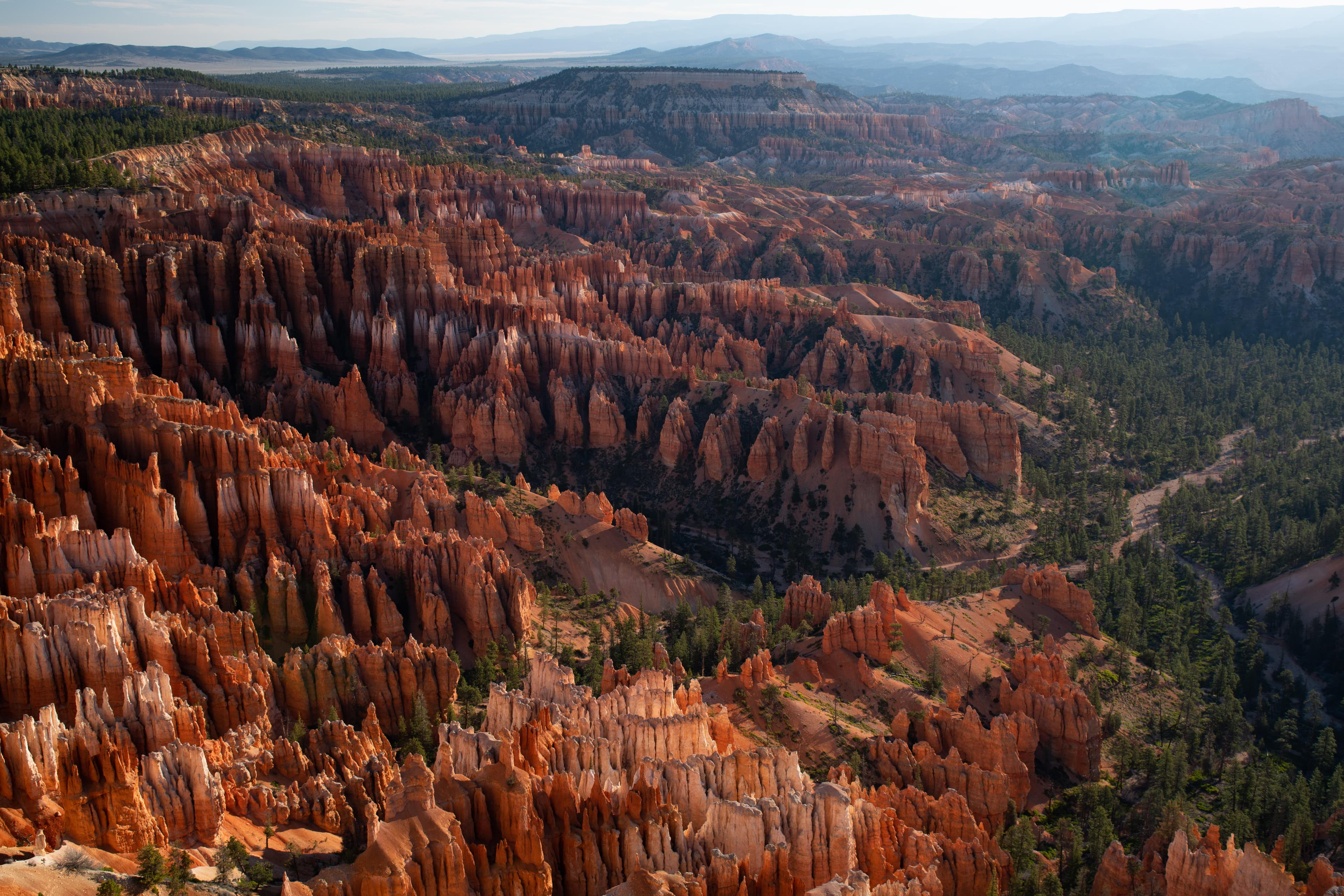
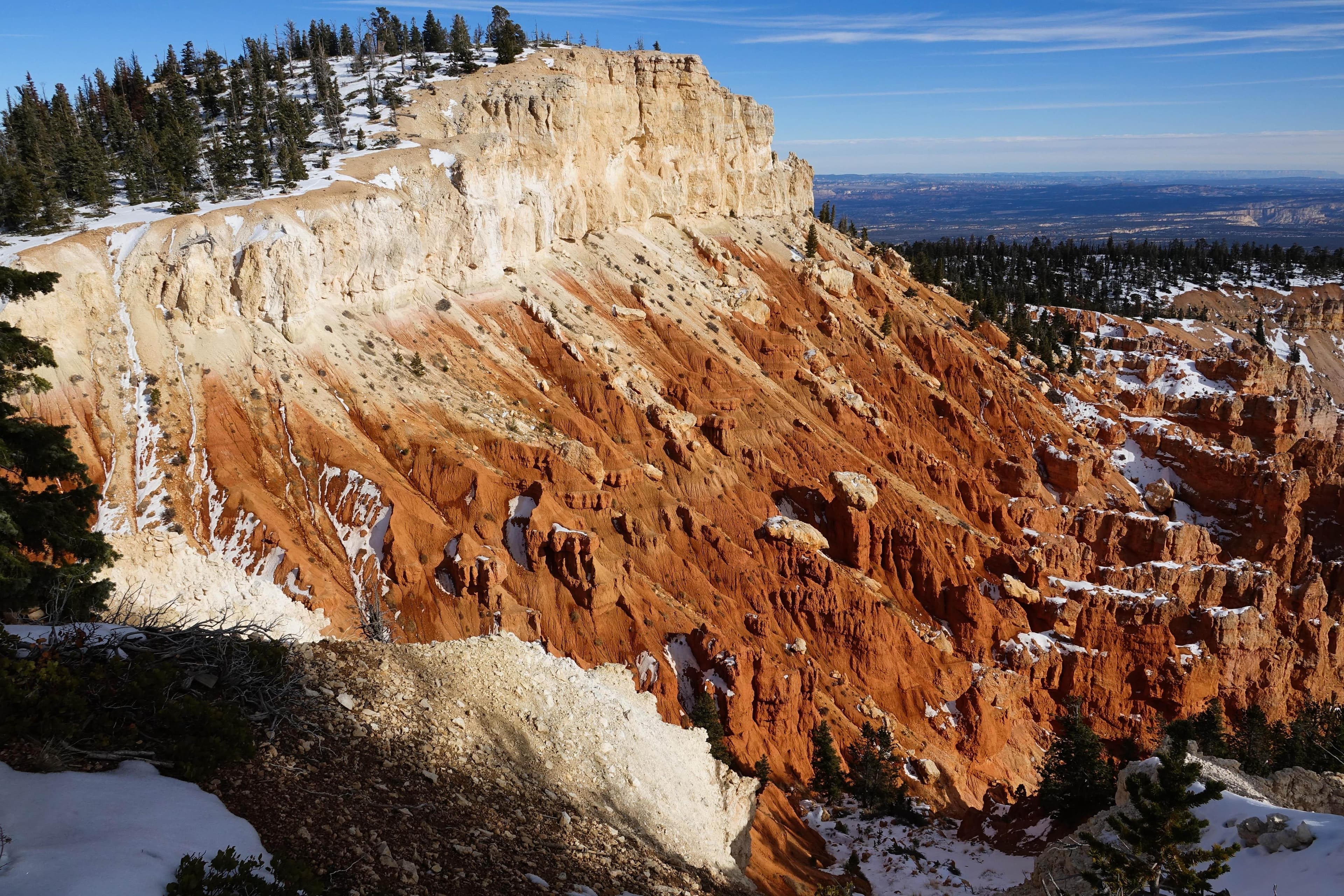
Hoodoos (irregular columns of rock) exist on every continent, but here is the largest concentration found anywhere on Earth. Situated along a high plateau at the top of the Grand Staircase, the park's high elevations include numerous life communities, fantastic dark skies, and geological wonders that defy description.
Riding guide
Horses provided
Highlights
Bryce Canyon National Park protects one of the most visually striking landscapes in the American Southwest.
Riding
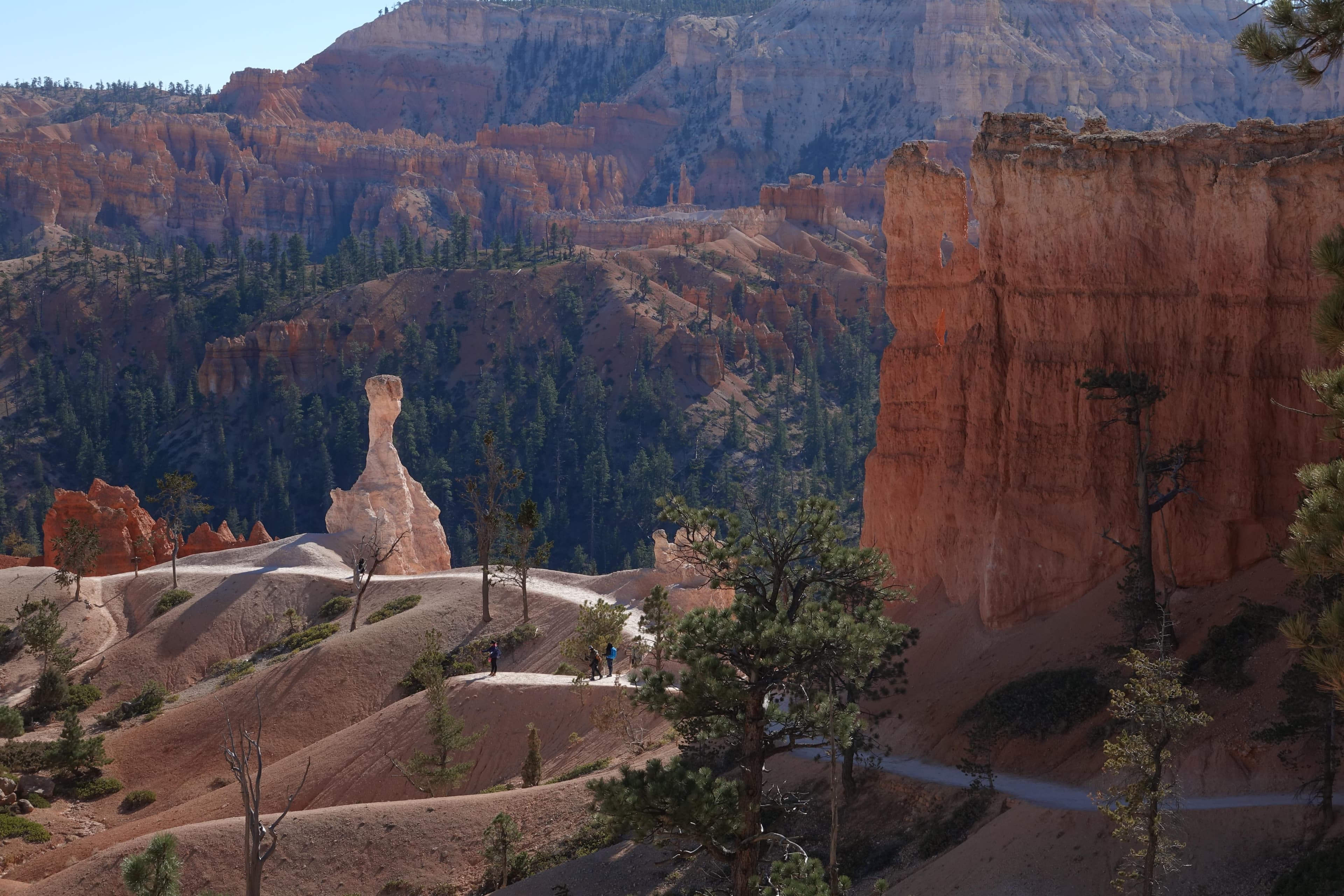
Rideable terrain here is noted as 18 miles, giving riders a clearer sense of scale before they ever unload. For equestrians, Bryce Canyon offers a rare opportunity to ride directly through this otherworldly terrain. Designated stock trails descend from the rim into the amphitheater, winding between the hoodoos and through narrow red-rock corridors before climbing back onto the forested plateau above. Trails such as Peekaboo Loop allow riders to experience Bryce Canyon from within the formations themselves, offering perspectives that hikers and scenic overlook visitors often miss.
Rideable terrain
18 miles
Trailer parking
Canyon Trail Rides Corral This is the primary equestrian staging area in Bryce Canyon. Why it works best: Large parking area designed for horse trailers and stock staging Direct access to the Peekaboo Loop Trail, the park’s main equestrian route Located near Bryce Canyon Lodge and the main amphitheater Used by the park’s official concessioner for guided horseback rides This location provides the most reliable and easiest access for riders bringing their own horses into the park. Secondary Parking Option Rainbow Point Trailhead Why riders use it: Larger open parking area Access to the Riggs Spring Loop Trail, one of the longer equestrian routes in the park Quieter than the amphitheater area This location is useful for riders wanting to explore the southern plateau trails.
Horse regulations
Designated Trails: Private stock is generally restricted to the Peekaboo Loop and the designated trail from the King’s Creek area to the canyon floor. Mandatory Reservations: Rides must be scheduled at least 72 hours in advance via Recreation.gov. Time Slots: Private rides are limited, often scheduled between 4:30 p.m. and 7:30 p.m. to avoid conflicts with concession tours. Health Documentation: Out-of-state horses need a Certificate of Veterinary Inspection (valid for 30 days) and a negative Coggins test (within 12 months). Waste Management: Riders must clean up manure at the Parking/Mixing Circle and on paved surfaces. Restrictions: Stock cannot be left unattended, and feeding must occur only at the trailer parking area.
Getting here
Use Highway 63, Bryce, Utah as your primary planning reference before you haul in. Canyon Trail Rides Corral This is the primary equestrian staging area in Bryce Canyon. Why it works best: Large parking area designed for horse trailers and stock staging Direct access to the Peekaboo Loop Trail, the park’s main equestrian route Located near Bryce Canyon Lodge and the main amphitheater Used by the park’s official concessioner for guided horseback rides This location provides the most reliable and easiest access for riders bringing their own horses into the park. Secondary Parking Option Rainbow Point Trailhead Why riders use it: Larger open parking area Access to the Riggs Spring Loop Trail, one of the longer equestrian routes in the park Quieter than the amphitheater area This location is useful for riders wanting to explore the southern plateau trails.
Planning your visit
Bryce Canyon National Park features premier viewing and "mounting" (overlook/access) areas centered on the Bryce Amphitheater, including Sunset Point, Sunrise Point, Inspiration Point, and Bryce Point. These spots offer immediate access to iconic hoodoo views, with trails like the Navajo Loop and Queen’s Garden connecting them to the canyon floor. Trails in Bryce Canyon National Park feature a mix of paved, gravel, and natural dirt surfaces, with significant elevation changes and potential for loose, sandy, or muddy conditions. Key, accessible, paved surfaces are found along the Rim Trail between Sunrise and Sunset Points. Bryce Canyon National Park offers limited natural water access, primarily featuring the small Tropic Ditch Falls via the Mossy Cave Trail. Potable water is available at visitor centers, campgrounds, and the lodge, but natural sources are scarce, requiring hikers to carry sufficient water. The park has two campgrounds, North and Sunset, providing water and amenities.
Where to stay
Bryce Canyon Visitor Center is the main visitor-contact point tied to this destination, which is helpful when you want current conditions, maps, and stock-use updates before riding. This entry indicates both guided ride support and horse-camping potential, making Bryce Canyon National Park one of the more flexible federal options for riders building a fuller travel plan. For a polished trip plan, pair the ride with lodging, fuel, and resupply planning in or near Bryce before heading deeper into federal-land access points.
Entrance fees & passes
- $35.00
Entrance - Private Vehicle
Admits one private, non-commercial vehicle (15 passenger capacity or less) and all occupants.
- $30.00
Entrance - Motorcycle
Valid for 7 days. Admits up to 2 private, non-commercial motorcycles with up to 4 total passengers.
- $20.00
Entrance - Per Person
Admits one individual with no car to the park - typically used for bicyclists and walk-ins. Youth 15 and under are admitted free.
- $100.00
Nonresident
Each non-US resident aged 16 and older visiting Bryce Canyon National Park must pay a $100 nonresident fee (in addition to the standard entrance fee), unless admitted with an Annual or America the Beautiful Pass. This includes nonresidents entering as part of a commercial tour group, commercial use authorization (CUA) group, or concessioner tour group.
- $70.00
Annual Entrance - Park
As US citizens and residents, valid for entry into Bryce Canyon National Park for 12 months from purchase date.
Park map
Trails
No trails synced for this park yet.
Campgrounds
North Campground
100 sites
Located across the road from the Visitor Center and is comprised of 100 sites in 4 loops; A, B, C, D. Loops A & B are for RV campers. Loops C & D are for tent campers and closed in freezing temperatures. There are no sewer, water or electrical hook-ups available. A dump station is available in summer months near North Campground; use is included with campsite fee. Potable water is available near the dump station. North Campground is close to the Visitor Center, General Store, and Fairyland Loop/Rim Trail.
Reserve a siteSunset Campground
99 sites
Located west of Sunset Point, approximately 1.5 miles south of the Bryce Canyon Visitor Center, and is comprised of 99 sites in 3 loops; Loop A is primarily for RVs; Loops B & C are tent-only. There are no sewer, water or electrical hook-ups available. A dump station is available in summer months near North Campground; use is included with campsite fee. Potable water is available near the dump station. Sunset Campground is close to Sunset Point and has a shuttle stop at its entrance.
Reserve a site
Points of interest
Additional Parking Lot
POIThis additional parking lot is located just southeast of the Visitor Center and provides all-day and oversize vehicle parking.
A Forest Reborn wayside
POIOn June 14, 2009, a lightning strike started the Bridge Fire that burned 3,947 acres in Bryce Canyon National Park and Dixie National Forest. Years of fire suppression had created a crowded, diseased, and less diverse forest. As the fire, a natural agent in the ecosystem, moved through this area, the forest was reborn. After the fire, nutrients were recycled back into the soil, sunlight reached the ground, and a variety of species returned.
Agua Canyon
POIAt Agua Canyon two prominent hoodoos command attention. On the left, is the taller of the two towers, "The Hunter." To the right is a hoodoo commonly referred to as the "Rabbit" or alternatively the "Backpacker."
Air Quality wayside
POIBryce Canyon is known for its stunning views and vistas. On a clear day from this point you can see Navajo Mountain, 80 miles (129 km) away, and the San Francisco Peaks, 150 miles (241 km) south. Good air quality, one of the park’s most precious resources, makes these views possible. It is also essential for visitor and employee health and the well-being of the natural environment.
A Lasting Legacy wayside
POIIn 1933, during the Great Depression, President Franklin D. Roosevelt established the Civilian Conservation Corps (CCC) providing employment for young, unmarried men. From 1934–41, at Bryce Canyon National Park the CCC planted trees and shrubs, built and improved roads and trails, developed campgrounds, paved parking lots, and provided insect control. At Rainbow Point, they built the overlook structure and the Under-the-Rim Trail.
An Ever-changing Landscape wayside
POIColorful Layers Pure limestone is white, but here, iron deposits have oxidized, or rusted, producing the yellows, oranges, reds, and browns. Oxidized manganese creates the pale blue and purple hues. Changing weather and light also affect the canyon’s colors. Bryce Canyon is ever-changing. About 50 million years ago (mya), a large freshwater lake began filling the low basin of southern Utah. Over millions of years, rivers and streams gradually filled this lake.
Architectural Artistry wayside
POIGilbert Stanley Underwood, the master architect hired by Union Pacific Railroad, helped pioneer the National Park Service rustic style. Here at Bryce and at many other western national parks, his artistry, vision, and utilization of local timber and stone created structures that nestled harmoniously into the natural landscape.
Black Birch Canyon
POIThe park has its share of misnomers (Mossy Cave isn't a cave, the canyon isn't really a canyon...) and Black Birch Canyon would be another.
Bristlecone Loop Gazebo
POIA small octagon shaped log shelter built by the park in the 1980s after the Bristlecone Loop was completed. At this point in the trail you might recognize smaller bristlecone pines nearby. Look for densely bunched needles travelling in a bushy arrangement up the branch. Needles will be in bundles of 5. Two quotations by Henry David Thoreau are framed on the interior wall of the shelter. The first: Silence alone is worth being heard, then "I need solitude. I have come forth to
Bristlecone Loop Hike the Hoodoos
POIHike the Hoodoos Hiking is great exercise and Bryce Canyon's "I Hiked the Hoodoos!" program is not just hiking, it's also a scavenger hunt with a special reward!
Bristlecone Loop Trailhead
POIA short path through fir and pine leads to the easy 1.0 mi/1.6 km Bristlecone Loop, as well as the 8.8 mile (14.2 km) backcountry Riggs Spring Loop and 23 mile (37 km) Under-the-Rim Trail. Though the Bristlecone Loop trail only climbs 200 feet (61 m) and is rated as Easy, be sure to carry water, wear ankle-supporting footwear, and postpone your hike if lightning is expected.The Bristlecone Loop reaches elevations over 9,100 feet (2778 m). Here you will pass by bristlecone pin
Bristlecone Loop Trailhead at Rainbow Point
POIA short path through fir and pine leads to the easy 1.0 mi/1.6 km Bristlecone Loop, as well as the 8.8 mile (14.2 km) backcountry Riggs Spring Loop and 23 mi/37 km Under-the-Rim Trail.
Bristlecone Loop wayside (107)
POIThis trail takes you through a forest of white fir, Douglas-fir, limber pine, and ponderosa pine. Bristlecone pines—some over 1,000 years old—grow at the trail's southern end where hikers enjoy grand views to the south. Small mammals and a variety of birds, including woodpeckers, nuthatches, and peregrine falcons might be spotted. In winter months, this trail may be impassable due to deep snow.
Bristlecone Loop wayside (108)
POIThis trail takes you through a forest of white fir, Douglas-fir, limber pine, and ponderosa pine. Bristlecone pines—some over 1,000 years old—grow at the trail's southern end where hikers enjoy grand views to the south. Small mammals and a variety of birds, including woodpeckers, nuthatches, and peregrine falcons might be spotted. In winter months, this trail may be impassable due to deep snow.
Bristlecone Loop wayside (109)
POIThis trail takes you through a forest of white fir, Douglas-fir, limber pine, and ponderosa pine. Bristlecone pines—some over 1,000 years old—grow at the trail's southern end where hikers enjoy grand views to the south. Small mammals and a variety of birds, including woodpeckers, nuthatches, and peregrine falcons might be spotted. In winter months, this trail may be impassable due to deep snow.
Bryce Amphitheater wayside
POIBryce Canyon is not truly a canyon, but a series of bowl-shaped amphitheaters. For thousands of years, seasonal erosion created gullies in the edge of the Paunsaugunt Plateau, while rain, ice, and snow carved and sculpted the landscape into this extraordinary maze of hoodoos. The Bryce Amphitheater, before you, is constantly changing, chiseled by drainages that gather into Bryce Creek. The breathtaking views can extend nearly 100 miles (161 km) along the eastern horizon.
Bryce Canyon Association Bookstore
POIBryce Canyon Natural History Association (BCNHA) is a 501(c)(3) non-profit organization and the official nonprofit partner of Bryce Canyon National Park and Dixie National Forest, operating retail shops and visitor centers within the park, and surrounding national forest lands. Since 1961, BCNHA has provided over nine million dollars in support.
Bryce Canyon Association wayside
POISince 1961, the Bryce Canyon Association has worked to enhance the visitor experience at Bryce Canyon National Park. This non-profit organization was created to support educational, interpretive, and scientific programs in the park. As the park’s primary partner, they fund free visitor publications, annual geology and astronomy festivals, youth internships, wildlife research, and much more. Your purchase directly supports the park.
Bryce Canyon General Store
POIThe General Store is located near Sunrise Point and North Campground. It serves "grab-and-go" hot and cold foods such as pizza, soup, ice cream, and sandwiches. Beverages such as soda, water, beer, and coffee are also available. Visitors can also find restrooms, showers, camping supplies including firewood, and souveniers. The General Store is typically closed between January and March.
Bryce Canyon Lodge
POIThe Lodge at Bryce Canyon is one of the park's most iconic historic structures. The Lodge and its surrounding motel structures are located a short walk from the park's iconic Bryce Amphitheater, and offer 114 rooms including lodge suites, motel rooms, and cabins.
Bryce Canyon Mather Plaque
POIEmbedded in a boulder beside the Visitor Center flagpole is a bronze plaque dedicated to Stephen Tyng Mather, known both as a successful businessman and avid conservationist whose vigorous efforts to build public and political support for the parks helped persuade Congress to create the National Park Service (NPS) in 1916.
Bryce Canyon Park Entrance Sign
POIThis stone monument marks the beginning of the park boundary.
Bryce Canyon Shared Use Path
POIThis path provides passage from Bryce Canyon city through Dixie National Forest into Bryce Canyon National Park. Hike, bike, walk or wheel all 5 miles to Inspiration Point, or stop at the shuttle stops and other amenities along the way.
Bryce Canyon Shuttle Station
POIThe shuttle station is the hub for the free Bryce Amphitheater shuttle. You can purchase your park admission at a window near the bus boarding area.
Bryce Canyon's Solar Array Wayside
POILook up! The same sunlight sustaining life all around you is also powering the visitor center. With its dry climate, high elevation, and mild average temperatures, Bryce Canyon’s Visitor Center checks all the boxes, making it an exceptional place to take advantage of solar energy. The solar array was funded by a Department of Energy grant and installed in 2015.
Bryce Canyon? Wayside
POICanyons are formed by rivers, but the colorful scene before you wasn't created by one. Bryce "Canyon" is, instead, a series of bowl-shaped drainages called "amphitheaters" that only contain water when rain or snow fall into them. As this water drains east joining the Paria River, the plateau rim erodes away with it. This process causes the park's many amphitheaters to enlarge at a rate of one to four feet every century.
Bryce Life Zones wayside
POIHere at Bryce, the elevation ranges from 9,100 feet (2,778 m) at Rainbow Point to 6,600 feet (2,012 m) at the canyon bottoms. The accompanying wide range of temperatures and precipitation creates three distinctive climatic or life zones—Mixed Conifer (highest elevation), Ponderosa Pine (mid-elevation), and Pinyon/Juniper (lowest elevation).
Bryce Point
POIPerhaps the most iconic of all the Bryce Amphitheater's four major viewpoints, Bryce Point provides a soaring view of the park's most popular area. The view and the park share the same namesake, Ebenezer Bryce, who settled in the Paria Valley in 1870. Bryce was a shipbuilder who journeyed west with Brigham Young and the Mormon pioneers to assist in the construction of buildings essential to community life throughout the new land. Bryce lived here for only five years, but in t
Building Bryce wayside
POIStarting in the 1920s, the Union Pacific Railroad and their subsidiary, the Utah Parks Company, played a key role in the development and popularization of Bryce Canyon and many other western national parks. They provided first-class train and bus transportation, lodging, and tours. Between 1923 and 1929 they built the Bryce Canyon Lodge, along with 15 deluxe and 67 standard cabins in the National Park Service rustic style.
Buy a Digital Pass
POINo reservations are required to enter Bryce Canyon, but whether you arrive by car, shuttle bus, bicycle, or on foot, park entrance fees will apply. These park entrance fees help support improvement projects and staff to improve your visitor experience. Digital Passes provide a flexible way to pay your entrance fee, support Bryce Canyon, and get you into the park faster.
Camp Center wayside
POIThe park's General Store, designed by Gilbert Stanley Underwood, was the Utah Parks Company's last major improvement in the National Park Service rustic style. Built in 1932, it was known as Bryce Inn and served as the nucleus of more than 25 concessions buildings and cabins known as Camp Center.
CCC Picnic Area
POIPicnic tables are available for use at this forested pull-out at Mile 5 of the main park road.
Deciphering Nature's Palette wayside
POIThe colorful Claron Formation was formed 50 to 60 million years ago in a system of lakes that stretched across central Utah. Separated into an upper white member and lower pink member, both are composed primarily of limestone mixed with varying amounts of silt and clay. Intermittent layers of mudstone and sandstone were deposited as the lake levels rose or fell and rivers flowed across the basin.
Fairyland and Tower Bridge Wayside
POIFrom here the Rim Trail continues another 2.5 miles (4.0 km) north to Fairyland Point offering views of Boat Mesa and distant features beyond. At Fairyland Point hikers can descend below the rim to complete the strenuous 8.0-mile (12.9 km) Fairyland Loop hike. Those looking for a more moderate hike below the rim will enjoy the southern end of the loop, known as the Tower Bridge Trail. This 3.0-mile (2.4 km) out-and-back hike leads to the Tower
Fairyland Loop Trailhead
POIThe Rim Trail This is the northern end of the 5.5 mile (8.9 km) Rim Trail that begins in the south at Bryce Point. Fairyland Loop The Fairyland Loop is a strenuous 8 mile (12.9 km) loop.
Fairyland Orientation wayside
POIFollow this trail and discover nature’s fairyland of rock castles, cliffs, and spires. It begins with spectacular views from the rim, then continues down into the amphitheater, past fragile, towering hoodoos and cathedral walls. Changes in light create a mesmerizing, colorful palette at every turn. Look for the spur trail to Tower Bridge. Some of the named features along this loop are Boat Mesa, Sinking Ship, and Chinese Wall.
Fairyland Point
POIThe shuttle does not provide service to Fairyland Point. Fairyland Point is the northernmost viewpoint along the rim of the Paunsagunt Plateau within the park. The hoodoos (irregularly eroded rock spires) that fill Fairyland Canyon are younger than those further to the south in the main Bryce Amphitheater.
Farview Point
POIFarview Point is appropriately named. Navajo Mountain, 90 miles away on the border of Utah and Arizona, can be seen on all but the worst days. To the east, beyond the Table Cliff plateau, you may be able to see the more pointed peaks of the Henry Mountains, 84 miles away.
Fee Stations
POIThree entrance stations staffed at various times by rangers collect fees, sell passes, and provide free publications. These stations are located one mile inside the park, beside the Visitor Center.
Fighting Fire with Fire wayside
POIOn August 25 and September 6, 2018, lightning strikes ignited two separate fires that merged, creating the Lonely/Riggs Fire. Over 2,000 acres in Bryce Canyon and Dixie National Forest burned. Thanks to a proactive forest management program, the park had dedicated years to thinning and pile-burning overcrowded, diseased, and dead trees in this area. The fuel reduction project allowed wildland fire crews to set a controlled "back-burn" fire along this trail.
Giants of the Sky wayside
POIThe California condor, with a nearly ten-foot wingspan, is the largest land bird in North America. Its range once stretched across the west, south to Baja California, and north to British Columbia. By 1940, this magnificent bird was on the verge of extinction from poaching, DDT contamination, habitat destruction, and lead poisoning from consuming carrion containing lead bullets. Captive breeding programs have helped stabilize the population.
Healthy Forest wayside
POILook into the forest. It is more than just trees; it is a woodland community of animals, plants, and insects that thrives when the ecosystem is balanced. Over one hundred years of fire suppression changed the balance, composition, density, and health of the forest, increasing the chance of severe wildfires, disease spread, and insect infestation. Trees in a dark or over-crowded forest are smaller, weaker, and more susceptible to disease and parasites.
High Plateaus Institute
POIThe High Plateau Institute is a field institute operated by the park in cooperation with its non-profit partner, the Bryce Canyon Association. The institute aims to provide an opportunity for field courses and research for this high plateau region of which the park is but a part.
Historic Service Station and Bike Rentals
POIHistoric Western Cabins
POIBetween 1925 and 1929, the Bryce Canyon Lodge, 15 deluxe, and 67 standard cabins were built in the National Park Service rustic style. In 1987, the lodge and deluxe cabin area became a historic district and a National Historic Landmark.
Home Under the Meadow wayside
POIInspiration Point.
POIAlong with Bryce Point, Inspiration Point provides a birds-eye view of the world's largest collection of rock spires called "hoodoos" found within the Bryce Amphitheater.
Layers of Time wayside
POIBryce Canyon is part of a larger region known as the Colorado Plateau--a layer cake of colorful sedimentary rocks. Over the last twenty million years, tectonic forces have slowly uplifted the Colorado Plateau to elevations reaching nearly 13,000 feet (3,960 m) in some areas. As it rose, faults fractured and offset the layers along its edge, creating the High Plateaus of southwestern Utah.
Leave No Trace wayside
POILeave No Trace Help take care of the park by practicing these seven principles.
Life of Hoodoos wayside
POICurrently the climate here provides a perfect balance of freezing and thawing temperatures to create hoodoos. As global temperatures rise, less frequent freeze/thaw cycles may occur, creating more rounded hoodoos shaped more by rain and chemical weathering than ice.
Living off the Land wayside
POIThe Southern Paiutes and other tribes that live in this area know the land, plants, and animals can provide them with everything they need, so they always treat them with respect. Three of the plants they use are highlighted below. Look for them along this path.
Making a Difference wayside
POIShare your love for Bryce Canyon by volunteering with us! From visitor services to search and rescue, to campground hosts or one-time service projects, volunteers play an essential role in caring for our national parks. Ask a park ranger or visit volunteer.gov for more information.
Mormon Pioneer National Heritage Area
POIThe Mormon Pioneer National Heritage Area preserves the natural, historical, and cultural heritage legacies and contributions of Mormon settlement in the West. The heritage area accomplishes this through community-led efforts to connect with the past by telling the Mormon pioneer story.
Mossy Cave
POIMossy Cave trail is one of the lowest elevation hikes in the park as well as one of the only hikes that begins with a climb and ends with a descent (most day hikes in the park begin with a descent and end with a climb). It is also the northernmost hike in the park, located just off of SR 12 as it winds its way through the park boundary.
Mossy Cave Hike the Hoodoos wayside
POIHike the Hoodoos Hiking is great exercise and Bryce Canyon's "I Hiked the Hoodoos!" program is not just hiking, it's also a scavenger hunt with a special reward!
Mossy Cave Trailhead Wayside
POIThis streamside walk leads to a spring-formed alcove that fills with summer moss and winter ice. At one time, water only flowed through Water Canyon after summer storms and spring snowmelt. After settlers completed an irrigation canal in 1892, water was diverted from the plateau above, steeply eroding these fragile canyon walls and feeding a waterfall that regularly freezes in winter.
Mossy Cave wayside
POIAt Mossy Cave, slightly acidic groundwater seeps through the harder limestone layer, dissolving and eroding the softer layers underneath. This cool, moist, shaded environment is a perfect habitat for mosses to thrive. As temperatures drop, the dripping water freezes, creating impressive icicles that sometimes last into summer. Please do not enter the cave and help us protect this fragile environment.
Natural Bridge
POILike some other features in the park, Natural Bridge is not what its name would suggest. Natural bridges are formed by the movement of a stream or river cutting through rock. The impressive feature seen here is instead a natural arch, or window, formed primarily by the expansion of ice in cracks deep within.
Natural Bridge wayside
POIThis "bridge" is technically an arch. Natural bridges are carved by rushing streams, but here, subtler forces of frost-wedging, chemical weathering, and gravity are at work. Today, the arch spans 85 feet (26 m) and appears solid and enduring, but weather is constantly chipping away at the opening. It may last hundreds or thousands of years, or it could collapse tomorrow.
Nature's Symphony wayside
POIClose your eyes and listen. What do you hear? Soundscapes, the combined sounds from natural and non-natural sources, are an important resource in national parks. Non-natural sounds, such as those from vehicles, aircraft, and other visitors, can disturb nature's delicate balance and visitor experiences. Soundscape monitoring helps us understand the impact of human-caused noises on the natural world.
Navajo Loop Hike the Hoodoos
POIHike the Hoodoos Hiking is great exercise and Bryce Canyon's "I Hiked the Hoodoos!" program is not just hiking, it's also a scavenger hunt with a special reward!
Navajo Loop Trailhead
POIThe iconic Navajo Loop Trail begins and ends at Sunset Point, travelling by switchbacks down between narrow walls of colorful limestone with views of towering Douglas-fir trees and the park's most famous hoodoo: Thor's hammer. The loop has two sides, the Two Bridges side and the Wall Street side. The Two Bridges side is open year-round, however the Wall Street side is closed in months when precipitation combines with freezing overnight temperatures.
Navajo Loop Trailhead wayside
POIThis popular trail has two sides, one descending into the narrow paths of Wall Street and the other to the erosion-resistant Two Bridges and Thor's Hammer. Hikers can also connect to the Peekaboo Loop and Queen's Garden Trail to create larger loops. See the Visitor Guide for information on combination loops.
North Campground Outdoor Theater
POIThe North Campground Outdoor Theater provides a venue for outdoor ranger programming, typically evening programs. Since it is outdoors, programs are only offered here during peak season / warmer months. Check out the park's calendar page for all ranger programming.
North Campground Picnic Area
POIPicnic tables and grills are available for use at the south end of North Campground.
Orientation Panel waysides
POIAt the entrance to the visitor center are five upright orientation panels along a curved stone wall. The panels provide photographs, maps, text and a chart of information on park amenities, exploring Bryce canyon, the hiking trails, the Bryce Amphitheater, and Junior Ranger activities.
Paria View
POIA viewpoint for those who want to experience the quieter side of the park, Paria View overlooks a more than 500 ft (152 m) deep amphitheater formed by the headwaters of Yellow Creek, which drains east and south to the Paria River.
Park Sign Scenic Highway 12 Western Boundary
POIThis stone monument marks the beginning of the western park boundary along Highway 12.
Peekaboo and Hat Shop wayside
POIThe Peekaboo Loop provides a steep adventure to the floor of Bryce Amphitheater. Both sides of this strenuous loop provide many climbs and descents through a forest of hoodoos. Return up to Bryce Point or connect to Queen's Garden, Navajo Loop, or Tropic trails at the northern junction. Clockwise travel is requested due to horse use. The Hat Shop Trail descends 1,000 feet (305 m) along the first 2 miles (3.2 km) of the much longer 23-mile (37 km) Under-the-Rim Trail.
Peekaboo Loop, Hat Shop, and Under-the-Rim Trail Trailhead
POIHere the Peekaboo Loop, Hat Shop, and Under the Rim Trails all descend from the Bryce Point area.
Peek-A-Boo Loop Hike the Hoodoos
POIHike the Hoodoos Hiking is great exercise and Bryce Canyon's "I Hiked the Hoodoos!" program is not just hiking, it's also a scavenger hunt with a special reward!
People of Bryce wayside
POIPeople have been here for thousands of years. Many tribes, including Southern Paiutes, Hopi, Ute, and Zuni, call this area home. Over 150 years ago, early settlers from the Church of Jesus Christ of Latter Day Saints came here. They built nearby communities, many of which are still here. Today this place is a national park. It is protected for you and people around the world to enjoy.
Pinyon Juniper Forest wayside
POIBryce Canyon’s elevation ranges 2,500 feet (762 m) from Rainbow Point to the canyon bottoms, creating a wide range of temperatures and precipitation resulting in three climatic or life zones—Pinyon/Juniper, Ponderosa Pine, Mixed Conifer. More than a thousand plant species inhabit the park, while dozens of animals, including over 100 species of birds, move throughout these zones.
Piracy Point
POIWith a little imagination two large buttes appear as sailing ships engaged in a naval battle. Another origin for the name might from from the fact that this point overlooks the Sheep Creek drainage system to the north and the Willis Creek drainage system that collects all run-off from Rainbow Point south from here. The northern extent of the Willis Creek drainage is beginning to be diverted toward Sheep Creek in a process called "stream piracy". This is when a river drainage
Ponderosa Canyon
POIPonderosa Canyon is so named because of the huge Ponderosa Pines on the canyon floor. Some of these trees measure more than 5 ft. in diameter and exceed heights of 150 ft.
Ponderosa Pine Life Zone wayside
POIPublicizing Bryce wayside
POIQueens Garden Hike the Hoodoos
POIHike the Hoodoos Hiking is great exercise and Bryce Canyon's "I Hiked the Hoodoos!" program is not just hiking, it's also a scavenger hunt with a special reward!
Queens Garden Trailhead
POIOne of the park's most popular trails, the Queen's Garden trail descends and bends 0.9 miles (1.4 km) along a ridgeline down to a unique hoodoo said to resemble Queen Victoria. Of the six trails that descend into the Bryce Amphitheater, the Queen's Garden Trail is considered the least strenuous; though due to the park's high elevation and steep grades in some areas, it is still categorized as a moderately strenuous hike.
Queen's Garden Trailhead wayside
POIRainbow Point
POIAt 9,115 ft (2,778 m) this and Yovimpa Point are the highest viewpoints in the park. Tectonic uplift has lifted this entire scene from sea-level over the course of the last 20 million years to later be dissected by tributaries of the Colorado River.
Rainbow Point Connections wayside
POIRainbow Point Orientation wayside
POIAt over 9,000 feet (2,743 m), Rainbow and Yovimpa points are the highest overlooks in the park. While Yovimpa Point looks south across the cliffs of the Grand Staircase, at Rainbow Point views are to the north. Here one can look back on the full length of the Paunsaugunt Plateau's eastern edge. Three trails depart from this area: Bristlecone Loop, Under-the-Rim Trail, and Riggs Spring Loop.
Rainbow Point Shelter
POIThis historic museum shelter is part of the legacy of the Civilian Conservation Corps (CCC) at Bryce Canyon. As Bryce Canyon's CCC camp gained experience in rustic construction techniques, more sophisticated projects were attempted. The CCC's outstanding achievement in the park was this combination museum-overlook at Rainbow Point, which was finished in the summer of 1940.After the completion of the museum-overlook at Rainbow Point, no building was erected at Bryce Canyon unt
Ranger Program Meeting Point
POIA wooden routed sign hanging from a fence just south of Sunset Point designates the meeting point for both Geology Talks and Rim Walks.
Riggs Spring Loop Trailhead at Yovimpa
POIExperience the solitude of Bryce's forested backcountry on the Riggs Spring Loop. Descending from the rim, this 8.8 mile (14.2 km) trail meanders through forests and raised promontories, offering stunning views of pink-hued cliffs in the distance.
Rim Trail Bryce Point Trailhead
POIThis is the southern end of the 5.5 mile (8.9 km) Rim Trail that begins in the south at Bryce Point and ends in the north at Fairyland Point.
Rim Trail Bryce Point wayside
POIBryce Point marks the southern end of the Rim Trail, which follows the edge of the Bryce Amphitheater north to Fairyland Point. It is a 1.5 mile (2.4 km) hike to the next viewpoint at Inspiration Point. When the shuttle is running, it can be used to enjoy one-way hikes between viewpoints as far north as Sunrise Point. In winter the section of Rim Trail between Bryce and Inspiration Points is closed.
Rim Trail Inspiration Point Trailhead
POIThe 5.5 mile (8.9 km) Rim Trail begins in the south at Bryce Point and ends in the north at Fairyland Point. The trail connects all viewpoints in the Bryce Amphitheater area and can be accessed at each of them. From here, turn left to travel north to Sunset Point. Turn right to travel south to Bryce Point. Note that the section between here and Bryce Point is closed in winter.
Rim-Trail Inspiration Point wayside
POIHikers can enjoy an easy 0.7-mile (1.2 km) walk north to Sunset Point above the Silent City, or a moderate 1.5-mi (2.4 km) hike south along steep cliffs to Bryce Point. When the shuttle is running, it can be used to enjoy one-way hikes between viewpoints as far north as Sunrise Point.
Rim Trail Sunrise Point Trailhead
POIThe 5.5 mile (8.9 km) Rim Trail begins in the south at Bryce Point and ends in the north at Fairyland Point. The trail connects all viewpoints in the Bryce Amphitheater area and can be accessed at each of them. From here, turn left to travel north to Fairyland Point. Turn right to travel south to Sunset Point.
Rim Trail Sunset Point Trailhead
POIThe 5.5 mile (8.9 km) Rim Trail begins in the south at Bryce Point and ends in the north at Fairyland Point. The trail connects all viewpoints in the Bryce Amphitheater area and can be accessed at each of them.
RV Dump Station
POIThis RV Dump Station is typically open spring - fall, closing for the season when overnight temperatures fall below freezing. The dump station is located at the south end of North Campground and can be used by any visitor for a $5 use fee. No use fee applies for those with a campground reservation in the park. Potable water is available.
Searching for Sustenance wayside
POIService Station wayside
POIAfter World War II, automobile sales surged, and thousands of eager tourists arrived to explore the park. To adapt to the change in visitation, the Utah Parks Company, a subsidiary of the Union Pacific Railroad, built this full-service Standard Oil station in 1947. Identical stations were also built nearby at Zion and the North Rim of Grand Canyon. The station's design was notable for being one of the first examples of the emerging Modern Movement architectural style.
Shuttle Stop 10: Sunset Campground Northbound
POIShuttle Stop located on the northbound side of the main road near Sunset Campground.
Shuttle Stop 11: Sunset Point
POIShuttle Stop located near Sunset Point.
Shuttle Stop 12: Bryce Lodge
POIShuttle Stop 13: Sunrise Point
POIShuttle Stop 14: Visitor Center Northbound
POIShuttle Stop located on the northbound side of the main road across from the Visitor Center. Provides service leaving the park. Park shuttles run mid-April through mid-October.
Shuttle Stop 2: Ruby's Inn (Outbound)
POIShuttle stop located across the road from Ruby's Inn main entrance. You can purchase your park admission at a window located beside the front doors.
Shuttle Stop 3: Best Western Plus Grand
POIShuttle stop located at the Best Western Plus Hotel
Shuttle Stop 4: Ruby's Inn (Inbound)
POIShuttle stop located at Ruby's Inn main entrance. You can purchase your park admission at a window located beside the front doors.
Shuttle Stop 5: Ruby's Inn Campground
POIShuttle stop located at Ruby's Inn Campground. You can purchase your park admission at a booth located beside the shuttle stop.
Shuttle Stop 6: Visitor Center Southbound
POIShuttle Stop located on the southbound side of the main road just beside the Visitor Center flagpole. Provides shuttle service into the park. Park shuttles run mid-April through mid-October.
Shuttle Stop 7: Sunset Campground Southbound
POIShuttle Stop located on the southbound side of the main road near Sunset Campground.
Shuttle Stop 8: Bryce Point
POIShuttle stop located at Bryce Point.
Shuttle Stop 9: Inspiration Point
POIShuttle stop located at Inspiration Point.
Solar Voltaic Arrays
POISteps Through Time wayside
POIThe first dinosaurs, two mass extinctions, the breaking apart of the supercontinent Pangea—these are just a few of the stories contained in the more than 2 miles (3.2 km) of rocks beneath your feet, and the view stretching over 100 miles (160 km) south.
Sunrise Hotel
POIThe Sunrise and Sunset Hotels are two-story structures located to the south and north of the main lodge building. These buildings provide accessible, rustic-themed lodging within minutes of the rim of the iconic Bryce Amphitheater.
Sunrise Point
POISunrise Point is the northernmost of the four major viewpoints that overlook the iconic Bryce Amphitheater. Though this point along with Sunset Point was named to entice early Lodge visitors to easily accessible points along the rim at both times of day, this view is equally spectacular at daybreak and day's end.
Sunset Hotel
POIThe Sunset and Sunrise Motels are two-story structures located to the south and north of the main lodge building. These buildings provide accessible, rustic-themed lodging within minutes of the rim of the iconic Bryce Amphitheater.
Sunset Point
POISunset Point offers vistas of some of the most famous and breathtaking of Bryce Canyon's hoodoos. Nowhere are the colors of Bryce Canyon's rock better displayed than from Sunset Point.
Sunset Point Orientation wayside
POINever-ending vistas of the world’s largest collection of hoodoos greet you along the rim of Bryce Amphitheater. From south to north, scenic overlooks include Bryce, Inspiration, Sunset, Sunrise, and Fairyland points. The easiest portion, from Sunrise Point to Sunset Point, approximately 0.5 mile (804 m), is flat and paved. From April to October you can use the park shuttle to enjoy one-way hikes between viewpoints. The shuttle does not stop at Fairyland Point.
Survivors wayside
POIThe twisted, weathered branches of Great Basin bristlecone pines attest to their longevity and the harsh environment—dry soil, cold temperatures, high winds—under which they grow. These trees are survivors. This species adapts to extreme conditions, entering a dormant state that can last for years during drought. The slow growth rate creates a dense wood resistant to parasites and rotting. Sections of a tree may die, but sprawling roots channel water to living limbs.
Swamp Canyon
POISwamp Canyon completes the transition from the hoodoo-filled Bryce Amphitheater to the steep cliffs and buttes that characterize the scenic drive and southern end of the park.
Swamp Canyon Connections wayside
POIHere, the Swamp Canyon Connecting Trail descends to the rugged 22.9-mile (36.9 km) Under-the-Rim backcountry trail, which travels north to Bryce Point and south to Rainbow Point. Day hikers can enjoy the 4-mile (6.4 km) Swamp Canyon Loop Trail.
Swamp Canyon Loop Trailhead
POIThe moderately strenuous 4.0 mi/6.4 km Sheep Creek/Swamp Canyon Loop begins here. The trail descends 647 ft/198 m to the canyon floor on a 3 - 4 hour hike. The loop is created by combining the Sheep Creek Connector Trail with 1.1 mi/1.8 km of the Under-the-Rim Trail and the Swamp Canyon Connector Trail.
The Legend People wayside
POIA panel along the overlook reads: The Legend People. Before there were any Indians, the legend people, To-when-an-Ung-wa, lived in that place…
Tower Bridge and Fairyland Loop Trailheads
POISimilar in difficulty to the Queen's / Navajo Combination loop, but far less travelled, the Tower Bridge trail provides excellent views of Boat Mesa, Sinking Ship, and other distant features within and outside the Bryce Amphitheater area of the park.
Tower Bridge Hike the Hoodoos wayside
POIHike the Hoodoos Hiking is great exercise and Bryce Canyon's "I Hiked the Hoodoos!" program is not just hiking, it's also a scavenger hunt with a special reward!
Transportation Challenges wayside
POIIn 1947 Bryce Canyon welcomed 163,000 visitors, most travelling by personal automobile. In 2018 the number of visitors exceeded 2.6 million. Park staff is continually developing creative solutions to address increasing visitation and protect this unique landscape for future generations, while making it available for all to safely experience and enjoy.
Tropic Ditch wayside
POIBy 1874 members of the Church of Jesus Christ of Latter-Day Saints had begun to settle in the Paria Valley east of Bryce Canyon. Arid conditions gave rise to a plan to divert water 10 miles (16 km) from the East Fork of the Sevier River to the cliffs of Bryce Canyon and down into the valley. Approximately 40 men, digging with hand tools, began work in 1889. On May 23, 1892 their work was completed, and water from the plateau flowed down through Water Canyon.
Tropic Trail Trailhead
POIOne of the least-travelled front-country trails in the park, the Tropic Trail provides a unique point of entry into the Bryce Amphitheater area of the park. While all other hikes in this area begin on the rim and descend into the amphitheater, the Tropic Trail begins in lower elevation forest and steadily climbs to its intersection with the Peekaboo Loop, Navajo Loop, and Queen's Garden Trails.
Tropic Trail wayside
POIOne of the few trails in the park that begins below the rim, the Tropic Trail connects to Navajo Loop, Queen’s Garden, Peekaboo Loop, and Rim trails. It follows Bryce Creek, which is dry much of the year. The incline is initially gradual and connects to other popular and more strenuous hikes. Total ascent to the Rim Trail is over 1,000 feet.
Under-the-Rim and Riggs' Spring Trailhead
POIThe Under-the-Rim Trail is approximately 22.9 miles (36.9 km) from Bryce Point to Rainbow Point. Connecting trails offer access from the park's Scenic Drive and intersect the Under-the-Rim Trail at Swamp Canyon, and Whiteman Bench. Agua Canyon Connector Trail **is closed** until further notice due to storm damage.
Visitor Center
POIThe Bryce Canyon Visitor Center might be one of your first stops when visiting Bryce Canyon National Park. Here you can obtain driving and hiking directions beyond those available on this website, weather forecasts, a current schedule of Park Ranger guided programs, Junior Ranger booklets, and information on area services including lodging, dining and other attractions.
Wall of Windows Hike the Hoodoos
POIHike the Hoodoos Hiking is great exercise and Bryce Canyon's "I Hiked the Hoodoos!" program is not just hiking, it's also a scavenger hunt with a special reward!
Watching for Wildlife Wayside
POIAn illustration of 13 of the most frequently seen mammals and birds found within the park, all circled around a Ponderosa pine tree. Junior Ranger mascot Ranger Ringtail provides an important reminder: Help us protect the animals of Bryce Canyon. Some might beg for food, but remember they are wild. Do not feed or try to touch them.
Water Canyon wayside
POIWhat's In A Name? wayside
POIIn 1875, a Scottish immigrant, Ebenezer Bryce, and his family joined other settlers in the valley to the east. To access timber, he built a road that ended in an amphitheater of pink cliffs. Others started calling it “Bryce’s Canyon.” Bryce and his family moved to Arizona in 1880, never anticipating his name would remain over a century later.
Whiteman Bench Picnic Area
POIPicnic tables are available for use at this pull-out surrounded by burned forest.
Whiteman Connecting Trail Trailhead
POIExperience the solitude of Bryce's forested backcountry on the Under the Rim Trail. Descending from the rim, this 22.9 mile (37 km) trail meanders through forests and meadows, offering stunning views of pink-hued cliffs in the distance.
Whiteman Trail Connections wayside
POIHere, the Whiteman Connecting Trail descends to the rugged 22.9-mile (36.9 km) Under-the-Rim backcountry trail, which travels north to Bryce Point and south to Rainbow Point. Day hikers can enjoy an out-and-back hike with views of the Paria Valley and Swamp Canyon.
Yovimpa Point
POIAlong with Rainbow Point, Yovimpa Point is one of the highest viewpoints in the park. Tectonic uplift has lifted this entire scene from sea-level over the course of the last 20 million years to later be dissected by tributaries of the Colorado River.
Yovimpa Point Air Quality Station
POIMost visitors expect clean air and clear views in parks. Bryce Canyon National Park (NP), Utah, is home to the largest concentration of hoodoos—totem-shaped rock spires resistant to erosion—in the world. The park enjoys relatively good air quality given its remote location on the Colorado Plateau. However, upwind urban and industrial sources, including large power plants and mines, can harm the park’s natural and scenic resources such as vegetation, surface waters, and visibi
Yovimpa Point Connections wayside
POIFrom here hikers descend on the 8.6-mile (13.8 km) Riggs Spring Loop Trail. Those looking to hike the rugged 22.9-mile (36.9 km) Under-the-Rim Trail, which travels north to Bryce Point, should begin near Rainbow Point. Day hikers might enjoy the nearby Bristlecone Loop or views of distant mesas and steep plateau cliffs along the strenuous Riggs Spring Loop.
Things to do
Backcountry Hiking and Camping
Experience the solitude of Bryce's forested backcountry! To preserve this experience, backcountry camping is permitted only in designated campsites. A backcountry permit must be obtained at the Visitor Center prior to any overnight trips.
Birdwatching
175 different species of birds have been documented to frequent Bryce Canyon National Park. Some are just passing through. Others stay for an entire season. Fewer still make this their year-round home, but those that do are charming and charismatic.
Bristlecone Loop Trail
The Bristlecone Loop, an easy 1 mile hike, meanders through the forest atop this highest portion of the park, reaching elevations over 9,100 feet (2778 m). Here you will pass by bristlecone pines up to 1,800-years-old and experience vistas reaching into the Four Corners area.
Duration: 30-60 Minutes
Bryce Amphitheater Traverse
The Bryce Amphitheater Traverse is a one-way hike combining the Peekaboo Loop with the Queen's Garden trail. Hikers descend from Bryce Point, turning left (clockwise) on Peekaboo Loop and then connecting to the Queen's Garden trail to ascend to Sunrise Point.
Duration: 3-4 Hours
Bryce Canyon Evening Program
Evening programs, typically offered from Memorial Day through Labor Day, offer topics that go beyond the rim! Check the calendar for daily times and locations. This is a Ranger’s Choice program offering an exploration into compelling stories, interesting themes, and unique resources that make Bryce Canyon special.
Duration: 45-60 Minutes
Day Hikes
From easy walks along the edge of the famous Bryce Amphitheater using the Rim Trail to more strenuous adventures surrounded by the hoodoos below on the Peekaboo Loopthe park provides a variety of options for a variety of abilities to enjoy the park up close at your own pace. Visit the "Hiking Trails" button on the front page of this app for more trail details.
Fairyland Loop
The Fairyland Loop is a quiet 8 mile hike that combines hiking along the plateau rim near Boat Mesa with a hike in the canyon with long views of the Bryce Amphitheater surrounded by unique hoodoos. You can start this hike at Fairyland Point or on the rim trail north of Sunrise Point at the Tower Bridge trailhead. We recommend hiking in a counter-clockwise direction. There is no shuttle pick-up at Fairyland Point, so you will need to hike to your starting point.
Duration: 4-5 Hours
Figure-8 Combination
The Figure-8 Combination combines three amphitheater hikes, Queen's Garden, Navajo Loop, and the Peekaboo Loop, into one ultimate hike! We recommend a clockwise direction descending Queen's Garden, connecting to the Peekaboo Loop (we recommend hiking it in a clockwise direction), and ascending either side of the Navajo Loop (Two Bridges in winter). From there you can complete the trail by hiking back to Sunrise Point along the Rim Trail.
Duration: 4-5 Hours
Full Moon Hike
Typically offered year-round at sunset as weather permits. Those planning to join a ranger-led full moon hike at Bryce Canyon National Park can make reservations online via Recreation.gov. Tickets for each month’s hike are released in two phases, 14 and 5 days in advance.
Duration: 60-120 Minutes
Get a Passport Stamp
Are you a "Passport to Your National Parks" cancellation collector? Bryce Canyon has a cancellation stamp to commemorate your visit in your passport book.
Go Cross-Country Skiing
A great way to explore Bryce Canyon in winter is on cross-country skis. Though it is illegal to ski off of the rim into the canyon, you can enjoy a variety of routes above the rim. These include sections of the Rim Trail along the edge of the Main Amphitheater, the Bristlecone Loop Trail; Paria Ski Loop; and the unplowed Paria View and Fairyland Point roads.
Go For a Winter Hike
Many hikes are available to visitors during the winter season, in both the front and backcountry, but might require some additional equipment. For much of the winter the most popular trails are so icy that steep sections cannot be safely traversed without some sort of additional traction device for your hiking shoes or boots.
Go Horseback Riding
Horseback riding is a great way to slow down and experience Bryce Canyon National Park. Horses have been used to explore Bryce Canyon National Park since before it was set aside for federal protection. To support this activity, the National Park Service completed 4.5 miles of foot and horse trails in 1931 that are still in use today.
Duration: 2-4 Hours
Go Snowshoeing
Snowshoeing is allowed throughout the park on all trails. But be aware that though snowshoes make it possible to travel through deep powdery snow, snowshoeing is still a highly strenuous activity. Most snowshoers enjoy walks along the Rim Trail, Bristlecone Loop, Fairyland Road, and Paria Road.
Hat Shop
The Hat Shop trail descends from Bryce Point into the backcountry using the Under-the-Rim trail, offering views of the colorful cliffs of the Grand Staircase. This strenuous out-and-back hike leads down 1,380 feet (421 meters) over two-miles to a cluster of balanced-rock hoodoos before hikers turn around to return to Bryce Point. These narrow, orange pinnacles wear "hats" of large gray boulders, giving them a distinct appearance.
Duration: 3-4 Hours
Hike the Hoodoos
To encourage visitors to stay healthy while having fun, Bryce Canyon National Park has developed an activity called "Hike the Hoodoos!" Part hike, part scavenger hunt, visitors must hike at least 3 miles on specially-marked trails and find "Hike the Hoodoos" benchmark survey markers along the way. Visitors may either obtain rubbings of the benchmarks, or take pictures of themselves with the benchmarks, to prove they hiked the required distance.
Duration: 2-6 Hours
Hoodoo Geology Talk
Typically offered year-round at Sunset Point at 11 a.m. Geologists have spent years studying the unique geologic story of Bryce Canyon and its amphitheaters of hoodoos. Join the Ranger along the rim at Sunset Point to explore the evolution of the hoodoos and the groups of people who have passed through this magical terrain.
Duration: 20-30 Minutes
Mossy Cave Trail
Mossy Cave trail is one of the lowest elevation hikes in the park as well as one of the only hikes that begins with a climb and ends with a descent. This trail provides access to Water Canyon in one direction and to a sheltered overhang known as Mossy Cave in the other. This area is filled with mosses in the summer and icicles in the winter. Please stay on the main trail and respect all posted signs. Pets are not permitted on this trail.
Duration: 30-60 Minutes
Navajo Loop Trail
The iconic Navajo Loop Trail begins and ends at Sunset Point. Its switchbacks wind between narrow walls of colorful limestone with views of towering Douglas-fir trees and the park's most famous hoodoo: Thor's hammer. The loop has two sides: Two Bridges and Wall Street. The Two Bridges side is open year-round, however, the Wall Street side is closed during the winter months. During this time Two-Bridges can be hiked as an out-and-back trail or combined with other trails.
Duration: 1-2 Hours
Navajo/Peekaboo Combination Loop
Combine two of our most iconic trails, the Navajo and Peekaboo Loop trails, into a a mini Figure-8 combination loop. Start the hike at Sunset Point, descend down either side of the Navajo Loop (Two Bridges in winter), connect to the Peekaboo Loop (we recommend hiking it in a clockwise direction), and ascend Navajo back to Sunset Point.
Duration: 3-4 Hours
Peekaboo Loop
The Peekaboo Loop descends 670 feet (204 meters) from Bryce Point to this hoodoo-filled loop trail before ascending back up to Bryce Point. In summer months, hikers will encounter horses/mules on this trail. We recommend hiking this trail in a clockwise direction.
Duration: 3-4 Hours
Plan a Picnic
Looking for a good place to enjoy a picnic? Here is a list of Bryce Canyon picnic areas.
Queen's Garden Trail
The Queen's Garden Trail is the least difficult of the trails descending from the rim into the Bryce Canyon Amphitheater. Hike this out-and-back trail to the Queen Victoria hoodoo at the end of a short spur trail and experience the splendor of hiking amongst the hoodoos. This trail is commonly combined with the Navajo Loop to create a 2.9 mile round trip trail where you can descend at Sunrise Point and ascend at Sunset Point.
Duration: 1-2 Hours
Queen's/Navajo Combination Loop
Our most popular hike in the park and the one we most recommend to first-time visitors. The Queen's/Navajo Combination Loop combines the open views and unique hoodoos of the Queen's Garden Trail with the iconic switchbacks and towering canyon walls of the Navajo Loop Trail. Descend Queen's Garden at Sunrise Point, ascend the Navajo Loop to Sunset Point, and then complete the loop back to Sunrise Point via the Rim Trail, enjoying views into the Bryce Canyon Amphitheater below.
Duration: 2-3 Hours
Riggs Spring Loop
The Riggs Spring Loop is a backcountry trail that begins and ends at Yovimpa Point. This trail travels through spruce, fir, and bristlecone forests offering beautiful views of distant cliffs. The western section of the trail is steeper and more heavily forested. Permits are not required to hike this trail, but all overnight stays require a permit.
Duration: 4-5 Hours
Rim Walk with a Ranger
Typically offered Memorial Day through Labor Day at Sunset Point at 2:00 p.m. Join a Ranger and experience the enchantment of the hoodoos, the history of the people who have passed through the amphitheaters for thousands of years, and the many ways the animals and plants have adapted to the unique ecosystems of Bryce Canyon National Park.
Duration: 45-60 Minutes
See the Night Sky
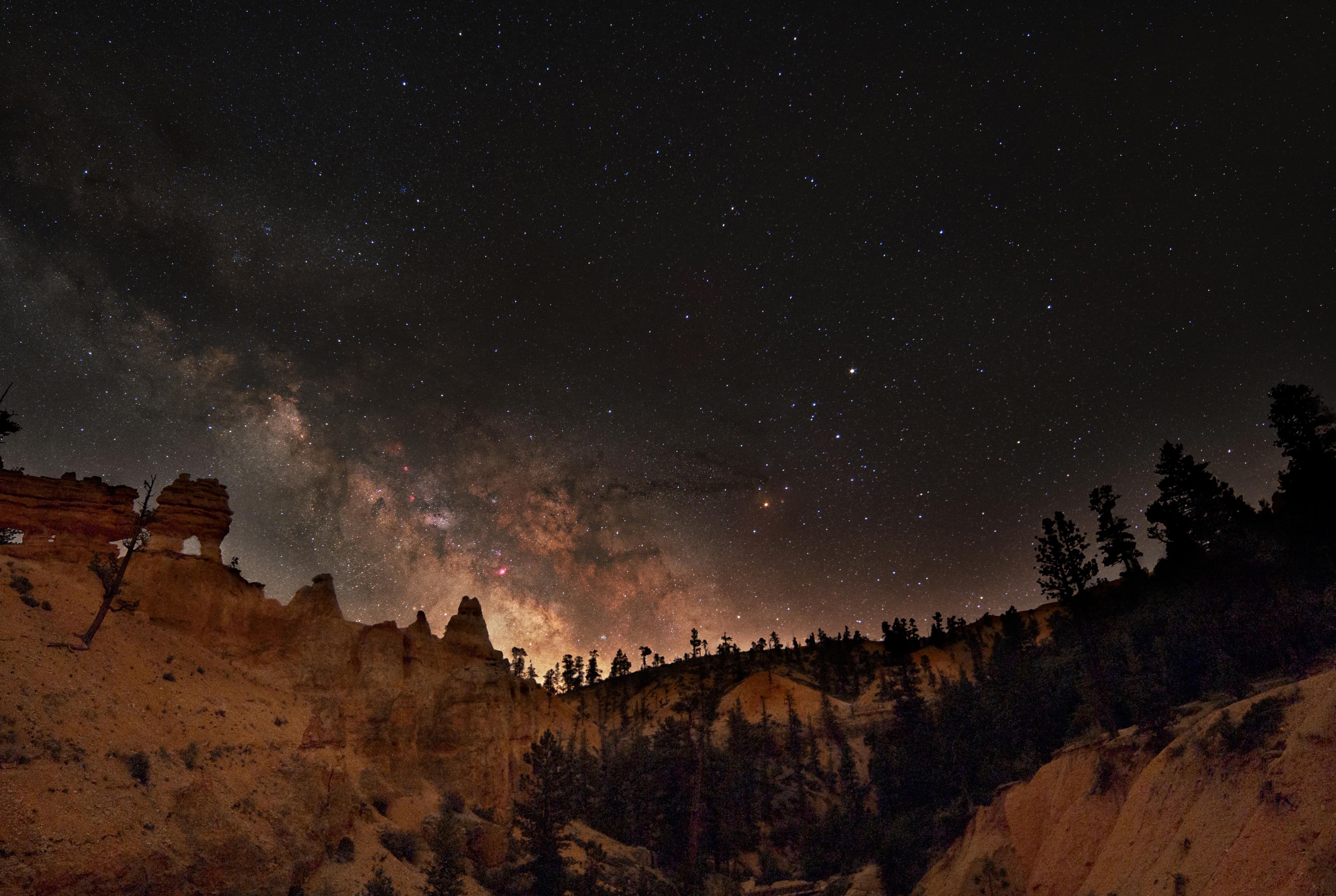
Bryce Canyon is a sanctuary for natural darkness. Bryce Canyon's skies are so dark, that in 2019 the park was designated as a Gold Tier International Dark Sky Park. Since the park is open 24 hours a day, whether you head off to a viewpoint yourself or join a night sky ranger program, we welcome you to the dark side!
See the Park Film
"A Song of Seasons" plays in the Visitor Center theater every half hour when the Visitor Center is open.
Duration: 24-30 Minutes
Snowshoe Hikes
Here at 8,000 feet (2,438 m) the scenery changes dramatically in the colder months. Come experience this magical season by taking a snowshoe-hike! Snowshoeing is allowed throughout the park on all trails so you can head out on your own or join a ranger-led snowshoe hike. These hikes are offered in winter as weather and snow conditions permit and are designed for all levels of experience, from beginner to expert.
Duration: 90-120 Minutes
Stargazing at Bryce Canyon
Bryce Canyon's high elevation, clean air, and remote location creates some of the darkest skies in the country. In fact, in 2019 Bryce Canyon officially gained International Dark Sky status. During a new Moon on a clear weather night, you can see thousands of stars and the spectacular band of the Milky Way Galaxy shooting across the sky. We take pride in our ability to protect the night skies for the present and future generations.
Sunset Point to Sunrise Point Hike
The Rim Trail hike meanders along the rim of the iconic Bryce Canyon Amphitheater, giving you views of the hoodoos below. This portion of the Rim Trail, from Sunset Point to Sunrise Point, is the only paved section of this trail and is the easiest walk in the park. Pets are allowed on this trail but must remain on paved surfaces.
Duration: 20-60 Minutes
Swamp Canyon Loop
Swamp Canyon appears relatively small and sheltered from the overlook, allowing the viewer to develop a more intimate connection with the landscape than some of the grander viewpoints in the park. The Swamp Canyon Loop, which starts at the viewpoint, is more rugged than the Bryce Amphitheater trails, taking hikers into a more forested backcountry hike. There is less signage on this hike and hikers are encouraged to carry a map.
Duration: 3-4 Hours
The Rim Trail
The Rim Trail stretches from its beginning in the south at Bryce Point 5.5 miles (8.9 km) north to Fairyland Point. As it follows the edge of the Bryce Amphitheater area of the park, it connects to the park's most popular viewpoints: Inspiration Point, Sunset Point, and Sunrise Point. This relatively easy hike (depending on how much of it you do) offers spectacular views of the park's most popular area.
Duration: 1-7 Hours
Tower Bridge
The Tower Bridge hike consists of the southern portion of the Fairyland Loop trail. This is an out-and-back trail that descends to a shady 1/4-mile spur trail leading to the Tower Bridge hoodoo. From there, hikers can return the way they came or continue to hike the entirety of the Fairyland Loop Trail.
Duration: 2-3 Hours
Under-the-Rim Trail
Bryce Canyon's backcountry trails offer forests and meadows, stunning views of distant cliffs, and solitude. However, hoodoos are best experienced along our frontcountry trails in the main amphitheater area. The Under-the-Rim trail connects Rainbow Point in the south to Bryce Point in the north. Permits are not required to hike this trail, but all overnight stays require a permit.
Duration: 2-3 Days
View Wildlife
The canyons and plateau of Bryce Canyon National Park are home to many animals. Park boundaries mean little to the migratory hummingbirds, nesting Peregrine Falcon, Rocky Mountain Elk and Pronghorn which daily cross through the forested plateau and amphitheaters. The search for food and water leads them to the best place to find sustenance and shelter. Many animals share habitats. Ebb and flow of populations is interdependent on all the members of the wildlife community.
Walk the Rim Trail
The Rim Trail stretches from its beginning in the south at Bryce Point 5.5 miles (8.9 km) north to Fairyland Point. As it follows the edge of the Bryce Amphitheater area of the park, it connects to Inspiration Point, Sunset Point, and Sunrise Point providing a relatively easy hike (depending on how much of it you do) that offers spectacular views of the park's most popular area.
Duration: 1-6 Hours
Visitor centers
Bryce Canyon Visitor Center
The Bryce Canyon Visitor Center might be one of your first stops when visiting Bryce Canyon National Park. Here you can obtain driving and hiking directions beyond those available on this website, weather forecasts, a current schedule of Park Ranger guided programs, Junior Ranger booklets, and information on area services including lodging, dining and other attractions. Entrance passes cannot be purchased at the visitor center.
Get directions
Webcams
Air Quality Webcam
Currently unavailable.
Hours of operation
Park is Open 24-7
Bryce Canyon National Park is open 365 days a year, 24 hours a day.
Mon
All Day
Tue
All Day
Wed
All Day
Thu
All Day
Fri
All Day
Sat
All Day
Sun
All Day
Activities
Weather
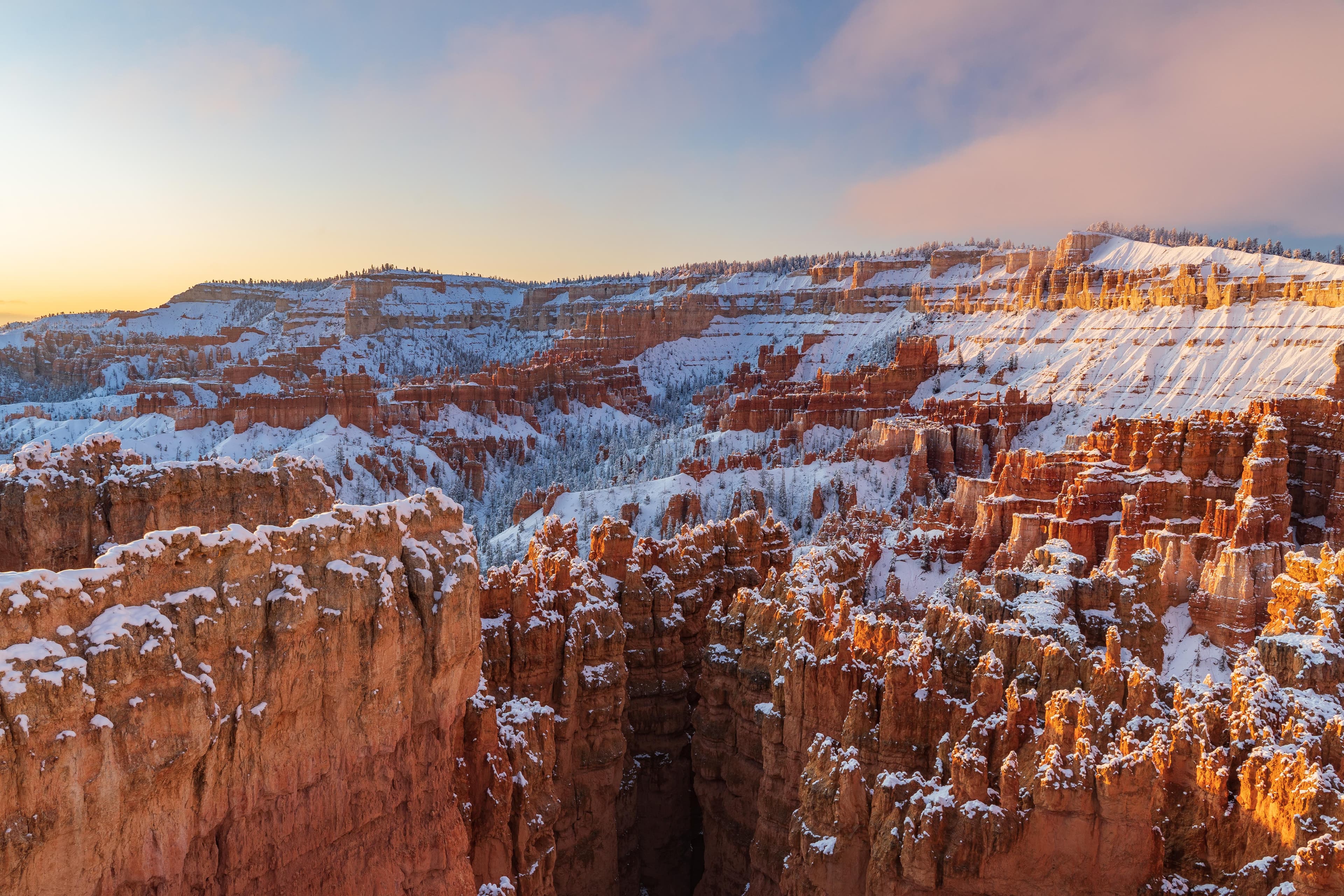
Due of its high elevation climate, weather at Bryce Canyon through autumn, winter, and spring can be highly variable. From October to May temperatures fall below freezing nearly every night. The park typically experiences its coldest and snowiest periods from December through February. Spring storms in March and April can still produce heavy snowfall that may impact travel in the region. Summer highs are typically in the 70s-80s F and afternoon thunderstorms are common in July and August.
Contact
Photos
Stay near this park
No horse-friendly stays listed near Bryce Canyon National Park yet. Know a great barn or property? Help fellow riders by listing it.
List your propertyDirections
From the North: Take I-15 south to UT-20 (exit 95). Travel east on UT-20 to US-89. Follow US-89 south to UT-12. Travel east on UT-12 to UT-63. Take UT-63 south to Bryce Canyon NP. From the South through Zion National Park: Take I-15 north to UT-9 (exit 16). Follow UT-9 east through Zion National Park to US-89. Travel north on US-89 to UT-12. Go east on UT-12 to UT-63. Take UT-63 south to Bryce Canyon NP. From the East Travel west on UT-12 to UT-63. Take UT-63 south to Bryce Canyon NP.
Source: nps.gov