
Information
Stage II Fire Restrictions
Stage II fire restrictions are in effect until further notice. Campfires including charcoal are not permitted, even in established fire rings. Smoking is only permitted within an enclosed vehicle. Gas or liquid fueled portable camp stoves are still permitted.
Caution
Elevated E. Coli levels - Fremont River
Recent water quality testing shows elevated E. coli levels in the Fremont River. Use caution if entering the water. Do not get water in your mouth, do not swim. Wash hands with soap and water.
Information
SR -24 Temporary Lane Closures
UDOT will be chip sealing sections of Utah Highway 24 from the Behunin Cabin to the east boundary of the park. Expect one-lane closures with delays of up to 15 minutes.
Park Closure
Annual/Seasonal Canyoneering Closures
The following are closed to entry through 8/31/2026 to protect sensitive resources: the heads of Fivemile Wash & Burro Wash descending east 2 miles; Shinob Canyon + all routes descending into Shinob (including Na-gah, Nighthawk, & Timpie); and Arch Nemesis Canyon, including the route exiting at Capitol Gorge + all direct tributary canyons.
More infoInformation
Reef Ride Bike Days 2026
For this special event in honor of National Public Lands Day, the Scenic Drive will be closed to motor vehicles for part of the day on Saturday, September 19 and Saturday, September 26, 2026. The road will be closed to vehicles from sunrise to 3 pm to allow for bicycles and pedestrians to enjoy the road at a more leisurely pace. The main road through the park (UT highway 24) - will remain open and unaffected by this closure.
More infoInformation
Special Use Permits
Special Use Permits are typically needed for activities that benefit a specific group. Examples include: Groups of 40 or more, trips organized by scouting groups, churches, or academic institutions, photography, weddings, and first amendment activities
More infoCapitol Reef National Park
UT · Torrey
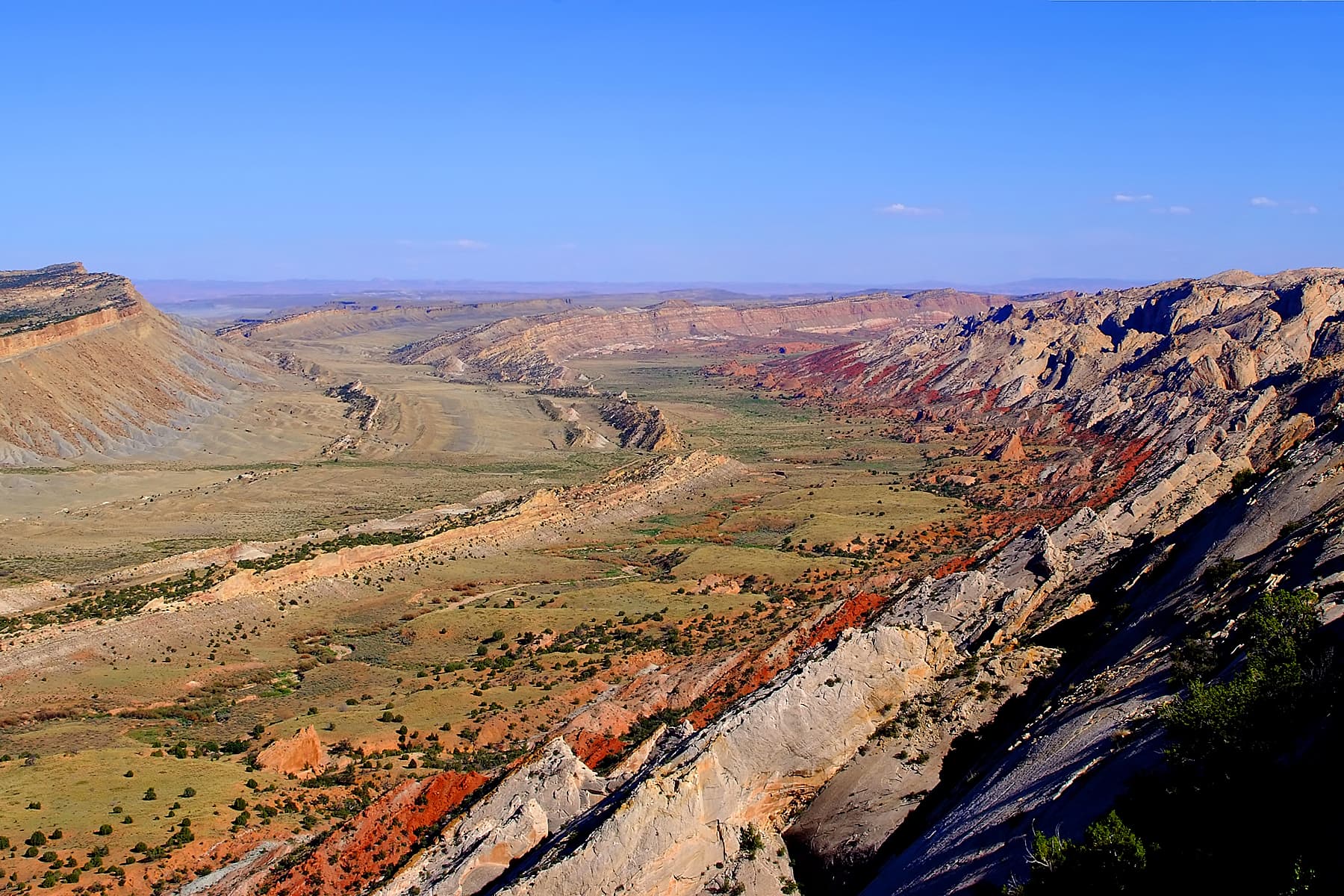
Located in south-central Utah in the heart of red rock country, Capitol Reef National Park is a hidden treasure filled with cliffs, canyons, domes, and bridges in the Waterpocket Fold, a geologic monocline (a wrinkle on the earth) extending almost 100 miles.
Riding guide
Highlights
Capitol Reef National Park anchors this federal destination list with planning-first equestrian appeal.
Riding
Rideable terrain here is noted as 60-80 miles, giving riders a clearer sense of scale before they ever unload. Capitol Reef National Park reads as a federal riding destination where preparation matters and the experience is shaped by the landscape itself.
Rideable terrain
60-80 miles
Trailer parking
1. Fruita Campground Parking / Rim Overlook Road • Gravel pullouts near the entrance to Rim Overlook Road are commonly used for trailers • Easy access to backcountry dirt roads • Not a designated horse facility, use at your own risk and be courteous to other visitors • Most convenient for riders entering the Cathedral Valley and upper backcountry roads Why this site: Central location and relatively easy access make it the most practical start point for many stock riders. 2. Chimney Rock Road Pullouts • Designated dirt road with wide pullouts suitable for horse trailers • Trail access onto roads that connect deeper into the backcountry • No corrals or hitching racks, but plenty of space to unload and get started Why this site: Good choice for longer exploratory rides that don’t start at Fruita. 3. Notom-Bullfrog Road Area • Multiple wide pullouts along the road, many with enough room for trailers • Access to scenic desert routes and canyon edges • No developed hitching or corrals, primitive staging Why this site: Great for riders targeting the Notom area and Burr Trail corridor.
Horse regulations
Recreational horse and pack animal use is a traditional way to experience Capitol Reef. “Pack animals” include horses, burros, and mules. Stock use may be restricted or prohibited in any area of the park when necessary to protect resources or visitors. Permits • A Backcountry Use Permit is required for each party staying overnight with horses or pack animals. Permits are available at the visitor center. • No permit is required for day use. Where Stock May Stay Overnight • Horses and pack animals may not be kept overnight in established roadside pullouts, campgrounds, picnic areas, or orchards. • The only developed overnight location is the Equestrian Staging Area at the Post Corral. Backcountry Camping Rules When camping outside the Post Equestrian Staging Area: • Camp at least 300 feet from tanks, ponds, archeological sites, historical sites, and trail junctions. • Camp at least 100 feet from any watercourse, whether wet or dry. • Camping is prohibited within ½ mile of established roads or trailheads. • Camping is prohibited within sight of established roads, trails, or other camping parties. • Parties must camp in a new location each night. Manure & Feed Requirements • Manure must be scattered when vacating a campsite. • Manure must be removed immediately if deposited in or near springs or non-flowing water sources. • All feed must be carried in by riders. • Feed must be certified weed-free during the trip and for two full days prior to arrival to prevent invasive species introduction. Grazing is not permitted. Group Size Limits • Maximum of 12 people • Maximum of 12 total head of horses or pack animals Animal Handling & Trail Conduct • Loose herding of horses and pack animals is prohibited. • Riders must slow to a walk when passing hikers. • Stock must be picketed in areas where vegetation damage will be minimized. • Dogs may not accompany recreational stock trips.
Getting here
Plan your arrival around Torrey, Utah as the closest location anchor for Capitol Reef National Park. 1. Fruita Campground Parking / Rim Overlook Road • Gravel pullouts near the entrance to Rim Overlook Road are commonly used for trailers • Easy access to backcountry dirt roads • Not a designated horse facility, use at your own risk and be courteous to other visitors • Most convenient for riders entering the Cathedral Valley and upper backcountry roads Why this site: Central location and relatively easy access make it the most practical start point for many stock riders. 2. Chimney Rock Road Pullouts • Designated dirt road with wide pullouts suitable for horse trailers • Trail access onto roads that connect deeper into the backcountry • No corrals or hitching racks, but plenty of space to unload and get started Why this site: Good choice for longer exploratory rides that don’t start at Fruita. 3. Notom-Bullfrog Road Area • Multiple wide pullouts along the road, many with enough room for trailers • Access to scenic desert routes and canyon edges • No developed hitching or corrals, primitive staging Why this site: Great for riders targeting the Notom area and Burr Trail corridor.
Planning your visit
Capitol Reef offers beautiful desert backcountry riding, but planning is strict and infrastructure is minimal. Preparation matters. Post Corral Equestrian Staging Area • Use is permitted for non-commercial horse users only. • Reservations must be made up to one year in advance by phone or in person. • A backcountry permit must be obtained in person at the visitor center prior to use. • Camp use is limited to one group of up to 12 riders and 12 horses. • Up to two camp tenders may accompany the group and remain in camp. • All vehicles, trailers, and camping units must be parked on the west side of the corral. • Horses must be contained within the corral area. • Day riders may use the site for staging, but must park in the signed trailer area adjacent to the corral, not at the trailhead. • No water is available at the corral site. Bring all water for horses and riders. • Generator use is prohibited. • Ground fires are prohibited unless contained in a portable fire pan or grill. • Ashes must be packed out. • Wood gathering is prohibited. Backcountry Realities • Desert heat can be extreme and shade is limited. • Flash flooding is possible in washes and low areas. • Cell service is limited to nonexistent outside developed areas. • Fuel and supplies are sparse. Plan ahead. • Roads can become rough or impassable after storms. RideJoy Planning Level Advanced planning required Capitol Reef rewards riders who prepare early, reserve well in advance, and arrive fully self-sufficient. This is structured desert backcountry riding, not casual pull-in access. If you'd like, we can now standardize a “Reservation Required” visual badge for parks like this so riders instantly know when advance booking is critical.
Where to stay
Capitol Reef National Park Visitor Center is the main visitor-contact point tied to this destination, which is helpful when you want current conditions, maps, and stock-use updates before riding. Horse camping is allowed, so this destination can work as more than a quick in-and-out ride if you want to build a longer federal-land stay around it. For a polished trip plan, pair the ride with lodging, fuel, and resupply planning in or near Torrey before heading deeper into federal-land access points.
Entrance fees & passes
- $20.00
Entrance - Private Vehicle
An entrance fee is charged per vehicle.
- $15.00
Entrance - Motorcycle
Valid for 7 days. Admits up to 2 private, non-commercial motorcycles with up to 4 total passengers.
- $10.00
Entrance - Per Person
Admits one individual with no car. Typically used for bicyclists and pedestrians.
- $10.00
Commercial Entrance - Per Person
Commercial Road-Based Tours are required to obtain a Commercial Use Authorization before visiting Capitol Reef. When visiting the park, the tour must then pay the separate entrance fee at the visitor center (or through pay.gov). Tours with vehicle capacity of 15 or less should apply for a CUA in the "Guided Interpretive Tours" category. Tours of this size fall under the Guided Activities entry fee structure.
- $100.00
Commercial Entrance - Mini-bus
Commercial Road-Based Tours are required to obtain a Commercial Use Authorization before visiting Capitol Reef National Park. When visiting the park, the tour must then pay the separate entrance fee at the visitor center (or through pay.gov). Vehicle capacity of 16 seats or greater: $100.00 entrance fee
- $100.00
Commercial Entrance - Motor Coach
Commercial Road-Based Tours are required to obtain a Commercial Use Authorization before visiting Capitol Reef National Park. When visiting the park, the tour must then pay the separate entrance fee at the visitor center (or through pay.gov). Vehicle capacity of 16 seats or greater: $100.00 entrance fee
- $10.00
Commercial Entrance - Per Person
Guided Activities include all types of guided services, such as bike and motorcycle tours, hiking guides, photography classes, hiking shuttles, and road-based commercial tours with vehicles <16 capacity. Guided activity groups are charged the per person fee of $10.00 per client, excluding the trip leader or guide. If a client has an America the Beautiful Resident pass (annual, senior, access, etc.) it covers 4 people in the group. (Non-resident annual passes cover only the pass owner.)
- $35.00
Annual Entrance - Park
Admits one private, non-commercial vehicle or motorcycle and all its occupants or riders.
Park map
Trails
No trails synced for this park yet.
Campgrounds
Backcountry Camping
0 sites
A free backcountry permit, available at the visitor center, is required for camping outside of campgrounds. Capitol Reef offers many hiking options for serious backpackers and those who enjoy exploring remote areas. For more information on possible backpacking routes, route descriptions and maps are available on our hiking and backpacking page.
Fruita Campground
71 sites
The 71 site Fruita campground is the only developed campground in the park, offering picnic tables, fire rings, restrooms, water and a dump station. A $25 nightly fee is charged. It is open year-round. Campsites are reservable year-round; visit www.recreation.gov to make a reservation. Reservations are accepted 6 months ahead of time. The busy season is mid March through October when the campground is typically fully booked. In the winter, there is less demand and it is easy to secure a campsite.
Reserve a siteGroup Campsite
1 sites
The Group Campsite is a secluded site located near the Fruita Campground and can accommodate a maximum of 40 people. It may be reserved through www.recreation.gov up to one year in advance. The Fruita Group Campsite is open from mid-April to mid-October. It is closed every Tuesday and Wednesday nights for maintenance. The nightly rate is $125.
Reserve a sitePrimitive campsites at Cathedral Campground
6 sites
It is located approximately halfway on the Cathedral Valley Loop Road. About 36 miles (57.9 km) from the visitor center, this primitive, no-fee campground has 6 sites, each with a picnic table and fire grate. There is a pit toilet, but no water available. The campground is open year-round; however, visitors should check road conditions with the Capitol Reef Visitor Center prior to planning an overnight stay. The campground is at ~7,000 feet (2,133 m) in elevation, No reservations; first-come, first-served.
Primitive campsites at Cedar Mesa Campground
5 sites
It is located approximately 23 miles (37.0 km) south of Utah State Highway 24 on the Notom-Bullfrog Road and is at 5,500 feet (1,676 m) in elevation. This primitive, no-fee campground has five sites, each with a picnic table and fire grate. There is also a pit toilet, but no water is available. The campground is open year-round, but visitors should check with the Capitol Reef Visitor Center for road conditions prior to planning an overnight stay. No reservations; first-come, first-served.
Points of interest
Behunin Cabin
POIImagine homesteading this area with your family. Would more children make it easier? Elijah Cutler Behunin, his wife Tabitha Jane, and their 13 children lived in this cabin and the alcove above for just one year.
Bentonite Hills
POIThe Bentonite Hills are softly rounded, large hills of various shades of gray, red, maroon, brown, and green. High clearance 4-wheel drive is usually necessary to access them, and sometimes the road is impassable.
Capitol Dome
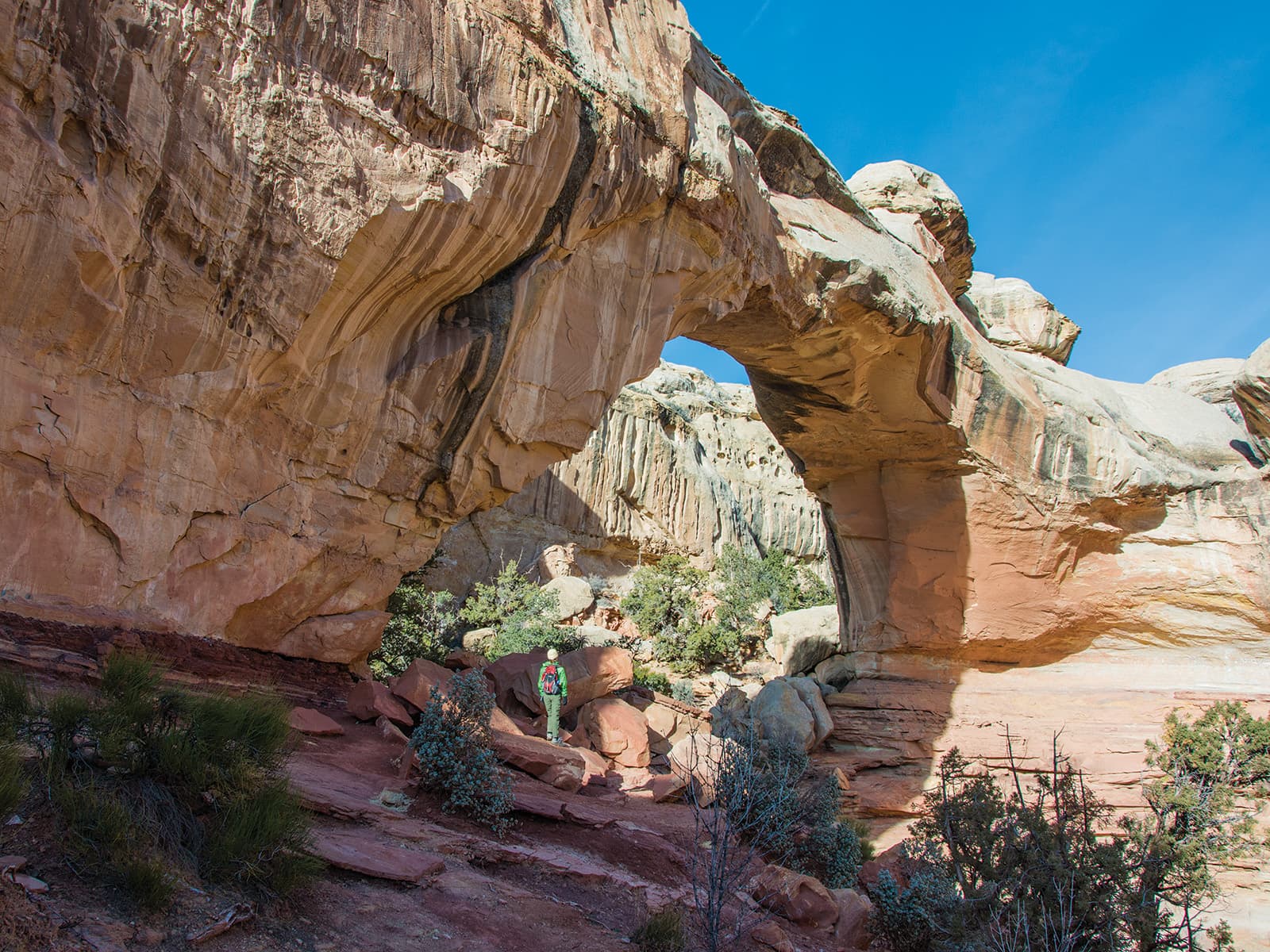
POICapitol Dome is part of why Capitol Reef has its name. The rounded dome resembled various capitol buildings, including the one in Washington D.C. It is easy to view from the Hickman Bridge Trailhead.
Capitol Reef East Entrance Wayside
POICapitol Reef National Park's Scenic Drive
POIThe nearly 8 mile winding Scenic Drive is a great way to see and experience Capitol Reef National Park.
Capitol Reef Orchards
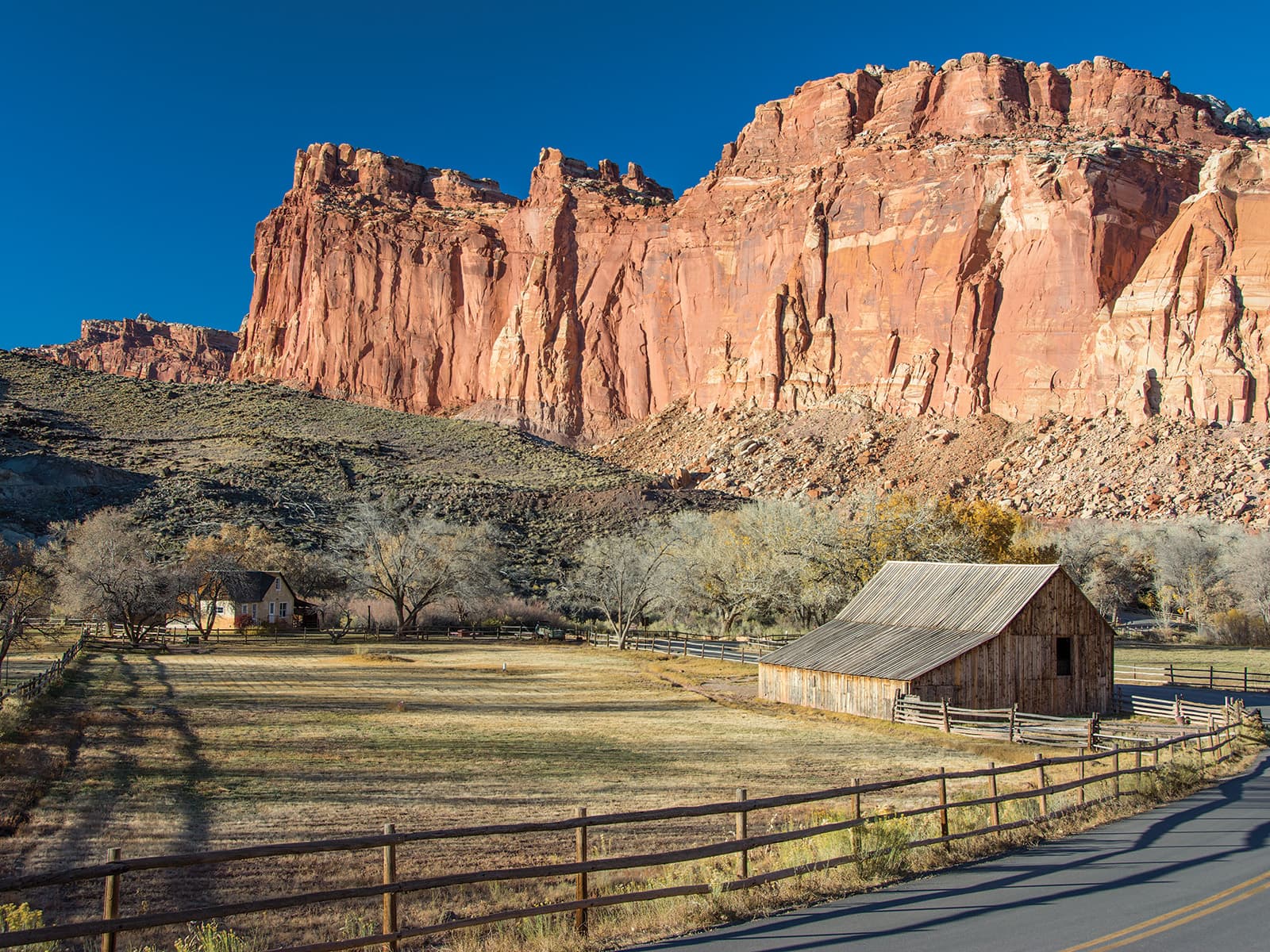
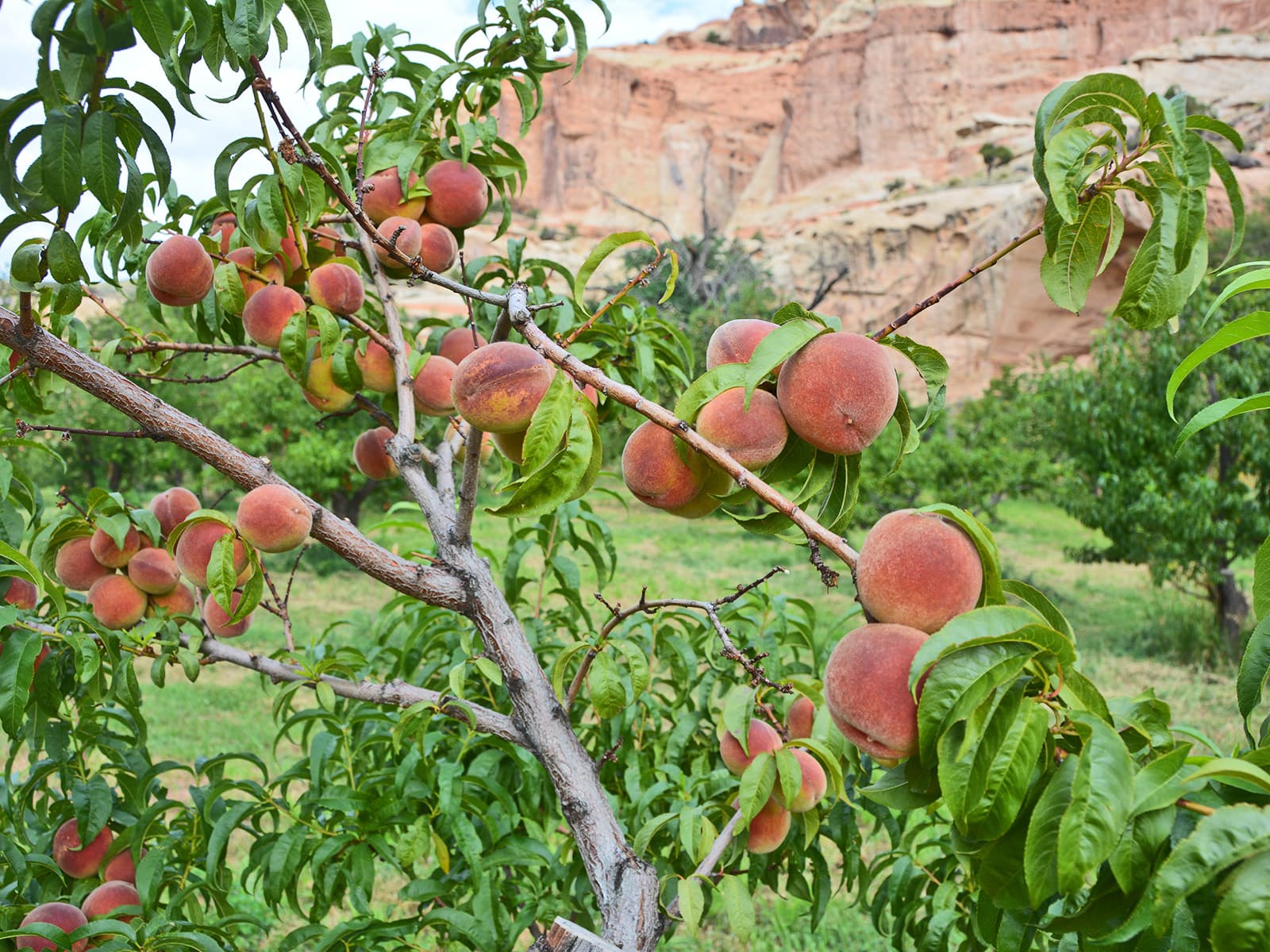
POIThe orchards that lie within a mile or two of the visitor center are evident remains of the pioneer community of Fruita, settled in 1880. Many varieties of heirloom fruit are available for harvest by visitors in season.
Capitol Reef West Entrance Pulloff
POICathedral Valley
POIThe Cathedral District of Capitol Reef is remote and rugged. A high clearance vehicle is required and occasionally 4 wheel drive as well. Check at the visitor center, or call 435-425-3791 for road conditions.
Fluted Wall Viewpoint
POIFruita Schoolhouse
POIVisit the Fruita Schoolhouse, and imagine what life was like for a pioneer child in this rural corner of Utah.
Gifford House
POIThe Gifford House lies in the heart of the Fruita valley and depicts the typical spartan nature of rural Utah farm homes of the early 1900s. Today, the home is open seasonally, as a small sales outlet.
Gypsum Sinkhole
POIThe Gypsum Sinkhole is about 200 feet deep and was formed by water dissolving the gypsum, leaving a large cavity. The rock is very soft, stay back from the edge.
Jackson Orchard
POILesley Morrell Line Cabin
POIThe Lesley Morrell Line Cabin provides a glimpse into the ranching past of Capitol Reef National Park. Access requires a high clearance vehicle. Check road conditions and weather before attempting.
Lower Spring Canyon Trailhead
POIMax Krueger Orchard
POIMerin Smith Implement Shed
POIFruita resident Merin Smith built this shed in 1925 as a workshop, blacksmith shop, and garage. The objects in the shed illustrate what life would have been like in Fruita during that time period.
Navajo Dome Viewpoint
POIOxbow Waterfall
POIPanorama Point
POIVisit Panorama Point to see sweeping vistas of red rock cliffs.
Petroglyph Panel
POIView ancient rock markings carved by the Fremont Culture people who inhabited this area from 300-1300 Common Era (CE).
Pioneer Register
POITake a short hike in Capitol Gorge to see the historic Pioneer Register where early explorers and pioneers carved their names into the cliff wall. It is illegal to deface, vandalize, or add your own name to the Register.
Scenic Drive Stop 1
POICapitol Reef’s sedimentary rock layers tell us stories from Earth’s ancient past.
Scenic Drive Stop 10
POIWhy is it called “Capitol Reef?”
Scenic Drive Stop 11
POIThe Capitol Gorge trail features natural pools of water and markings from early pioneers and travelers.
Scenic Drive Stop 2
POIWhat is the Waterpocket Fold? The tilted cliffs along the Scenic Drive are part of this massive wrinkle in the Earth’s crust.
Scenic Drive Stop 3
POIAncient environments determine today’s rock types and colors.
Scenic Drive Stop 4
POIErosion changes the landscape, from small holes in the cliff, to huge natural arches.
Scenic Drive Stop 5
POIWhat are those long black streaks striping the cliff walls?
Scenic Drive Stop 6
POIJuniper trees showcase dark, twisting bark and light blue berries.
Scenic Drive Stop 7
POISummer monsoon season brings heavy rain and flash flooding to Capitol Reef. The torrents of water can be spectacularly beautiful, but also deadly.
Scenic Drive Stop 8
POIThe incredible, edible pinyon pine helps many species survive in a harsh desert environment.
Scenic Drive Stop 9
POIDesert bighorn sheep are often spotted in Capitol Gorge along narrow cliff ledges.
Sulphur Creek Trailhead
POITemple of the Sun and Temple of the Moon
POIThe Temples of the Sun and Moon in Cathedral Valley are large monoliths of Entrada Sandstone. High clearance 4-wheel drive is usually necessary to access them, and sometimes the roads in Cathedral Valley are impassable.
The Castle Viewpoint
POITwin Rocks Viewpoint
POIWaterpocket District
POIThe Waterpocket District of Capitol Reef is rugged and remote. Road conditions vary, a high clearance vehicle is usually needed. Check at the visitor center, or call 435-425-3791 for road conditions.
Things to do
Bicycle Touring
Bicycling touring in Capitol Reef offers opportunities to explore paved and unpaved roads throughout the park. Explore colorful canyons, beautiful vistas of red rock country, and the verdant Fruita Historic District by bicycle.
Driving the Burr Trail
Drive the scenic Burr Trail from Glen Canyon's Bullfrog district, along the bottom of Capitol Reef, through Grand Staircase, to Boulder, UT. Distance: 67 miles (108 km) one-way Mix of paved and dirt roads, impassable when wet Four-wheel drive sometimes required. No RVs.
Duration: 1-14 Days
Hike an Easy or Moderate Trail
Hike an easy or moderate trail to see panoramic views or to experience a deep sandstone canyon.
Hike a Strenuous Trail
Hike a strenuous trail to view dramatic geologic formations and spectacular vistas.
Hike Cathedral Valley
Explore Cathedral Valley by foot. These hikes are accessible only by rough unpaved roads. A high clearance vehicle is necessary and four-wheel drive is recommended at times.
Hike in the South (Waterpocket) District
Get to know the South (Waterpocket) District on foot by hiking an easy trail or strenuous backcountry route. Many of these hikes are accessible only by unpaved roads.
Picnic
Enjoy a picnic in Capitol Reef National Park! In the Fruita Historic District, look for the Doc Inglesby and Chesnut picnic areas, as well as tables and a water fountain near the Gifford House. At the end of Capitol Gorge Road, off the Scenic Drive, there are covered picnic tables as well as a pit toilet.
Scenic Drive Tour
Take Capitol Reef's Scenic Drive, and experience colorful cliffs and deep narrow canyons from the comfort of your vehicle.
Duration: 90 Minutes
Stargaze
Capitol Reef protects extremely dark night skies, and is a wonderful place to stargaze.
Visit the Petroglyph Panel
From 600 to 1300 C.E., native people of the Fremont Culture made their home at Capitol Reef. Petroglyphs carved into the Wingate sandstone remind us of their time.
Duration: 5-30 Minutes
Watch the Sunset
Watch the sunset from various scenic points in Capitol Reef. Take an easy stroll or a strenuous hike as the sun goes down. Don't forget to bring a headlamp.
Visitor centers
Capitol Reef National Park Visitor Center
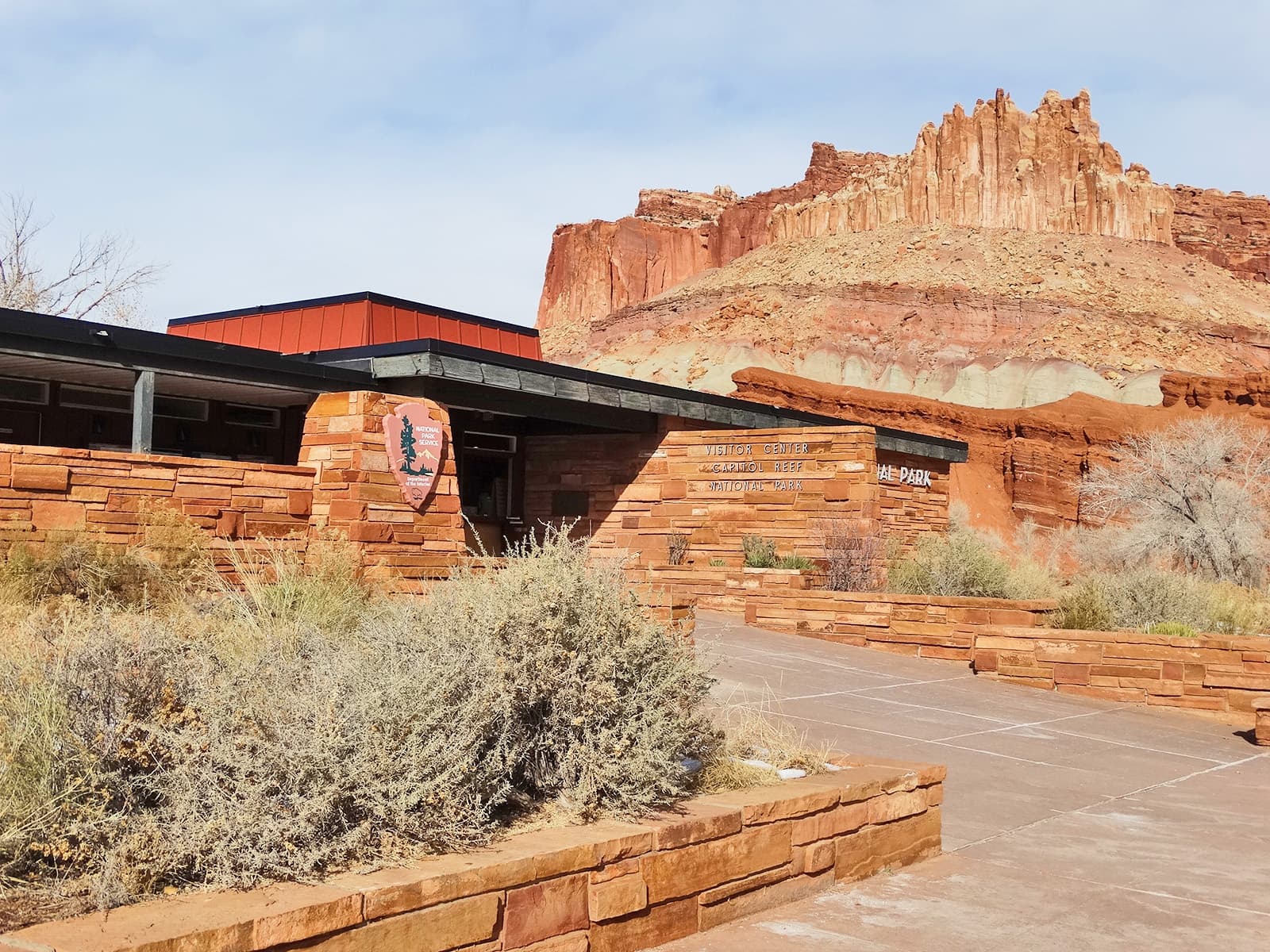
Capitol Reef National Park visitor center sits at the intersection of UT-24 and the Scenic Drive.
Get directions
Hours of operation
Capitol Reef National Park
Capitol Reef is a 24 hour park, open all day, every day. The visitor center is open daily, except for some major holidays. Visitor center hours vary, call 435-425-3791 and follow the prompts for current visitor center information.
Mon
All Day
Tue
All Day
Wed
All Day
Thu
All Day
Fri
All Day
Sat
All Day
Sun
All Day
Activities
Weather
Weather is posted daily; check at the park visitor center for weather updates. Do not enter into narrow canyons if there is a threat of rain or if rain has been falling in the area. Rain and snow may also make dirt roads impassable to vehicles.
Contact
Photos
Stay near this park
No horse-friendly stays listed near Capitol Reef National Park yet. Know a great barn or property? Help fellow riders by listing it.
List your propertyDirections
From I-70: Take exit 149, then take UT-24 west toward Hanksville; continue for 43.8 miles (70.5 km). Turn right to continue on UT-24 west and continue for 37.3 miles (60 km). From I-15: take exit 188 then US-50 east toward Scipio. Left on UT-50; continuing 0.7 miles (1.1 km). Turn right onto US-50 east; continue for 24.4 miles (39.3 km). Turn right onto UT-260 south and continue 4.2 miles (6.8 km), then right on UT-24 for 71.3 miles. UT-12: North on highway 12 to Torrey, UT. Right onto UT-24.
Source: nps.gov