
Information
Many Glacier Campground and Trail Closures
The Many Glacier campground is closed due to flooding. It is projected to reopen July 2. Most trails in Many Glacier are closed, but there are limited hiking opportunities available.
Information
Two Medicine North Shore Trailhead Reroute
In 2026, Two Medicine's North Shore Trailhead is not accessible due to construction in the Two Medicine Campground. A reroute has been established to access the North Shore Trail but does require a ford (unbridged water crossing). Directional signage is in place marking the reroute. Hikers may also access Twin Falls, Upper Two Medicine Lake, No Name Lake, and Dawson Pass without a ford, by using the South Shore Trail. Note: this adds approximately 1 mile of distance, one-way.
More infoInformation
Going-to-the-Sun Road is Open for 2026 Season
The Going-to-the-Sun Road is fully open for the 2026 summer season. The road may now be accessed by motorized vehicles over Logan Pass from both the West Glacier and St. Mary Entrances.
More infoGlacier National Park
MT · West Glacier
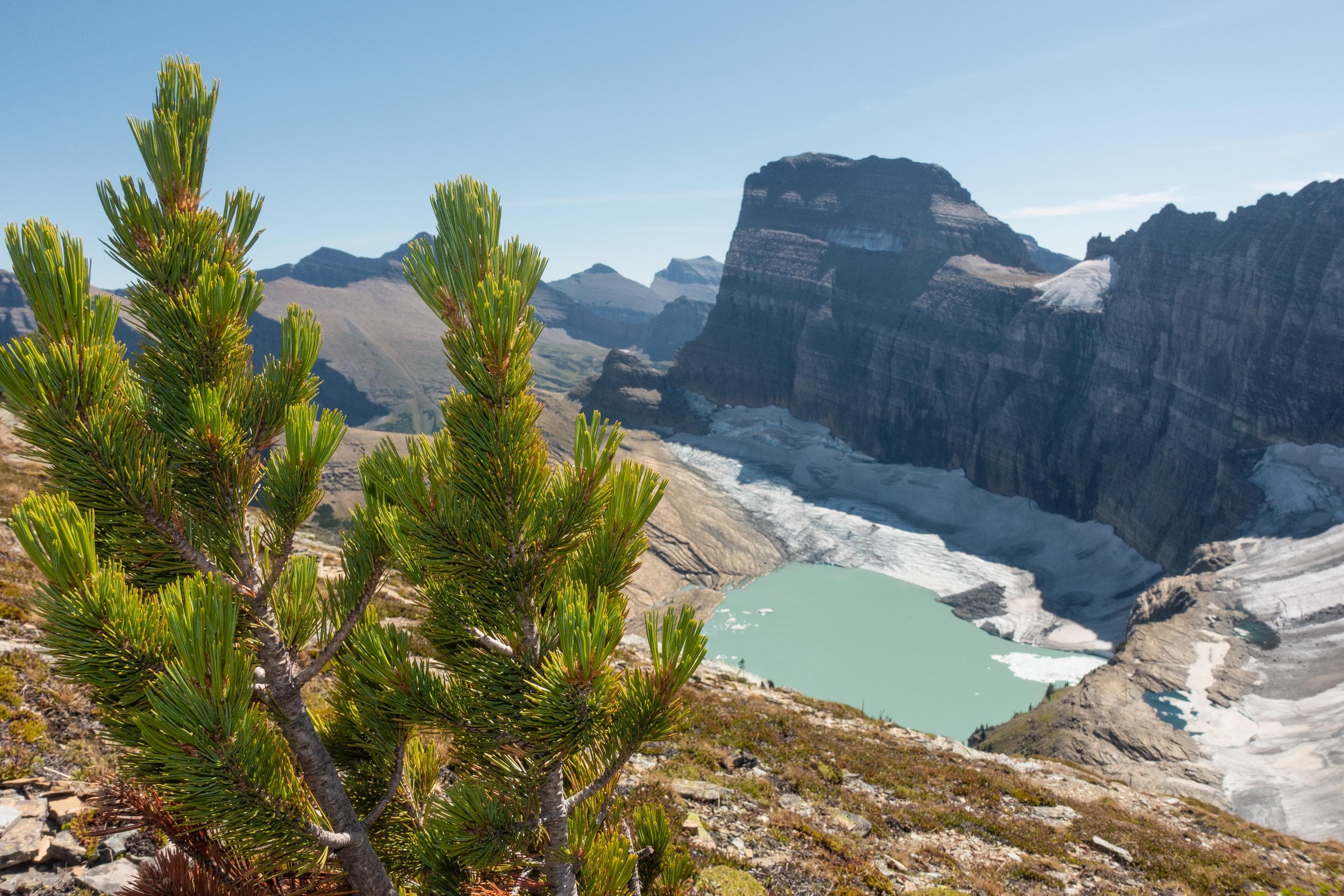
A showcase of melting glaciers, alpine meadows, carved valleys, and spectacular lakes. With over 700 miles of trails, Glacier is a paradise for adventurous visitors seeking a landscape steeped in human culture. Relive the days of old through historic chalets, lodges, and the famous Going-to-the-Sun Road.
Riding guide
Horses provided
Highlights
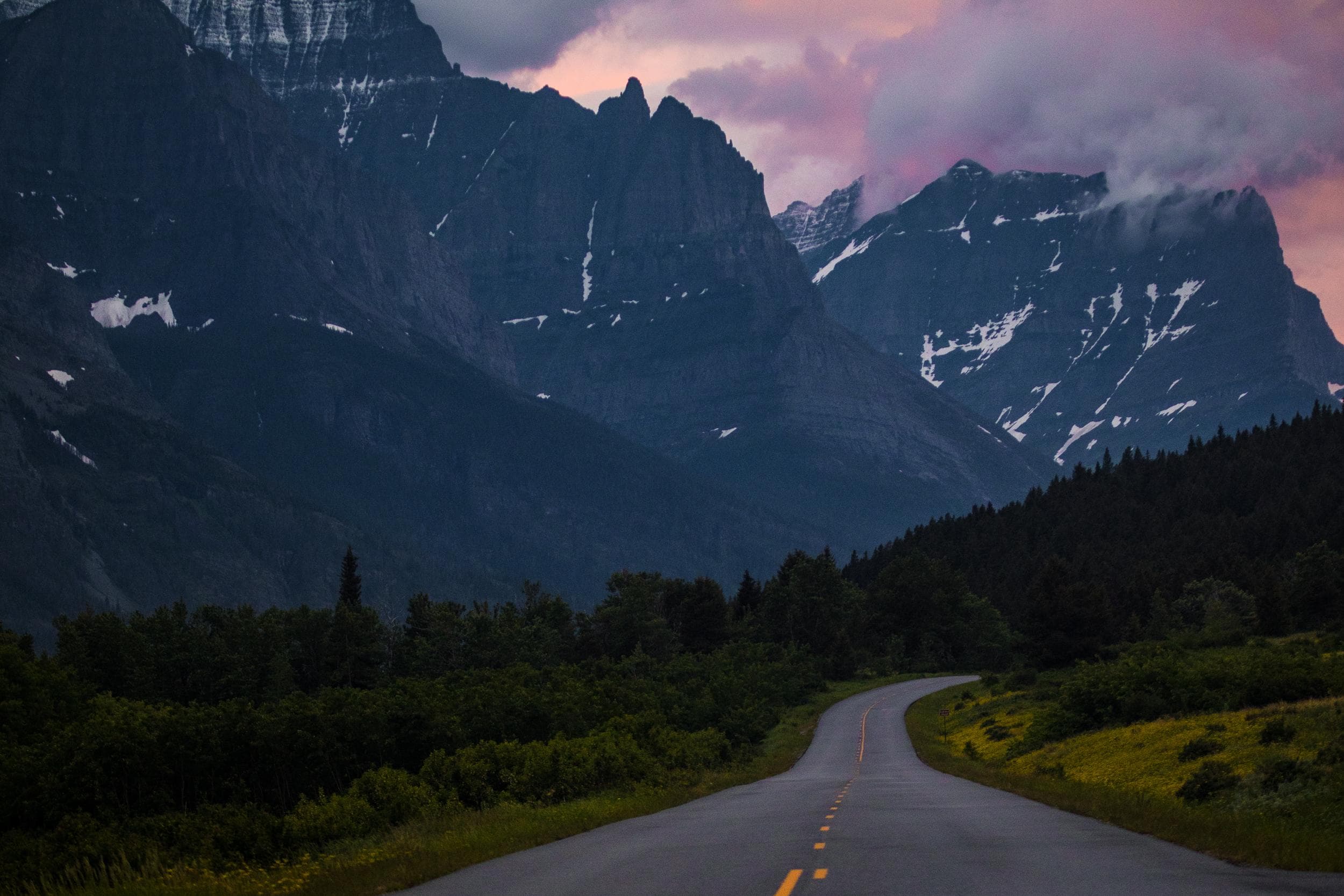
Glacier National Park is true big-sky wilderness: towering peaks, alpine lakes, glacier-carved valleys, and Miles of rugged backcountry…
Riding
Rideable terrain here is noted as 350-500 miles, giving riders a clearer sense of scale before they ever unload. Overnight trips require wilderness permits, and preparation is essential. With dramatic elevation changes and variable weather, Glacier is best suited for experienced riders and sure-footed horses. For those ready for the challenge, it delivers one of the most unforgettable backcountry riding experiences in North America.
Rideable terrain
350-500 miles
Trailer parking
Apgar Horse Corrals (West Side – Near Lake McDonald) • One of the primary equestrian staging areas • Designed for stock use • Trailer-friendly parking • Hitching facilities available • Access to backcountry trail system This is generally the most reliable and developed equestrian staging location in the park. Fish Creek Area (West Side) • Some trailer-accessible parking near stock-legal routes • Less structured than Apgar • Must verify space availability Many Glacier Area (East Side) • Limited trailer maneuvering space • Very busy in peak season • Better suited for experienced drivers comfortable with tight lots Important Notes • Glacier has designated stock camps in the backcountry, but overnight use requires a permit. • Many roads inside the park are narrow and winding. Large trailers require careful driving. • Going-to-the-Sun Road has vehicle length restrictions that may impact access depending on your rig size. • Parking fills early during peak season.
Horse regulations
Guided horseback rides are available inside the park at Many Glacier, Lake McDonald, and Apgar. Swan Mountain Outfitters offers drop camp services, packing visitor's gear into certain backcountry campgrounds using stock. This can be an enjoyable alternative to backpacking. A backcountry permit and advance coordination are required. For information and reservations contact: Swan Mountain Outfitters Designated Stock Routes Only Stock (horses, mules, burros, llamas) are permitted on designated trails and in specific backcountry areas. Cross-country travel is not allowed. Some trails may be closed seasonally due to snow, wildlife activity, or resource protection. Wilderness Permits Required (Overnight) A wilderness permit is required for all overnight trips with stock. • Trailhead quotas apply • Campsites are assigned • Advance reservations are strongly recommended during peak season Day riding does not require a wilderness permit. Stock Camping Rules • Stock must stay in designated stock camps or stock-approved backcountry sites • Grazing is regulated and limited to specific zones • Weed-free feed is required • Highlining or approved tethering methods must be used • Camping near lakes and streams is restricted Party Size Limits • Maximum party size and stock numbers apply (varies by zone) • Group size includes both people and animals Bear Country Protocols Glacier is active grizzly and black bear habitat. • All feed must be secured properly • Food and stock feed storage rules are strictly enforced • Clean camps are essential Front-Country Horse Camping Glacier has very limited developed horse camping. Most stock use is wilderness-based. Riders should confirm trailer access and staging areas in advance.
Getting here
Use Camas Rd and Going-to-the-Sun Road, West Glacier, Montana as your primary planning reference before you haul in. Apgar Horse Corrals (West Side – Near Lake McDonald) • One of the primary equestrian staging areas • Designed for stock use • Trailer-friendly parking • Hitching facilities available • Access to backcountry trail system This is generally the most reliable and developed equestrian staging location in the park. Fish Creek Area (West Side) • Some trailer-accessible parking near stock-legal routes • Less structured than Apgar • Must verify space availability Many Glacier Area (East Side) • Limited trailer maneuvering space • Very busy in peak season • Better suited for experienced drivers comfortable with tight lots Important Notes • Glacier has designated stock camps in the backcountry, but overnight use requires a permit. • Many roads inside the park are narrow and winding. Large trailers require careful driving. • Going-to-the-Sun Road has vehicle length restrictions that may impact access depending on your rig size. • Parking fills early during peak season.
Planning your visit
Must Know Before You Ride • This is true wilderness. Much of Glacier’s stock access is remote, high-elevation backcountry with steep terrain and rapidly changing weather. Preparation and experience matter. • A wilderness permit is required for all overnight stock trips. Campsites are assigned, quotas apply, and popular routes fill quickly. • Glacier is active grizzly bear habitat. Proper food and feed storage is critical, and clean camp practices are strictly enforced. • Snow can linger into early summer, and some high passes may not open until mid- to late-season depending on conditions. Always check trail status before arrival. • Stock use is limited to designated trails and approved camping areas. Cross-country travel is not allowed. • Front-country horse camping is limited. Most equestrian experiences here are backcountry-based. Plan trailer staging and access carefully. • River crossings, rocky footing, and narrow mountain sections are common. This park is best suited for confident riders and sure-footed horses.
Where to stay
Apgar Visitor Center (West Side of Park) is the main visitor-contact point tied to this destination, which is helpful when you want current conditions, maps, and stock-use updates before riding. This entry indicates both guided ride support and horse-camping potential, making Glacier National Park one of the more flexible federal options for riders building a fuller travel plan. For a polished trip plan, pair the ride with lodging, fuel, and resupply planning in or near West Glacier before heading deeper into federal-land access points.
Entrance fees & passes
- $35.00
Entrance - Private Vehicle
(Winter Rate - $25.00, November 1 to April 30) This is an entrance fee for all persons traveling in a single, private, non-commercial vehicle (car/truck/van). The pass is good for seven days and is non-transferable. Visitors can enter the park at any time, if the entrance station is not staffed, a self-registration area is available for purchasing a 7-day park pass.
- $20.00
Entrance - Per Person
(Winter Rate - $15.00, November 1 to April 30) This is a per person entrance fee for a visitor traveling on foot, bicycle, or for individuals traveling together in a vehicle as a non-commercial, organized group. The pass is good for seven days and is non-transferable.
- $30.00
Entrance - Motorcycle
(Winter Rate - $20.00, November 1 to April 30) Valid for 7 days. Admits up to 2 private, non-commercial motorcycles with up to 4 total passengers.
- $25.00
Commercial Entrance - Sedan
Entrance fees are based on the seating capacity of the vehicle (driver not included). Commercial Sedan entrance fee is $25, plus $20 per person, 16 years of age or older. The pass is good for seven days and is non-transferable.
- $75.00
Commercial Entrance - Van
Entrance fees are based on the seating capacity of the vehicle (driver not included). Commercial Van entrance fee is $75 regardless of occupancy. The pass is good for seven days and is non-transferable.
- $100.00
Commercial Entrance - Mini-bus
Entrance fees are based on the seating capacity of the vehicle (driver not included). Commercial Mini-bus entrance fee is $100 regardless of occupancy. The pass is good for seven days and is non-transferable.
- $200.00
Commercial Entrance - Motor Coach
Entrance fees are based on the seating capacity of the vehicle (driver not included). Commercial Motor Coach fee is $200 regardless of occupancy. The pass is good for seven days and is non-transferable.
- $100.00
Nonresident
Each non-US resident aged 16 and older visiting Glacier National Park must pay a $100 nonresident fee (in addition to the standard entrance fee), unless admitted with an Annual or America the Beautiful Pass. This includes nonresidents entering as part of a commercial tour group, commercial use authorization (CUA) group, or concessioner tour group.
- $70.00
Annual Entrance - Park
New in 2024, all passes will have one signature line for a single passholder. This pass is valid for one year from the month of entry and admits the purchaser and passengers in a single, private, non-commercial vehicle, or the pass holder and his/her immediate family (spouse, children, parents) when entry is by other means (foot, bicycle) into the park. It is nontransferable, nonrefundable, and does not cover camping fees.
Park map
Trails
No trails synced for this park yet.
Campgrounds
Apgar Campground
194 sites
Apgar Campground is the largest campground in the park. It is situated in trees and provides tent and RV campers with shade and some privacy. Evening sunsets on Lake McDonald are only a short stroll, and you won't want to miss evening programs with a ranger at the Apgar Amphitheater. Many trails are located within a short drive of the campground. Advanced reservations are required for all sites. Click the reservation button below for details.
Reserve a siteAvalanche Campground
87 sites
Avalanche Campground is located in one of the most popular sections of Glacier National Park west of the Continental Divide. The campground accommodates tent and RV campers, however only 50 sites will accommodate vehicle lengths up to 26 feet. Bring your hiking boots and binoculars. Two popular day hikes offer spectacular scenery and glimpses of birds and wildlife that inhabit the area. Advanced reservations are required for all sites. Check Recreation.gov for details.
Reserve a siteBowman Lake
48 sites
Bowman Lake Campground is located in the North Fork area of Glacier National Park approximately 32.5 miles from the west entrance and 30 miles from the Canadian border. The drive to Bowman Lake is a very slow, dusty, and bumpy ride on dirt roads. Trailers are not permitted. The campground is located close to the shore of Bowman Lake and camp sites are within trees for shade and some privacy. Tent campers looking for peace and quiet will enjoy Bowman Lake for its serenity and remote location.
Cut Bank
14 sites
The Cut Bank Campground is located on the east side of Glacier National Park and provides a sense of peace and quiet that may not be found in larger campgrounds within the park. The campground is accessed by a 5-mile dirt road off of highway 89. The campground is geared toward tent campers. RVs are not recommended. Starting in 2025, Scan & Pay will be required through the Recreation.gov app to pay for a campsite. This requires downloading the free Recreation.gov mobile app prior to arrival.
Fish Creek
178 sites
Fish Creek is the second largest campground in the park and is one of the campgrounds in the park that takes reservations. Sites within the campground are surrounded by trees and provide shade and some privacy to both tent and RV campers. Some sites, though not directly on the shore of Lake McDonald, offer filtered views of the lake.
Reserve a siteKintla Lake
13 sites
Kintla Lake Campground is Glacier National Park's most remote frontcountry and car camping campground. It is located in the uppermost northwest section of the park known as the North Fork, approximately 40 miles from the west entrance. Access is via a rough dirt road. Trailers not permitted. Due to its remote location, the campground is very quiet and rarely fills, offering tent campers a sense of solitude. The campground sits on Kintla Lake.
Logging Creek
7 sites
The Logging Creek Campground is one of the smaller campgrounds in Glacier and is located on the west side of the park, south of Polebridge. Access is via the Inside North Fork Road, a dusty narrow winding road. Caution is advised when traveling this road. RVs and trailers are not permitted. Once there, campers will find a small primitive campground with all the solitude one could want. The trailhead to Logging Lake is nearby and the easy hike to the lake is a great family day hike.
Many Glacier Campground
109 sites
The campground at Many Glacier is one of the most popular campgrounds in Glacier National Park. The campground is situated within trees for tent and RV campers, though there are only 13 sites that can accommodate vehicles up to 35 feet in length. Bring your binoculars, as there are opportunities to view wildlife like bighorn sheep, moose, and bears. Many Glacier also provides access to some of the best day hikes in the park. Advanced reservations are required for all sites.
Reserve a siteQuartz Creek
7 sites
Quartz Creek Campground is the smallest campground in Glacier National Park and remains in primitive status all season. It is located on the west side of the park in the North Fork area and is accessed by the Inside North Fork Road, a rough, dusty, dirt road with many blind curves and few pullouts. Trailers are not permitted. Tent campers will enjoy a wilderness experience at the campground.
Rising Sun Campground
84 sites
Rising Sun Campground is located just west of St. Mary and halfway along St. Mary Lake. Campers at Rising Sun will enjoy beautiful sunrises in the morning with Red Eagle Mountain as a backdrop, and the campground serves as a convenient base camp to many day hikes located east of Logan Pass. Some sites are open, allowing for cool breezes throughout the day, while others are located among trees, accommodating those seeking some shade and privacy.
Sprague Creek Campground
25 sites
Sprague Creek is a small campground located on the northeast shore of Lake McDonald, just off Going-to-the-Sun Road. Towed units (vehicle plus unit) and RVs exceeding 21 feet are not permitted in this campground. The campground is located within trees, providing shade during warm summers. Some sites near the shore have unobstructed views of Lake McDonald. Reservations are required to camp at Sprague Creek Campground. Click the reservation button below for details.
Reserve a siteSt. Mary Campground
148 sites
St. Mary Campground is the largest campground on the east side of Glacier National Park and is open year-round. Activities such as interpretive programs, book sales, and shuttle service tours are located at the nearby St. Mary Visitor Center. St. Mary requires a reservation throughout the season. Though shade may be sparse, aspen trees grace St. Mary Campground with soothing sounds from spring and summer breezes, and colorful splashes of yellow late in the season.
Reserve a siteTwo Medicine Campground
100 sites
Two Medicine is approximately 13 miles from East Glacier. Sites within the campground at are generally shaded by trees, and offer some privacy from other campers. Boat tours and Red Bus tours can be found at Two Medicine. There are numerous day hiking opportunities available, including a handicap accessible trail to Running Eagle Falls. The campground remains open in late-September for primitive camping with no running water or flush toilets. Advanced reservations are required for all sites.
Reserve a site
Points of interest
Aapaawapsspi (Huckleberry)
POIAkai miniw (Black Elderberry)
POIApgar Campground
POIThe Apgar Campground in Glacier Naitonal Park.
Apgar Lookout Trailhead
POIApgar Nature Center
POIApgar Village
POIApgar Visitor Center
POIApikuni Falls Trail
POIAsiitsiksimm (Black Cottonwood)
POIAvalanche Creek
POIAvalanche Lake Trail
POIThe Avalanche Lake Trail begins in the same place as the Trail of the Cedars and the Avalanche Campground. The trail climbs steadily through an old growth forest to an alpine like with outstanding waterfalls. Avalanche Lake 2.3 mi (3.7 km), one way Elevation gain: 500 ft (152 m) Trailhead: Avalanche Picnic Area
Beaver Pond Loop Trailhead
POIIn the summer, Beaver Pond Loop is a nice, relatively flat trail for hikers. In the winter, this route offers skiing and snowshoeing through aspen, meadows, and mixed conifer stands in the rolling hills east of St. Mary Lake.
Big Bend - GTSR
POIBird Woman Falls Overlook
POICamas Road Gate Parking
POIParking at the Camas Road Gate is only allowed during the winter months. From here, skiers and snowshoers can access a variety of trails.
East Tunnel
POIFire in the Park
POIExamine a map of Glacier's fire history over the last 100+ years.
Fire on the Rise
POILearn how climate change is affecting fires in Glacier and across the Northern Rockies.
Fire Through Time
POILearn the history of fire in Glacier over the past century.
Forest and Fire Nature Trail
POIVisit the Forest and Fire Nature Trail to learn about the history and future of wildland fire in Glacier National Park.
Forest and Fire Nature Trail Fire Ecology
POIExplore a piece of fire history in Glacier on this short nature trail, through a forest that has burned 3 times in the last 100 years.
Forest and Fire Nature Trailhead
POILearn about the Forest and Fire Nature Trail and the fire ecology that is found along the trail.
Goat Haunt Overlook
POIGoat Lick Overlook
POIGoing-to-the-Sun Road West Side Winter Gate Closure
POIThe Going to the Sun Road closes to vehicle traffic in the winter just past Lake McDonald Lodge. Though this section of the road is closed in the winter to vehicles, the road remains open to hikers and skiers.
Granite Park Chalet
POIExperience unequaled back country hospitality in one of Glacier National Park's most panoramic and pristine wilderness environments.
Grinnell Glacier Trailhead
POIGrizzly Bear and Wolverine Superpowers Exhibit
POIHidden Lake Trailhead
POIHidden Meadow Trailhead
POIHighline Trailhead
POIIceberg Lake Trailhead
POIJackson Glacier Overlook
POIJackson Glacier Overlook: Recent Mountain Glaciers
POILake McDonald Lodge
POILake McDonald Lodge sits on the shore of Lake McDonald and has been welcoming guests since 1914. Built in a Swiss style of architecture it retains a "hunting lodge" feel as guests enter the lobby surrounded by animal mounts and rustic log banisters. It remains the primary lodging facility on the west side of the park.
Lakeshore View of Many Glacier Hotel
POILogan Pass
POILogan Pass Causes and Consequences Exhibit
POIAn upright tri-panel exhibit behind the Logan Pass Visitor Center. Two panels are about climate change and the third is a map of the area. The two climate panels are titled Causes & Consequences and Solutions & Benefits.
Logan Pass Ramp Exhibit about Snowpack
POILogan Pass Trio of Geology and Climate Exhibits
POILunch Creek
POIMaksskitsi (Mountain Ash)
POIMany Glacier Hotel
POIThe Many Glacier Hotel was the showpiece of the many hotels and chalets that the Great Northern Railway built in Glacier National Park.
Many Glacier Hotel Lobby
POIMarmot and Pika Superpowers Exhibit
POIMcDonald Creek Overlook
POINorth Lake McDonald View
POINuma Lookout Trailhead
POIOberlin Bend
POIOkonoki (Serviceberry)
POIOtohtoksinii (Thimbleberry)
POIOtokomi Lake Trailhead
POIParadise Point Trail
POIPokintsomo (Cow Parsnip)
POIPtarmigan and Weasel Superpowers Exhibit
POIRainbow Falls Trailhead
POIRedrock Falls Trail
POIRising Sun
POIRising Sun Motor Inn and Cabins
POIBuilt in 1940, Rising Sun Motor Inn and Cabins sits adjacent to spectacular St. Mary Lake inside Glacier National Park and is surrounded by soaring mountain peaks. In addition to 72 cabins and motor inn rooms, you will find the Two Dog Flats Grill, campstore, and gift shop.
Rocky Point Trailhead
POIRunning Eagle Falls Nature Trail
POIRunning Eagle Falls Trailhead
POIScenic Point
POISheep and Goat Superpowers Exhibit
POISiyeh Bend
POISperry Chalet
POIYou will find the chalet on the west side of Gunsight mountain. Situated on an alpine ledge overlooking Lake McDonald and the Whitefish Range. Surrounded by craggy peaks, cascading waterfalls and up and down vistas it is an area full of alpine nooks and crannies waiting to be explored by those who like to relax and enjoy "away from it all".
St. Mary Falls Trail
POISt. Mary Falls Trailhead
POISt. Mary Visitor Center
POISt. Mary Visitor Center: Montana's Prairieland
POISun Point
POISunrift Gorge
POISunrift Gorge: Erosion and Geologic Activity
POISwiftcurrent Lake Trail
POISwiftcurrent Motor Inn and Cabins
POIBuilt in 1933, Swiftcurrent Motor Inn is located one mile from Many Glacier Hotel and is a hiker's paradise with trailheads for many of Glacier's most spectacular hikes right outside its doors. In addition to 95 cabins and motor inn rooms, you will find 'Nell's restaurant, fully stocked campstore/gift shop, and numerous activities at this picturesque location.
The Loop
POIThe Weeping Wall
POITrail of the Cedars
POITrail of the Cedars is a peaceful boardwalk nature trail along Avalanche Creek. Follow the boardwalk through old growth cedars, listen to the American dippers, see the powerful force of water carving the Avalanche Gorge.
Triple Arches
POITriple Divide Peak: The Headwaters of Three Watersheds
POITsikokiinii (Thinleaf Alder)
POITwo Dog Flats
POITwo Medicine Winter Road Closure
POIThe Two Medicine Road closes to vehicles in winter but remains open to snowshoeing and cross-country skiing and visitors can park their car at the gate closure.
View Above Many Glacier Hotel
POIVillage Inn at Apgar
POIBuilt in 1956, the Village Inn at Apgar is located on the shores of Lake McDonald. This quaint 36 room motor inn offers stunning views from every room of Lake McDonald and the mountain panorama forming the Crown of the Continent.
West Tunnel
POIWild Goose Island: Ice Age Glaciers
POIWild Goose Island Overlook
POI
Things to do
All about birding in Glacier National Park
Glacier provides a wonderful opportunity to birdwatch, with plenty of spaces for birders of all ages to sit, listen, and observe the sights and sounds of nature. With 279 documented species including raptors, songbirds, shorebirds, and waterfowl, the park’s variation in elevation and habitat types contribute to a high diversity of bird life.
All about wildlife watching safety
View wildlife across Glacier National Park's vast landscapes. The diversity of habitat types creates opportunities for a wide range of animals. Find more information on everything from the large and majestic elk of the prairies, to the small stonefly of glacier-fed streams on Glacier National Park's website.
American Dipper
The American dipper is a stocky, round-bodied bird with grayish-brown feathers, a dark bill, and long, pale legs. The bird gets its name from bobbing up and down while standing, a funny but easily identifying trait. They sing a high-pitched song that is a series of whistled phrases, each repeated two to four times with a buzzy call that sounds similar to “dzeet.”
American Martens
Martes americana The American marten, also called a pine marten, is part of the weasel family. Pine martens have short limbs and a long, bushy tail. They are light to dark brown or black with a throat patch that is an irregular shape and size, with ranges in color from buff to bright orange.
Attend One of Glacier's Evening Programs
Evening programs are a chance for rangers to help visitors find amazing meaning in specific park resources.
Duration: 30-60 Minutes
Bats
Bats are part of the mammalian order Chiroptera, which is ancient Greek for "hand wing." There are over 1,200 species of bats worldwide, with 9 species that call Glacier National Park home. All of Glacier's bat species are insectivores (insect-eaters).
Bears
Glacier is home to two species of bears: grizzly bears (Ursus arctos horribilis) and black bears (Ursus americanus). Both species come in a range of colors from black to brown, reddish, or blond.
Beavers
The North American beaver is the second largest rodent in the world behind the Capybara of South America. Found throughout the U.S. and Canada, these semiaquatic ecosystem engineers constuct dams and lodges that affect the hydrology and ecology of their surroundings. As a keystone species, their presence in riparian habitats affects all neighboring animal and plant life.
Bighorn Sheep
Bighorn sheep live in a variety of habitats throughout the year. During the summer, they can be found in meadows, fellfields, and on mid-elevation slopes bordered by cliffs and ledges. In the winter, sheep frequent windswept and south-facing valleys and ridges where forage is blown free of snow. Bighorn sheep can often be seen in the parking lot of Logan Pass licking antifreeze from the pavement, which is the most easily accessible source of salt in their diet.
Bobcats
The bobcat has many color variations such as red-brown fur with indistinct markings or light buff with dark spotting. They are similar to the Canada lynx, but have shorter ear tufts and a short tail with several black rings that do not fully circle it and no black tip. Their tracks are about 2 inches (5 cm) from top to bottom.
Canada Lynx
Canada lynx are similar to bobcats in appearance, but differ in several distinct ways. Lynx are grayer in color, with less distinctive spotting, and have much larger paws and longer ear tufts. The tail tip of a lynx is entirely black, while the tail tip of a bobcat has a white underside. In 2000, the US Fish and Wildlife Service listed the Canada lynx as threatened under the Endangered Species Act.
Check out a Mission 66 Visitor Center
These visitor centers are worth a stop for the information and exhibits provided, as well as their historic architecture.
Clark's Nutcracker
The Clark’s nutcracker has a pale- gray body, black wings with large white patches along the trailing edges, and a black tail with broad white stripes on either side. These birds typically travel in small flocks and call back and forth to communicate. They have a long, harsh, rising call that sounds similar to “shraaaaaaa.”
Columbian Ground Squirrels
The Columbian ground squirrel has a well-developed colonial social structure. When they sense danger, they will make a shrill chirp as an alarm call. They are vulnerable to predators such as long-tailed weasels, hawks, coyotes, and grizzly bears.
Common Loon
One-fifth of Montana’s nesting loons are in Glacier National Park. Because of their limited range, small population, sensitivity to human disturbance, and loss of breeding habitats outside of the park, they are listed as a Species of Special Concern in Montana. Human disturbance along shores or getting too close to these birds can cause stress and may cause them to abandon their nests.
Coyotes
Coyotes (Canis latrans) are intelligent and highliy adaptable animals. The subspecies in Glacier is the mountain coyote (C. l. lestes). Often mistaken for a wolf, the coyote is about one third of the wolf's size, with a slighter build. Its coat ranges from tan to buff and sometimes gray, with some orange on its tail and ears.
Deer
Two types of deer are commonly seen thorughout Glacier: the northwestern white-tailed deer (O. v. ochrourus) and the Rocky Mountain mule deer (O. h. hemionus). Both will flee when in danger. Males grow antlers from April or May through August or September and then shed them in the spring.
Drive Going-to-the-Sun Road
A drive across this engineering marvel has been a quintessential part of any trip to Glacier since the 1930s.
Duration: 3-8 Hours
Eagles
The bald eagle (Haliaeetus leucocephalus) and the golden eagle (Aquila chrysaetos) can both be seen soaring over Glacier’s skies. As one of the most important golden eagle migration routes in North America, Glacier established a Hawk Watch International site in 2018 to monitor raptors during fall migration. Research has shown that human presence can disturb eagle nesting and foraging, so known nest areas in national parks are often closed to visitors.
Elk
Glacier provides a summer range for a significant number of elk, while most winter at lower elevations outside the park. The subspecies occuring in Glacier is the Rocky Mountain elk (C. c. nelsoni). They feed on grasses, sedges, other herbs and shrubs, bark of aspen trees, conifer needles, burned bark, and aquatic plants.
Fire-Adapted Woodpeckers
Glacier is the perfect home for several fire-adapted woodpeckers. These are birds that depend on regular wildfire to create their habitat. Listen for “thunks” or knocking sounds of woodpeckers as they excavate tree cavities in search of a meal.
Gray Wolves
The subspecies of gray wolves (Canis lupus) found in Glacier is called the northern Rocky Mountain gray wolf (C. l. irremotus). There are three color variants: gray, white, and black. Wolves are secretive and elusive creatures, with sightings primarily being of lone wolves or pairs.
Harlequin Duck
One-quarter of Montana’s harlequin duck broods are born in Glacier National Park. These birds have a low reproductive rate and are very susceptible to habitat loss and degradation. Because of these characteristics, they are listed as a Species of Concern in the state of Montana.
Listen to Glacier's Podcast
Rangers recommend Glacier's podcast, Headwaters: a podcast about how Glacier is connected to everything else!
Duration: 1-30 Hours
Marmots
Marmots are one of the largest rodents in Glacier. Early settlers called them "whistle pigs" due to their vocalizations of loud whistles and "screams," which stem out of fear or excitement. They are typically active in the morning, late afternoon, and evening.
Moose
Four subspecies of moose (Alces alces) exist in North America. The subspecies in Glacier is the Shiras moose (A. a. shirasi) and is found in forested areas and willow flats from southeastern British Columbia to northern Colorado. Moose are better adapted to survival in deep snow than other ungulates in the park, and are usually solitary or in small family groups.
Mountain Bluebird
The mountain bluebird is a small bird with a round head and a straight, thin bill. Adult males are bright sky-blue, somewhat paler underneath. Adult females have duller blue wings and tails with gray breasts, crowns, throats, and backs. Their call sounds similar to a thin “tew” while their song is a warbled high “chur chur.”
Mountain Goats
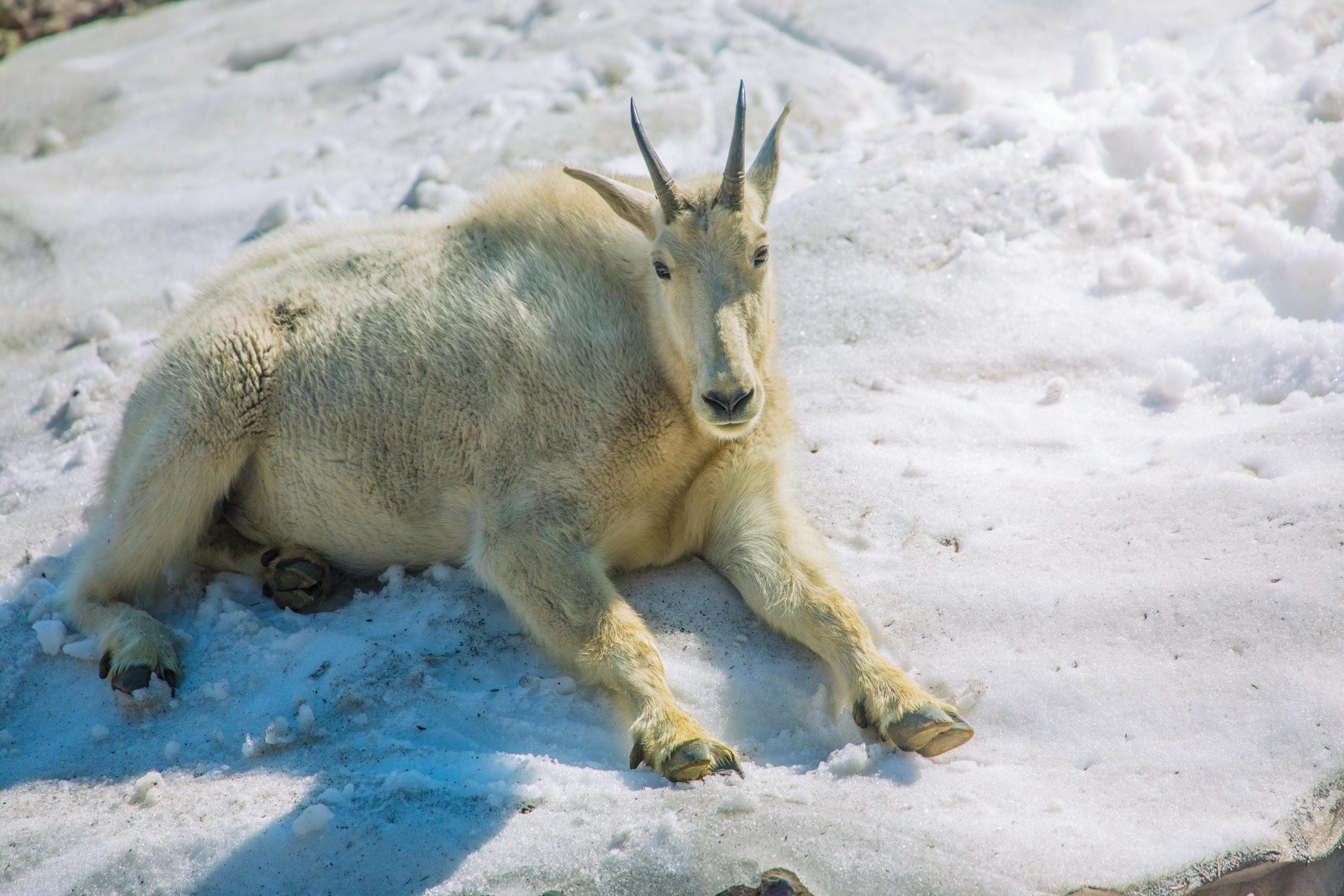
The mountain goat is one of the park's most inconic creatures. It is the only living member of its genus and is more closely related to caprines (the chamois of Europe and the gorals and serows of Asia) than to domesticated goats.
Mountain Lions
The mountain lion (Puma concolor), also known as the cougar, is one of the two largest cat species in North America and is a top predator native to Glacier. The subspecies in Glacier is the North American cougar (P.c. couguar).
Northern River Otters
The northern river otter is the most aquatic member of the weasel family. They can swim underwater up to 6 miles per hour (9.6 kph) for two to three minutes at a time. They aren't as agile or fast on land unless they find snow or ice, where they can move rapidly by alternating hops and slides reaching speads of 15 miles per hour (24 kph)
Osprey
A large bird with a slim body, the osprey has long, narrow wings that have a sharp bend in flight resembling the letter “M.” Ospreys have dark-brown feathers on their back and are white underneath. They also have a notable dark mark at the “wrist” of their wing. An osprey’s call is high-pitched with a series of short, slightly wavering screeches that sound like “too-too-too-tee-tee-tee-tee-too-too.”
Owls
There are four species of owls documented within Glacier, but their nocturnal nature may make it difficult to hear or see one of them while visiting.
Pikas
The American pika, a member of the order Lagomopha, is not a rodent, but related to rabbits and hares. Piles of drying vegetation, called haystacks, and a distinctive high-pitched call are the most recognizable indicators of active pika habitat. Pikas are sensitive to temperatures above 77.9°F (25.5°C); therefore, they are most active during cooler parts of the day.
Red Foxes
Red foxes are found throughout the northern hemisphere. In Glacier, they are adapted to a wide range of habitats, from open grasslands to dense forests. Most abundant in riparian areas and along the edges of forests, they are the smallest of the canids found in the park. Red foxes occur in several color phases, but they usually have reddish-yellow coats that are somewhat darker on the back and shoulders, black "socks" on their lower legs, and a white-tipped tail.
Take a Full Day Hike in Glacier
Glacier is a hiker’s paradise. Spend your whole day in nature on one of these popular trails.
Duration: 5-12 Hours
Take a Half-Day Hike in Glacier
Glacier is a hiker’s paradise. Spend part of your day on one of these 3-5 hour hikes.
Duration: 3-5 Hours
Varied Thrush
These secretive birds rarely flaunt their flashy colors. Instead, they sing shyly from dense forests. Adult males have a light orange line over the eyes, blue-gray backs, and a burnt-orange throat and belly separated by a dark breast band but are heard much more often than seen. They have a distinctive song of a long, single whistle on one pitch; it can sometimes be mistaken for a human distress whistle.
Visit One of Glacier's Historic Lodges
Step inside one of the historic lodges and pretend you are a traveler on the Great Northern Railway in the 1910s.
Duration: 1-3 Hours
Weasels
Glacier National Park has many members of the weasel family that call the park home. Two of those animals are the short-tailed weasel or ermine (Mustela erminea) and the long-tailed weasel (Mustela frenata).
White-Tailed Ptarmigan
The white-tailed ptarmigan is a medium to large chicken-like member of the grouse family. They are completely white in winter and barred grayish-brown in summer with white wings and tails and feathered feet. Breeding males will have a broad band of black markings across the chest and have red eye combs. Like chickens, they make clucking noises.
Wolverines
A mid-sized carnivore in the weasel family, the wolverine is active throughout the year in cold, snowy environments to which it is well-adapted. Wolverines are rarely seen and inhabit remote terrain. They are also known as one of the rarest and most elusive carnivores on the planet.
Visitor centers
Apgar Visitor Center
Apgar Visitor Center is located 2 miles east of the West Glacier entrance to the park. Rangers are on duty to assist with trip planning. The visitor center is the hub for the Going-to-the-Sun Road shuttle system on the west side of the park.
Get directionsLogan Pass Visitor Center
The Logan Pass Visitor Center sits atop the Continental Divide at 6,646 feet. The visitor center houses exhibits on the plants and animals found in the sub-alpine region of the park. Numerous exhibits outside the visitor center tell the story of geology, climate change, and life in the harsh alpine world above treeline. Logan Pass is perhaps the most crowded location in the park with the parking lot filling to capacity early in the morning. Plan to arrive early or visit later in the afternoon.
Get directionsSt. Mary Visitor Center
The St. Mary Visitor Center is located just inside the east entrance of the park near the community of St. Mary, Montana. Rangers are on duty inside to assist with trip planning. A park film is shown throughout the day. Exhibits highlight the rich Native American history associated with Glacier National Park.
Get directions
Webcams
Apgar 2
Currently unavailable.
Apgar Mountain
Currently unavailable.
Apgar Village
Currently unavailable.
Apgar Visitor Center Plaza
Currently unavailable.
Glacier Night Sky Webcam
Currently unavailable.
Lake McDonald - 1
Currently unavailable.
Lake McDonald - 2
Currently unavailable.
Logan Pass - 1
Currently unavailable.
Logan Pass 2
Currently unavailable.
Logan Pass Parking Lot
Currently unavailable.
Many Glacier
Currently unavailable.
Many Glacier - 2
Currently unavailable.
Middle Fork of the Flathead River
Currently unavailable.
Park Headquarters
Currently unavailable.
Snowball, Snowflake and Chilly Are Back!
Currently unavailable.
St. Mary Visitor Center
Currently unavailable.
St. Mary Visitor Center - Dusty Star Observatory Sky Cam
Currently unavailable.
St. Mary Visitor Center Osprey Nest
Currently unavailable.
The Ground Squirrels are Awake
Currently unavailable.
Two Medicine
Currently unavailable.
Two Medicine 1
Currently unavailable.
West Entrance
Currently unavailable.
Hours of operation
Glacier National Park
Glacier National Park is open 24 hours a day 365 days of the year. An entrance fee is required, even when entrance stations are not staffed. Instructions are available at each entrance for self-payment.
Mon
All Day
Tue
All Day
Wed
All Day
Thu
All Day
Fri
All Day
Sat
All Day
Sun
All Day
Activities
Weather
Glacier's weather is highly variable and can be extreme. Expect warm, sunny summer days but be ready for any type of conditions. In the winter, temperatures can fall well below freezing and typically the park receives considerable amounts of snow. Glacier's geography, straddling the Continental Divide, sets the stage for clashes of two very different climates. Warm, wet Pacific air moves in from the west, and cold, dry Arctic air flows from the northeast. They meet at the Divide.
Contact
Photos
Stay near this park
No horse-friendly stays listed near Glacier National Park yet. Know a great barn or property? Help fellow riders by listing it.
List your propertyDirections
Glacier National Park is located in the northwest corner of Montana along the spine of the Rocky Mountains. By car you can access Glacier via Highway 2, which runs along the southern boundary of the park. You can reach the east side of the park via Highway 89. The nearest airports are in Kalispell and Great Falls, Montana.
Source: nps.gov