
Danger
Fire activity in Walhalla Plateau area
Fire activity is occurring in the Walhalla Plateau area. There are no trail or area closures. Backcountry permits for the Walhalla Plateau are temporarily on hold.
Caution
Critical Backcountry Updates/Closures
Visit this link for the inner canyon weather forecast, current trail closures, today's heat risk, and drinking water availability.
More infoInformation
What's Closed and What's Open: South Rim & North Rim
Visit this link for a list of the available visitor services in Grand Canyon Village, Desert View, and the North Rim.
More infoDanger
Stage 2 Fire Restrictions—HIGH FIRE DANGER
Stage 2 fire restrictions for South Rim and Inner Canyon begin Friday, June 26 at 12 pm, due to strong winds, critically low relative humidity, and exceptionally dry vegetation across northern Arizona. No wood or charcoal fires, outdoor smoking (except in vehicles), explosives, and certain engines except street legal vehicles. Follow link for more details on restrictions and exceptions.
More infoGrand Canyon National Park
AZ · Grand Canyon Village
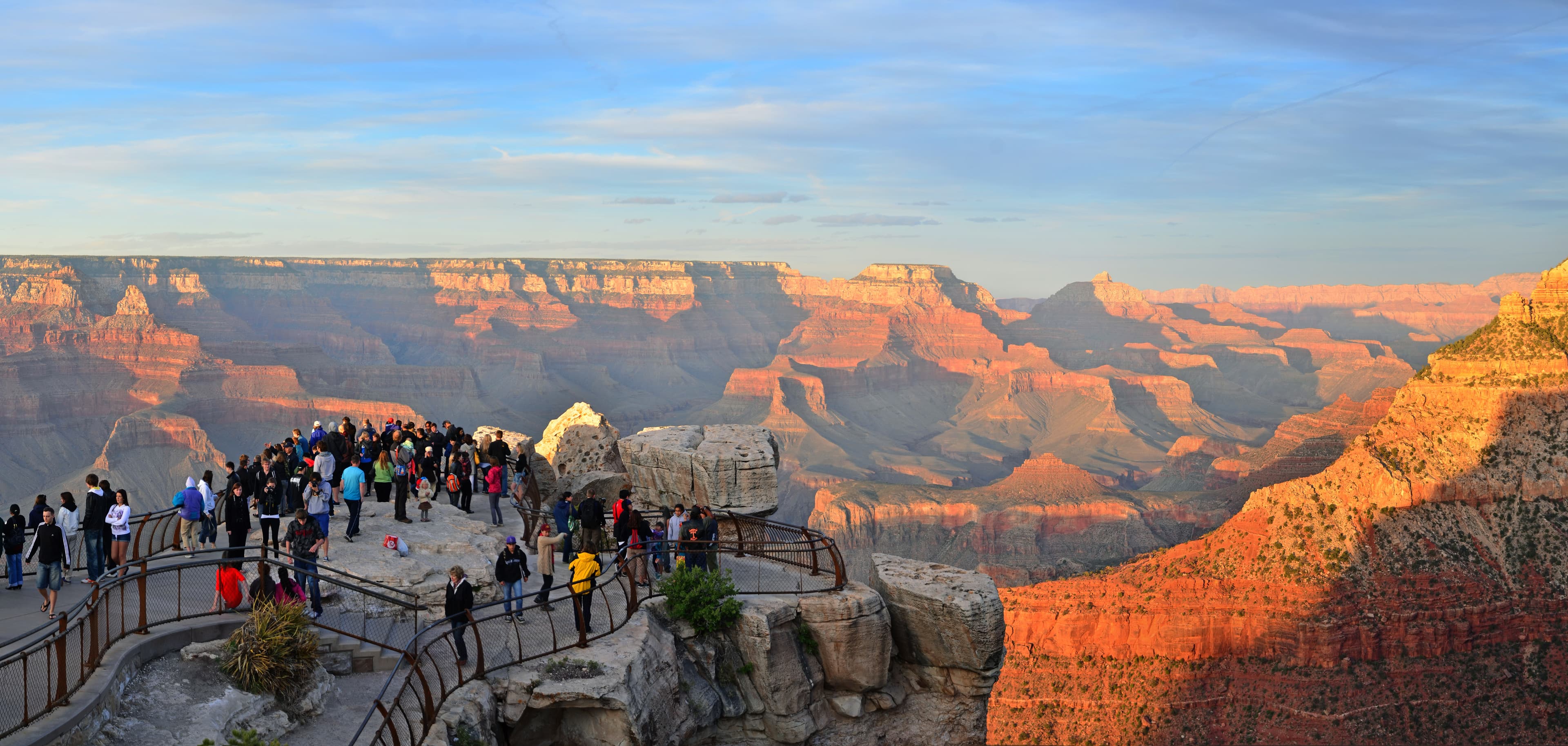
Entirely within the state of Arizona, the park encompasses 278 miles (447 km) of the Colorado River and adjacent uplands. Located on the ancestral homelands of 11 present day Tribal Communities, Grand Canyon is one of the most spectacular examples of erosion anywhere in the world—a mile deep canyon unmatched in the incomparable vistas it offers visitors from both north and south rims.
Riding guide
Horses provided
Highlights
Grand Canyon National Park offers one of the most iconic riding landscapes in the world.
Riding
Rideable terrain here is noted as 150-200 miles, giving riders a clearer sense of scale before they ever unload. Grand Canyon National Park offers one of the most iconic riding landscapes in the world. Along the rims, equestrians can explore designated trails with sweeping canyon views, while guided mule rides descend into the canyon on historic routes. With dramatic elevation changes, desert climate extremes, and carefully regulated stock access, riding here requires thoughtful planning. For prepared riders, the experience is unforgettable; layered red rock, vast open sky, and a sense of scale unlike anywhere else in North America.
Rideable terrain
150-200 miles
Trailer parking
South Rim — Backcountry Information Center Parking Lots • Located near the South Rim entrance and Backcountry information center • Day and overnight parking available (longer trailers ok) • Closest access point for South Rim stock trailheads into the backcountry • Start point for trails like Bright Angel and South Kaibab (stock-legal up to limits) Many riders stage here before heading into inner canyon backcountry routes. South Rim — Mather Campground (Equestrian Sites) • Some sites at Mather Campground are designated to accommodate trailers, including horse trailers • Identified in the park’s reservation system as horse-friendly sites • Good staging if you’re camping before a multi-day ride Better suited for riders who want to combine horse camping with rim trail access. North Rim — Backcountry Information Center / North Kaibab Parking • Limited but trailer-accessible areas near North Rim trailheads • Best for riders accessing North Kaibab Trail or nearby stock-legal forests • Note: North Rim facilities are more rustic and seasonal (often closed in winter due to snow) This is ideal if you’re planning North Rim or Tuweep rides.
Horse regulations
People have explored the canyonlands area on horseback for over a hundred years. In fact, many routes created by cowboys and sheepherders have become popular four-wheel-drive roads and hiking trails. However, resource concerns, including disease transmission from stock to wild animals and the spread of exotic plant species, have necessitated special regulations for visitors wishing to ride in the park today. Lack of water is a limiting factor for pack and saddle trips in Canyonlands, as only a few areas have reliable sources. Road conditions can vary through the year. Contact a visitor center for information about current conditions. Pack and saddle stock may be taken on all designated four-wheel-drive roads and in Horseshoe Canyon. Cross-country travel is prohibited. Pack and saddle stock include horses, burros or mules. Pets are prohibited in the backcountry.Equines have been part of the Grand Canyon story from the beginning. Horses and mules helped build the canyon’s earliest trails, carried visitors into the depths long before paved roads, and continue to assist with trail maintenance today. Riding here offers a historic perspective and a uniquely immersive way to experience one of the most dramatic landscapes in North America. If you plan to bring your own horse, you must check in with the Backcountry Information Center before riding. Riders are fully responsible for their safety, their animals, and compliance with all park regulations. What Riders Need to Know Group Size Limits Overnight trips are limited to six equines with riders. Day use is limited to twelve equines with riders. One rider may lead up to five animals tied single file. Maximum one pack animal per hiker. Permits Day riding does not require a permit, but check-in is required before departure. Overnight use in the Inner Canyon or North Rim requires a backcountry permit. Permits operate on a lottery system up to four months in advance and may sell out. Health Requirements Each equine must carry proof of a negative Coggins test. Stock Restrictions Only horses, mules, and burros are allowed. Llamas, goats, and other stock are prohibited. Shoeing Requirements If snow or ice is present or forecasted, caulked shoes are required. Trail Access Stock is allowed only on designated routes and primitive roads. Horses are not permitted on paved roads except when crossing to access approved trails. Major stock-accessible routes include: South Rim Primitive roads open to vehicles Arizona Trail Bridle paths between South Kaibab, Bright Angel Trailhead, and Mather Campground Inner Canyon Bright Angel Trail (no river crossing) South Kaibab Trail (Colorado River crossing via Black Bridge) North Kaibab Trail Tonto Trail (limited sections) Plateau Point Trail North Rim Primitive roads Arizona Trail North Kaibab Trail Ken Patrick Trail Uncle Jim Trail Tuweep Area Primitive roads Saddle Horse Loop Trail No camping or trailers allowed at Tuweep. Yielding & Travel Timing Commercial mule strings always have the right-of-way. Riders must pull off the trail and yield, backtracking if necessary. Certain inner canyon trails have directional travel windows to reduce congestion and improve safety. Riders should confirm current timing restrictions with the Backcountry Information Center before departure. Horse Camping South Rim Horse Camp (Mather Campground) Two designated horse sites with corrals, water troughs, picnic tables, and trailer access (up to 30 ft). Reservations required. North Rim Horse Camp One seasonal site near the North Kaibab Trailhead. Small corral, water (seasonal), six-animal limit. Inner Canyon Camps Bright Angel and Cottonwood Campgrounds each allow one equine group per night with permit. Hitch rails available; no corrals. Grazing is not permitted anywhere in the park. Feed & Water Rules • Only certified weed-free forage is allowed (proof required) • Forage may not be taken beyond trailheads • Use pellets, cubes, or processed feed in the backcountry • Feed must be packed out if unused • Store feed in rodent-proof containers or hang properly at camp • Animals may drink from natural crossings but may not linger in streams Parking South Rim offers day and overnight parking near the Backcountry Information Center. North Rim parking is limited, confirm before arrival.
Getting here
Use 8 S Entrance Rd, Grand Canyon Village, Arizona as your primary planning reference before you haul in. South Rim — Backcountry Information Center Parking Lots • Located near the South Rim entrance and Backcountry information center • Day and overnight parking available (longer trailers ok) • Closest access point for South Rim stock trailheads into the backcountry • Start point for trails like Bright Angel and South Kaibab (stock-legal up to limits) Many riders stage here before heading into inner canyon backcountry routes. South Rim — Mather Campground (Equestrian Sites) • Some sites at Mather Campground are designated to accommodate trailers, including horse trailers • Identified in the park’s reservation system as horse-friendly sites • Good staging if you’re camping before a multi-day ride Better suited for riders who want to combine horse camping with rim trail access. North Rim — Backcountry Information Center / North Kaibab Parking • Limited but trailer-accessible areas near North Rim trailheads • Best for riders accessing North Kaibab Trail or nearby stock-legal forests • Note: North Rim facilities are more rustic and seasonal (often closed in winter due to snow) This is ideal if you’re planning North Rim or Tuweep rides.
Planning your visit
• This is extreme desert terrain. Summer heat in the Inner Canyon regularly exceeds 100°F, while rim temperatures can be dramatically cooler. Plan for major elevation changes and temperature swings. • The elevation change is serious. Descending into the canyon means a long, demanding climb back out. Condition your horse accordingly and plan water carefully. • Wilderness permits are required for overnight stock trips in the Inner Canyon and on the North Rim. Permits operate on a lottery system and fill quickly. • Commercial mule strings have priority on corridor trails. Riders must yield completely and follow specific directional travel windows on certain routes. • Grazing is not permitted. Only certified weed-free forage is allowed, and forage cannot be taken beyond trailheads. • Snow, ice, and monsoon storms can impact trail safety depending on season. Caulked shoes are required when snow or ice is present. • Parking and trailer access vary by rim. South Rim is more developed; North Rim is seasonal and limited. • This park is highly regulated. Check in with the Backcountry Information Center before riding, even for day use.
Where to stay
Grand Canyon Visitor Center is the main visitor-contact point tied to this destination, which is helpful when you want current conditions, maps, and stock-use updates before riding. This entry indicates both guided ride support and horse-camping potential, making Grand Canyon National Park one of the more flexible federal options for riders building a fuller travel plan. For a polished trip plan, pair the ride with lodging, fuel, and resupply planning in or near Grand Canyon Village before heading deeper into federal-land access points.
Entrance fees & passes
- $35.00
Entrance - Private Vehicle
Admits one single, private, non-commercial vehicle and all its passengers, up to a 15 person passenger van. Organized non-commercial groups over 16 passengers require different charges. Commercial groups are not eligible for the vehicle permit.
- $30.00
Entrance - Motorcycle
Valid for 7 days. Admits up to 2 private, non-commercial motorcycles with up to 4 total passengers.
- $20.00
Entrance - Per Person
Individual ($20 valid for 7 days): for bicyclists, hikers, and pedestrians.
- $100.00
Nonresident
Each non-US resident aged 16 and older visiting Grand Canyon National Park must pay a $100 nonresident fee (in addition to the standard entrance fee), unless admitted with an Annual or America the Beautiful Pass. This includes nonresidents entering as part of a commercial tour group, commercial use authorization (CUA) group, or concessioner tour group.
- $70.00
Annual Entrance - Park
Available to the general public for purchase for unlimited visits to Grand Canyon National Park only. This is an annual pass, valid one year from month of purchase; it is non-transferable. It admits the pass holder and any accompanying persons in a single, private, non-commercial vehicle, or the pass holder and accompanying immediate family (spouse, children, parents) when entry is by other means (train, shuttle, bicycle, or foot).
Trails
No trails synced for this park yet.
Campgrounds
Desert View Campground (Reservations Required)
49 sites
At the East Entrance, Desert View Campground offers a peaceful setting with 49 campsites. 30 feet (9.1 m) combined total length is the maximum length for RVs or vehicles pulling travel trailers. Campsites are available by reservation only at www.recreation.gov and can be made up to 6 months in advance, Sat. April 11, through the night of Sun. October 18, 2026. Make reservations online or call (877-444-6777). It is possible to make same day call-in and/or online reservations.
Reserve a siteMather Campground - South Rim
327 sites · 2 horse-friendly
Mather Campground is located in Grand Canyon Village on the South Rim of Grand Canyon National Park. There are 327 sites. Each includes a campfire ring/cooking grate, picnic table, parking space and room for up to six people, three tents, and two vehicles. There are flush toilets and drinking water throughout the campground. No hookups are available, however there is a free dump station. Most RV spaces are pull-through.
Reserve a siteTrailer Village RV Park - South Rim
123 sites
Trailer Village is the only in-park RV campground with full hookups (sewage, water, and electrical with 30 amp and 50 amp sites available) Open year-round, Trailer Village features paved pull-through sites which can accommodate vehicles up to 50 feet long. Trailer Village is operated by Delaware North. Reservations can be made up to 13 months in advance. If visiting during the busy season (May through October) making reservations 1 year in advance is recommend. Visit their website to make reservations.
Reserve a site
Points of interest
Angels Window
POIA short, easy side trail from the paved Cape Royal trail leads to an area above Angels Window, which offers visitors the chance to stand over a natural arch and enjoy a magnificent viewpoint. Railings and fencing secure the area. However, walking above Angels Window may not be a good idea if you are afraid of heights.
Animal Life Appeared About 630 Million Years Ago
POIThe record of life and the stories of the diverse creatures that once lived here are captured in the rocks that make up the walls and cliffs of Grand Canyon today in the form of fossils, tracks, and various clues deciphered by paleontologists.
Arizona Steakhouse (at Bright Angel Lodge)
POIThe Arizona Steak House (at Bright Angel Lodge) Located on the east side of Bright Angel Lodge in the South Rim Village Historic District; the Arizona Steakhouse is one of the few restaurants in the park offering canyon views from the dining area. Southwestern flavors and ingredients inspire the cuisine. ► Follow the link for current hours of operation.
Backcountry Information Center
POIBackcountry Info Center is open daily from 8:00 am to noon and 1:00 pm to 5:00 pm. It provides backcountry information, permits, and trip planning assistance about day and overnight hikes into the canyon. The building is located in the village by Parking Lot D, and across the railroad tracks from Maswik Lodge. Park in Lot D, then take the free shuttles around the village and out to scenic overlooks. Early morning Hiker Express Bus travels from here to South Kaibab Trailhead.
Backcountry Information Center Bus Stop - Village (Blue) Route
POIParking Lot D has 150 standard parking spaces, and 30 sized for RVs or buses. The Backcountry Information Center provides restrooms, water, trail information, and helpful park rangers ready to answer your questions and help plan your trip. (Permits are required for all overnight trips into the canyon.) The early morning Hikers' Express shuttle bus also stops here daily on its way to the South Kaibab Trailhead. Visit the link for current schedules.
Bridle Path (North End)
POIFrom the North Kaibab Trailhead, the Bridle Path climbs a hill then parallels the road (AZ 67) reaching the large parking area of the former Grand Canyon Lodge in 1.6 miles (2.6 km); allow one hour - one way. Pets on a leash, stock use, and bicycles are permitted on this hard packed trail. The 2026 North Rim season will focus mainly on day use and limited backcountry access, with some scenic drives, viewpoints, and trails.
Bridle Path (South End)
POIFrom the north end of the large parking area of the former Grand Canyon Lodge, the Bridal Path parallels the road (AZ 67) reaching the North Kaibab Trailhead in 1.6 miles (2.6 km). allow one hour - one way. There is minimal elevation gain. Pets on a leash, stock use, and bicycles are permitted on this hard packed trail. The 2026 North Rim season will focus mainly on day use and limited backcountry access, with some scenic drives, viewpoints, and trails.
Bright Angel Fault Fossil Beds
POIThousands of feet of exposed rock layers at Grand Canyon provide a veritable playground for scientists to explore and this site tells the tale of a world far different than the one we see here today. With careful eyes the exposed fossilized remains of creatures from an ancient marine environment can be seen.
Bright Angel Lodge
POIBright Angel lodge is located right along the canyon's edge in the Village Historic District. Opened in 1935, the lodge has a gift shop, a history room, and offers several dining options: Bright Angel Fountain/Coffee and Grab and Go, Harvey House Café, a casual family-friendly restaurant, and the Arizona Steak House. ► Follow the link for more information and the restaurant hours of operation.
Bright Angel Lodge Bus Stop - Village (Blue) Route
POILocated on Village Loop Road and just east of Bright Angel Lodge, this shuttle stop offers quick access to the canyon rim. Thunderbird and Kachina lodges (guest rooms) and Bright Angel Lodge (including Fred Harvey Burger, Bright Angel Coffee Bar and Fountain). The early morning Hikers' Express Shuttle, with service to South Kaibab Trailhead, also departs daily from this stop. Visit the link for the current schedules.
Bright Angel Trail
POIBright Angel Trail lets hikers walk in the footsteps of the canyon's Indigenous peoples, miners, and early tourists, as they descend into the canyon's depths. Offering outstanding views, morning and afternoon shade, resthouses, vault toilets, and water stations during the summer. Visit the link for the current list of trail reopenings and closures.
Bright Angel Trailhead
POIBright Angel Trailhead is located just west of Bright Angel Lodge, Lookout Studio, and Kolb Studio. At 6,840 feet (2,085 m), it provides access for hikers and mules to many inner canyon destinations. From the Hermit Road Interchange shuttle bus stops, it is a short walk to the east, and up a hill, on a paved path to the trailhead.
Buckey O'Neill Cabin
POIThis cabin is the only remaining building from the early pioneer settlement era of the Village. Built on this site in 1895 by William Owen "Buckey" O'Neill, the 2-room office and bunkhouse—complete with v-notched logs, rough mortar chinking, and a native stone chimney—was the rustic home of Buckey and his wife while they operated a small hotel on the South Rim.
Buggeln Picnic Area
POIThe Buggeln picnic area features vault toilets, multiple picnic tables, shade, and exhibit panels describing the local forest habitat; no water. There is no direct view of the canyon from this site, but a few small glimpses can be seen through the gaps in the trees. The small, teardrop-shaped parking area is fine for cars and small RVs, but larger vehicles and those towing trailers will find turning around a bit tight.
Camper Services — Laundry and Showers
POICamper Services (Laundry and Showers) is located near the entrance to Mather Campground. Hours of Operation: 7:00 am to 10:00 pm daily. Last laundry load: 9:00 pm — Last shower: 9:45 pm. The Camper Store is open from 7:00 am to 8:00 pm. Adjacent to Camper Services is a free dump station and potable water filling station for RVs. Several picnic tables are located outside the building. This facility also serves nearby Trailer Village RV Campground.
Canyon Adventures Bike Tours & Café —Visitor Center Plaza
POICanyon Adventures Bike Tours & Café offers bicycle, eBike, stroller, and wheelchair rentals, as well as a full espresso bar and grab-and-go sandwiches, salads, pastries, drinks, and more. Hours: 8 am to 5 pm daily. Located in the South Rim Visitor Center's Plaza, adjacent to Parking Lot 4. During spring, summer and fall, guided bicycle tours are available. Some outdoor accessories are also on sale, like hats, sunglasses, water bottles and trekking poles.
Canyon Village Market & Deli
POICanyon Village Market & Deli is located in Market Plaza, across the parking lot from Yavapai Lodge and next to the US Post Office. The market has a large selection of groceries and souvenirs, along with outdoor gear for campers and backpackers. ► Follow the link for current hours of operation.
Cape Final
POINamed by geologist Clarence Dutton in 1880, Cape Final Overlook rewards hikers for their 4.2 miles (6.8 km) round-trip hike. According to Dutton, "Point Final is doubtless the most interesting spot on the Kaibab." Backcountry camping is possible; however, you must first obtain a permit in advance from the Backcountry Information Center.
Cape Final Trail
POIThe trail begins from a small dirt parking lot alongside Cape Royal Road, 2.4 miles (3.9 km) north of the Cape Royal parking lot. This relatively flat, forested trail leads hikers to the end of Cape Final, for a 4.2 miles (6.8 k) round trip hike. The first half of this rocky trail is entirely within the forest, but views of Grand Canyon begin peeking through the trees around halfway. The trail comes to an end at Cape Final, one of the North Rim's most spectacular viewpoints.
Cape Royal
POIAt the end of Cape Royal Road, Cape Royal and Angel's Window are some of the only spots with views of the Colorado River from the North Rim. From the southeast side of the parking lot, a short wheelchair-accessible path leads to several spectacular viewpoints. The west side of the parking lot is where you can find a picnic area. From the overlook, visitors can see the Painted Desert and towering formations such as Freya Castle and Vishnu Temple.
Cape Royal Road (North Rim Scenic Road)
POIDuring the North Rim's 2026 season, Cape Royal Road offers a scenic drive leading to diverse viewpoints and several trailheads. NOTE: RVs over 22 feet long, and vehicle + trailers with a total length over 22 feet, are not permitted because of the narrow roadway. Plan ahead and be prepared for a more remote, limited-services experience this year as fire recovery efforts continue. Potable water will not be available - bring enough for the duration of your visit.
CCC Legacy and Transcanyon Line Monument
POIMany of our national parks have benefited from the hard work of the Civilian Conservation Corp (CCC) and Grand Canyon is no different. This site marks where CCC workers built the transcanyon telephone line in 1935.
Center Road Bus Stop - Village (Blue) Route
POIThis bus stop along the Village (Blue) Route provides direct access to Parking Lot C, a small public lot with 38 spaces, but often one of the last parking areas to fill during busy days. This stop is centrally located within the historic district of Grand Canyon Village with historic buildings located to the east, north and west of this point. Visit the link for the current schedule.
Cliff Spring Trail
POIThe Cliff Spring Trail is a short, unique trail is accessed from a pullout on the left side of a curve in Cape Royal Road, 0.3 miles (0.5 km) from Cape Royal. The trail heads down along a wash down into a forested ravine. After passing an archaeological site, the trail descends further, reaching the spring at the base of a cliff. Do NOT drink the water.
CLOSED - Ken Patrick Trail - West (N. Kaibab Trailhead)
POIThis section of the Ken Patrick Trail, from the South Kaibab Trailhead to Cape Royal Road, is closed, due to damage from the Dragon Bravo wildfire. The 2026 season will focus primarily on day use and limited backcountry opportunities, with access to select scenic drives, viewpoints, and trails. Visitors should be prepared for a remote, limited-services environment, with no potable water, fuel, lodging, or other visitor services available on the North Rim in 2026.
CLOSED - North Rim Campground Laundry and Showers
POIThe North Rim Laundry and Showers Building, at the entrance to the North Rim Campground, is CLOSED for the 2026 season. The Campground Dump Station is also CLOSED. The General Store (at the entrance to the campground) is open daily May 15 through September 7, from 9 am – 4 pm for dry goods and bottled water. The Service Station is also open May 15 through September 7, with 24-hour self-serve pay-at-the-pump gas and diesel.
CLOSED - Uncle Jim Trail
POIThe Uncle Jim Trail is CLOSED until further notice because of extensive damage from the Dragon Bravo Wildfire. —The Uncle Jim Trail was a loop trail accessed via the Ken Patrick Trail from the North Kaibab Trailhead parking lot. Both the Uncle Jim Trail and the Ken Patrick Trail west of Cape Royal Road are CLOSED during the 2026 season.
Desert View Amphitheater
POIDesert View Amphitheater has several rows of stone benches; all have an excellent view of Grand Canyon. Ranger talks, cultural presentation and special events are held here.
Desert View Entrance Station
POIApproximately 30 miles (48 km) west of Cameron, AZ, and 23 miles (37 km) east of Grand Canyon Village, the Desert View Entrance Station serves as a secondary gateway to the South Rim and the primary portal to the Desert View area. It is open 24 hours/day, 7 days/week. This entrance reduces driving time for motorists traveling to/from Southwestern Colorado, Southern Utah, New Mexico and Phoenix, Arizona.
Desert View Gas Station
POISelf-service gasoline and diesel fuel (pay at the pump with credit/debit card) is available year-round, 24 hours a day. Inside, a Camper Store is open 9:00 am to 5:00 pm daily. The park's only gas station on the South Rim offers visitors one last chance to fill-up before heading to the next closest gas stations 30 miles (48 km) east in the town of Cameron, Arizona —or 30 miles (48 km) west in the town of Tusayan, Arizona (just outside of the park's south entrance).
Desert View Market & Deli
POILocated on the eastern side of the Desert View settlement, near the restrooms, the market sells groceries and souvenirs, clothing, including t-shirts, keychains and coffee mugs. Stock up on groceries for camping, or road trip snacks and drinks. The deli counter is inside the building with indoor seating. There is additional seating outside. ► Follow the link for current hours of operation
Desert View Point
POIBelow Desert View Point, the Colorado River makes a sharp 90-degree turn to the west, cutting directly into a major uplift. Looking to the west, one can glimpse in the distance where the river plunges into the black, narrow, confined depths of the Granite Gorge. Note: the plaque and stone memorial commemorate the 1956 Grand Canyon TWA-United Airlines Aviation Accident Site was relocated to Navajo Point, just west of here, along Desert View Drive.
Desert View Trading Post and Ice Cream
POIWithin sight of Desert View Point and the Watchtower, the Trading Post is just up the walkway from the rim of the canyon. A snack bar is located inside the Trading Post. It offers ice cream, sweet treats and coffee drinks. There is also an outdoor patio. When it comes to authentic Native American crafts, the trading post gallery/shop features handicrafts from Grand Canyon's associated tribes. ► Follow the link for the current hours of operation
Desert View Watchtower
POIDesert View Watchtower Retail Store (View Room) is open daily: 8 am to 7 pm. The upper tower floors are open, when staffing allows, from 8 am to 6 pm. Last tower access is at 6 pm, with the stairs closed for the day at 6:30 pm. A ticket system admits 25 people with a 20-minute time limit. Last tickets for the day are handed out at 5:40 pm. The Watchtower was constructed in 1932; designed by Mary Colter and based on Ancestral Puebloan architecture.
Duck on a Rock
POIThis unsigned pull off on Desert View Drive offers plenty of parking for cars, larger vehicles, and RVs to stop and view Grand Canyon and a well-known rock formation.
Edge of Vastness Wayside
POIIt can be hard to put into context how vast Grand Canyon is. Nestled between the Kolb Studio and the Bright Angel Trail, this wayside attempts to put it into perspective, while offering sweeping overlooks of the canyon itself.
El Tovar Hotel
POILocated right on the rim of Grand Canyon, historic El Tovar Hotel features a fine dining room, lounge, gift shop, and newsstand. Guests can expect full bell service, a lobby concierge, and in-room dining. *Advanced reservations are required for lunch and dinner at El Tovar Dining Room. (928) 638-2631, ext. 6432. ► Follow the link for current dining room and lounge hours or operation.
El Tovar Monument
POIThe first modern hotel constructed in the Village, El Tovar Hotel eventually became the eventual heart of Grand Canyon National Park, and a National Historical Landmark. Constructed to the highest standards of the time, El Tovar Hotel helped lure visitors to a remote and rough canyon region.
Grand Canyon Conservancy
POIGrand Canyon Conservancy (GCC) is the official nonprofit partner of Grand Canyon National Park, funding projects not covered by federal money.
Grand Canyon Kennel
POILocated on the South Rim near Maswik Lodge, Grand Canyon Kennel is operated by Xanterra, and accepts dogs and cats only. Reservations are highly recommended, especially during spring break and summer. The kennel is open 7:30 am – 5 pm, 7 Days/Week. Overnight boarding is available. The kennel can provide a safe place for your furry friend to stay while you explore all that Grand Canyon has to offer.
Grand Canyon National Park Headquarters
POIPark Headquarters is currently closed to the public. Between 1957 and 2001, this building was the South Rim Visitor Center. Basic trip planning and hiking information, along with ranger program schedules are posted on signs in front of the building. A paved footpath, just beyond the left side (southwest side) of the building reaches the canyon rim in 0.5 mile/ 0.8 km.
Grand Canyon Pioneer Cemetery
POILocated next to Shrine of the Ages the Grand Canyon Pioneer Cemetery is the final resting place of many historical figures involved in the development and protection of Grand Canyon as a National Park. Captain John Hance, Ralph Cameron, Pete Berry, Ellsworth Kolb, Gunnar Widforss, and Eddie McKee are just a few of the folks you might visit here.
Grand Canyon South Entrance Station
POIThe South Entrance Station is the entry point for most visitors to Grand Canyon National Park. It is the closest entrance to Grand Canyon Village on the South Rim. The entrance is open 24 hours/day and 7 days/week, unless closed by snow. Located in Arizona, it is 5 miles (8 km) north of the gateway town of Tusayan; 55 miles (89 km) north of Williams, Arizona via SR 64 from I-40; and 80 miles (129 km) north of Flagstaff via US 180,
Grand Canyon's Rocks Are Incredibly Old
POIGeologically speaking, the canyon is considered to be a "young" feature, having largely been eroded in just the last few million years. But the rocks of Grand Canyon are a different matter entirely. The age range of Grand Canyon's rocks encompasses over 1.5 billion years of Earth's past, from the oldest known rock, at an ancient 1.8 billion years old, to the youngest, a mere 270 million years old.
Grand Canyon Visitor Center Shuttle Bus Terminal
POIThis terminal is the main hub for the park's free shuttle buses. From here, the Village (Blue) Route shuttle connects the Visitor Center with lodges, campgrounds, the Backcountry Information Center, and Market Plaza (general store, deli, and U.S. Post Office). The Kaibab Rim (Orange) Route travels eastbound to South Kaibab Trailhead, or westbound to Yavapai Geology Museum. During summer only, the Tusayan (Purple) Route transports visitors to the gateway community of Tusayan.
Grandeur Point
POIThis location offers one of the better views of the layers and depths of the canyon in the area of Grand Canyon Village. It also provides especially fantastic aerial views of the switchbacks on the upper and middle portions of Bright Angel Trail.
Grandview Point
POIGrandview Point is one of the most popular South Rim viewpoints in the park. It is located along Desert View Drive (SR 64), halfway between Grand Canyon Village (10.2 miles/16.4 K) and Desert View (13.8 miles/22.2 K). The viewpoint offers breathtaking panoramic views of the canyon and is known for stunning sunrises and sunsets. The Colorado River is visible here. There are vault toilets, and parking for larger vehicles. No drinking water here - so bring your own.
Grandview Trail
POIFirst used by American Indians who gathered mineral paints on Horseshoe Mesa, and later by copper miners, the Grandview Trail is a rocky, exposed, strenuous trail requiring experience and caution. Big steps and extreme pitches intensify this hike.
Hermit Road - Bus Transfer Station - Village (Blue) Route
POIThis shuttle stop provides access to both the Bright Angel Trailhead and the first shuttle stop on the Hermit (Red) Route. During December, January and February, Hermit Road is open to private vehicles, and the Hermit Road Shuttle (Red) Route is not in service. Located at the western end of Grand Canyon Village, this shuttle stop also provides access to the historic village and the paved Canyon Rim Trail heading west along Hermit Road, 7.5 miles towards Hermits Rest.
Hermits Rest Bus Stop - Hermits Rest (Red) Route
POIThis is the final shuttle stop on the Hermit Road (Red) Route, where shuttle buses turn around and begin their 7.5 mile (12.1 km) return trip back to Grand Canyon Village, Hermits Rest provides access to the only water bottle filling station along Hermit Road, restrooms, a snack bar, gift shop, Hermit Trail, the western end of the Rim Trail, and beautiful canyon views. Note: NO BUS SERVICE on Hermit Road during December, January and February.
Hermits Rest (Grand Canyon)
POIHermits Rest is the historic and iconic building at the end of Hermit Road. It offers a gift shop and snack bar. Hours of operations: 9 am to 5 pm daily. From March 1 through November 30, access is by Hermit (Red) Route shuttle bus, on foot, or by bicycle. Restrooms and a water bottle filling station are available outside, behind the main building. Hermits Rest was designed by Mary Colter to resemble an old miner's cabin, with native stonework and a giant alcove fireplace.
Hermits Rest National Historic Landmark Plaque
POIThis square metal plaque celebrates the 1987 designation of Hermits Rest as a National Historic Landmark.
Hermit Trail Grand Canyon
POIThe Hermit Trail was originally built by the Santa Fe Railroad in 1911 and provided access to the developed luxury Hermit Camp and Waldron Basin tourist areas. Today, the Hermit Trail still offers experienced, knowledgeable canyon backpackers a direct link to the excitement and romance of the early days at Grand Canyon.
Historic Community Building
POIThe Community Building is used for community, cultural, educational, and informational events, and the second-floor houses permanent offices. It is not open to the public - exception being special events This wooden two-story building was constructed in 1934-1935 by the National Park Service and Civilian Conservation Corps workers from Company 819. The Public Works Administration (PWA), with help from the local PTA, American Legion, and Masons, funded the construction.
Hopi House
POIHistoric Hopi House, located right on the rim of Grand Canyon, has been offering authentic American Indian arts and crafts for over 100 years, and also carries many other items for sale. The structure was completed in 1905 and is a large, multi-story building of stone masonry, constructed as a replica of a Hopi pueblo, and was originally designed to house the main sales rooms for Fred Harvey Indian Arts gallery and shop. ► Follow the link for current hours of operation.
Hopi House and El Tovar Waysides
POIAs two of the earliest permanent structures catering to the needs of modern visitors in the Grand Canyon Village the El Tovar and the Hopi draw inspiration from two very different locations and cultures yet both were designed to attract people to the wonders and stories of this one-of-a-kind place.
Hopi Point
POIThis viewpoint offers panoramic and breathtaking views of the canyon along the scenic Hermit Road. An ideal location for sunrise or sunset, Hopi Point also offers five views of the Colorado River. Vault toilets available. Shuttle bus only for most of the year. Catch the Hermits Rest (Red) Route Shuttle for access March–November.
Hopi Point Bus Stop - Hermits Rest (Red) Route
POIFrom this stop, follow the path to the right (east) for a more open vista of the canyon at Hopi Point, Also the only vault toilet along Hermit Road between the village and Hermits Rest. Hopi Point is popular for sunrise and sunset. During the day, this stop is OUTBOUND only (to Hermits Rest). After sunset, special buses transport visitors INBOUND - back to the Village, picking up passengers at Hopi Point itself. Note: NO BUS SERVICE on Hermit Road during Dec., Jan. and Feb.
Kachina Lodge
POISitting directly on the rim of Grand Canyon in the center of the historic Village, this lodge is within close walking distance to restaurants, gifts shops, Kolb Studio, Verkamp's Visitor Center, and Bright Angel Trailhead .Kachina Lodge was built in 1968 as part of a plan by the National Park Service to expand services at parks across the country.
Ken Patrick Trail - East (Point Imperial)
POIThis scenic, hilly section of trail follows the rim to Cape Royal Road. Many parts are recovering from wildfire, providing vast views and making it quite exposed to sun, wind, and cold. This is a great hike from Point Imperial, whether you hike the whole section or turn around after a few minutes. — Note: the section of the trail from Cape Royal Road to the South Kaibab Trailhead is CLOSED due to damage from the Dragon Bravo fire.
Kolb Studio
POIThe beautifully restored Kolb Studio once housed the Kolb family home, an auditorium, and a photography studio. The shop on the upper floor now offers books, gifts, and souvenirs, while the lower level features history and art exhibits. Photographers Emery and Ellsworth Kolb helped popularize Grand Canyon, making their studio one of the area’s first visitor attractions. ► Follow the link for hours of operation.
Lipan Point
POIBeginning June 22, 2026, Lipan Point and Lipan Point Road on Desert View Drive (Highway 64) will temporarily close to all visitor use to allow for critical rehabilitation and maintenance work of the overlook. The closure is expected to remain in effect through December 23, 2026. Lipan Point features some of the widest and most expansive canyon views along the South Rim, as well as the longest perspective of the Colorado River.
Lookout Studio
POIDesigned in 1914, Lookout Studio was Mary Jane Colter's vision to create opportunities for visitors to safely view and photograph the natural beauty of Grand Canyon from its edge. Just west of El Tovar Hotel, "The Lookout" is a neat, comfortable, and rustic studio of stone and log timbers. ► Follow the link for current hours of operation.
Maricopa Point
POIThe edge of the South Rim juts out over the canyon on this narrow point, extending northeast for about 100 feet (30 m) before dropping away vertically. The view from Maricopa encompasses over 180 degrees of Grand Canyon, with no significant obstructions between here and the Colorado River.
Maricopa Point Bus Stop - Hermits Rest (Red) Route
POIAlthough there is not a view of Grand Canyon directly from this shuttle stop itself, a short walk from here, through the forest and along the easy, paved path is rewarded with a spectacular, open, panoramic viewpoint which extends far out from the canyon rim. Maricopa Point. Note: NO BUS SERVICE on Hermit Road during December, January and February.
Market Plaza ATM Machines
POIMarket Plaza ATMs are located at Canyon Village Market/Deli, and at Yavapai Lodge (on the opposing side of the parking lot from Canyon Village Market) The Chase Bank Automatic Teller Machine (ATM) adjacent to Canyon Village Market/Deli (General Store) and the U.S. Post Office has been removed.
Market Plaza - Eastbound Bus Stop - Village (Blue) Route
POILocated within Market Plaza, this shuttle stop is on the north side of Parking Lot B, right next to Yavapai Lodge (lodging, gifts, souvenirs, dining). Two J1772 EV charging stations are nearby. Across the parking lot from here, you can see Canyon Village Market and Deli (general store with groceries, souvenirs, and hiking gear), and the U.S. Post Office. From this bus stop, shuttles continue eastbound to Grand Canyon Visitor Center. Visit the link for the current schedule.
Market Plaza - Westbound Bus Stop - Village (Blue) Route
POICrossing the road from this shuttle stop is Yavapai Lodge (lodging, dining, tavern, gifts). Walking around to the other side of the lodge is Market Plaza, on the west side of Parking Lot B. At Market Plaza, the South Rim's business center, you will find the Village Market & Deli (general store, groceries, souvenirs, hiking gear), public restrooms, and the U.S. Post Office. A number of EV Charging Stations are nearby. Visit the link for the current schedule.
Maswik Lodge
POIMaswik Lodge is a 250-room lodging complex nestled within several acres of ponderosa pine forest. The lodge is located a short, 0.25-mile (0.4 km) walk from the canyon's edge. The main building has a registration desk, gift shop, cafeteria style food court, and a pizza pub. Two-story lodging units are located north and south of the main building. ► Follow the link for current hours of operation.
Maswik Lodge Bus Stop - Village (Blue) Route
POIThis shuttle stop is right in front of the main entrance to Maswik Lodge. The Lodge building and adjacent guest rooms are contemporary in style. The main lodge building houses a Registration Desk, Gift Shop, and a Food Court. There is also a transportation desk for booking guided tours. Across the railroad tracks is one end of a large parking lot, (Lot D, with 150 spaces - including 30 for RVs) and a short walk to the Backcountry Information Center. Visit link for schedule.
Mather Amphitheater at Mather Point
POIJust southeast of Mather Point, there is a rim-side amphitheater for ranger programs and special events. Located at one of the most beautiful viewpoints along the South Rim, Mather Amphitheater was built using native limestone and provides several levels of elevated seating for visitors to enjoy breathtaking views of Grand Canyon. It’s an ideal spot to attend ranger-led interpretive programs or for just relaxing and soaking in the canyon views.
Mather Campground Bus Stop - Village (Blue) Route
POIThis bus stop is located near the entrance to the Mather Campground registration "kiosk" building and Camper Services, a pay laundromat and showers. There are more than 300 campsites scattered throughout a ponderosa pine forest, as well as restrooms and water. There are no RV hook-ups. Full hook-ups are available at nearby Trailer Village (next shuttle stop). Campers can leave their vehicles in the campground and access the shuttle system here. Visit the link for schedule.
Mather Point
POIFor many visitors coming to the South Rim, Mather Point offers the first glimpse of a world wonder. A short walk from the Grand Canyon Visitor Center and parking lots 1-4, Mather Point offers an expansive view of the canyon. On a clear day you can see 30+ miles (48 km) to the east and 60+ miles (96 km) to the west. Looking down into the canyon you can see a few small samples of the Colorado River, Phantom Ranch at the bottom of the canyon, and numerous trails.
Mather Point Bus Stop - Kaibab Rim (Orange) Route
POIFrom the Visitor Center shuttle bus terminal, Mather Point is the first stop on the Westbound Kaibab/Rim (Orange) Route. From here the bus travels to Yavapai Geology Museum, then returns directly to the Visitor Center. From this bus stop, a very short walk to the east will take you to a wide open vista of Grand Canyon. However, the wheelchair accessible, Mather Point overlook is a short walk further east (to the right when facing the canyon). Visit link for current schedule.
McKee Amphitheater
POIDuring warmer months, McKee Amphitheater is the primary location for evening ranger programs in Grand Canyon Village. Located just off the connector trail between the Canyon Rim Trail and Park Headquarters, McKee features bench seating in an open-air amphitheater. Programs are not presented every night, so view the park calendar on the website, or mobile app, for the current schedule. In the event of inclement weather, programs will be cancelled.
Mile-and-a-Half Resthouse
POIThis popular day-hike destination along Bright Angel Trail provides relief from the summer heat. Vault toilets are available year-round. During summer, this location is a good source for potable water. Just over 1,100 feet (335 m) below Grand Canyon's South Rim, this first rest area offers visitors a taste of the struggles and rewards Grand Canyon's steep trails present.
Mohave Point
POIAnother spectacular point for watching sunset, Mohave Point offers excellent views of the Colorado River deep in the canyon below. From here you can also see the Salt Creek, Granite, and Hermit rapids.
Mohave Point Bus Stop - Hermits Rest (Red) Route
POIA two-way shuttle stop with separate buses headed both outbound (west) to Hermits Rest and inbound (east) back to the Village, Mohave Point features a spectacular view from the shuttle stop. The main viewpoint, however, is a short walk down the paved trail from the shuttle stop. Mohave Point primarily faces west, with a great view of the Colorado River far below, making this point a popular place for sunset. Note: NO BUS SERVICE on Hermit Road during Dec., Jan. and Feb.
Monument Creek Vista Bus Stop - Hermits Rest (Red) Route
POIA spectacular view of Monument Creek far below and Granite Rapid on the Colorado River can be seen directly from this shuttle stop. This viewpoint is the eastern end of a section of the Greenway Trail, which accommodates both walking and bicycling, which runs west from here past Pima Point almost all the way to Hermits Rest. Note: NO BUS SERVICE on Hermit Road during December, January and February.
Moran Point
POIThis viewpoint is named for Thomas Moran, an artist well known for his landscape paintings of the western United States. His work helped to create many national parks. Explore this point for a good spot to watch the shadows and changing light throughout the day, just as the artist did.
Mule Barn
POIThe Fred Harvey company built the Mule Barn, Livery Stable, and Blacksmith/Saddle Shop in 1906 by to provide support services for the El Tovar Hotel. Based on their historic usage these three buildings were referred to as the Fred Harvey company's "Transportation Department."
Mule Corral
POIBuilt in 1907, the mule barn and corral in the Village house roughly half of the 150 mules used by Xanterra to carry people and cargo into and out of Grand Canyon. If you see a mule headed up or down any trail, be sure to give them the right of way.
Navajo Point
POIJust a few minutes west of Desert View on Desert View Drive, Navajo Point offers a great view of Desert View Watchtower, as well as panoramic vistas to the west and a view north up the Colorado River. Watch for raft trips on the Colorado River as it winds below this highest viewpoint on the South Rim at 7,461 feet (2,275 m). Also located at Navajo Point is the plaque and stone memorial that commemorates the 1956 Grand Canyon TWA-United Airlines Aviation Accident Site.
No Name Point
POIA unnamed and unsigned stopping point along the Desert View Drive, this pull-out still features a large parking area, railings, and a great view of Grand Canyon looking north and northwest.
North Country Healthcare - Grand Canyon Clinic
POIThis location provides medical services to park residents and visitors, and is equipped for on-site testing, immunizations, check-ups, and prescriptions. FAMILY PRACTICE - URGENT CARE: Memorial Day to Labor Day: 9 am – 6 pm daily (Summer) PHARMACY: Monday – Friday 9 am to 5 pm, closed between 12 noon and 1 pm. The clinic offers walk-ins and same day appointments for routine and sick visits. Please wear a face mask. If you do not have a face mask, one will be provided.
North Kaibab Trail
POIThe North Kaibab Trail is currently open for the 2026 season. It is the least visited and most difficult of the major inner canyon corridor trails. It is challenging for day hikers as well as rim-to-rim hikers. Always carry a way to filter or treat creek water, in the event water stations at Manzanita and Cottonwood Campground are not working. Hikers should anticipate temporary trail closures or delays due to weather events or while crews continue to repair the trail.
North Rim Backcountry Information Center (2026)
POIDuring the 2026 North Rim Season, Backcountry Information Staff will be available daily from 8 am – 12 pm, at the campground kiosk adjacent to the North Rim Campground and General Store, to answer questions about hiking conditions, trail access, and trip planning. The 2026 season will focus mainly on day use and limited backcountry access, with some scenic drives, viewpoints, and trails open to visitors. Be sure to bring plenty of water and food for your visit.
North Rim Entrance Station
POISelect areas of the North Rim have reopened for the 2026 season. Entrance to the North Rim of the park is located 31 miles (50 km) south of Jacob Lake on State Route 67; The actual rim of the canyon is an additional 13 miles (21 km) south of the entrance station. (Jacob Lake, AZ is located in northern Arizona at the intersection of Highway 89A, and State Route 67. Grand Canyon lies entirely within the state of Arizona.
North Rim General Store
POIDuring the 2026 North Rim season, the North Rim General Store (adjacent to the campground and Service Station) is open daily May 15, through September 7, from 9 am – 4 pm. Dry goods and bottled water are available. Note: the only place to purchase bottled water, within the North Rim of the park, is here at the General Store.
North Rim Meadows
POIAs you passed through Kaibab National Forest and entered the North Rim of Grand Canyon National Park, you probably noticed something unusual. On either side of you, tall and densely clustered pine or aspen trees abruptly end at the edges of this large meadow. Learn why these vibrant forests suddenly stop invading an open, rolling grassy landscape?
North Rim Service Station
POISelf-service gasoline/diesel fuel is available here 24 hours, by card, from May 15 – September 7. The only gas station inside park boundaries (on North Rim) is located at the entrance to the campground road, near the General Store. Outside the park, the nearest lodging, food services, and fuel - open all year, are at Jacob Lake, 31 miles (50 km) north of the park's entrance station.
Park Store at the Visitor Center - Grand Canyon Conservancy
POILocated on the south side of Grand Canyon Visitor Center Plaza, adjacent to parking lot 4. This large store features books, maps, apparel, souvenirs, and gifts to help you plan, or share your trip to Grand Canyon with friends and family back home. A large variety of publications provide in-depth information about the canyon's geology —as well as natural and cultural information. ► Follow the link for hours of operation.
Picnic Area - Desert View Drive (Range Road)
POILocated in the forest, near mile marker 244, on the south side of SR 64 (Desert View Drive), this small picnic area offers tables with both sun and shade, There are no restrooms here, or view of Grand Canyon from this location.
Picnic Area - Long Jim Road
POIThis picnic area, located near Mile Marker 248 near several small lookout points west of Grandview Point, has several picnic tables and is well shaded. Year-round ponderosa pines provide cover, while the spring and summer will some extra shade from a few local gamble oaks. There is, however, no view of Grand Canyon from here, nor are there restrooms.
Picnic Area - Yaki Point Rd.
POIThis picnic area, located just east of the shuttle-bus-only Yaki Point Road on the south side of Desert View Drive, has shaded picnic tables and restrooms. There is, unfortunately, no view of Grand Canyon from this picnic area.
Pictograph Panel — Bright Angel Trail
POIA short walk down the Bright Angel Trail gives an excellent introduction to the rich human history that is visible from this path. Right after passing through the first, or upper tunnel, pause and look above the sloping cliff on your left. Far above, you can see pictographs painted in red onto a band of rock beneath an overhanging ledge. A pair of binoculars brings them in close and reveals some additional designs.
Pima Point
POIPima Point is one of the best places on the rim to see, and sometimes even hear, the Colorado River. The distant roar of Granite Rapids far below can be heard echoing up the canyon walls on quiet days.
Pima Point Bus Stop - Hermits Rest (Red) Route
POIOne of the few places where one can hear the Colorado River from the rim of Grand Canyon. Wait for the shuttle to pull away, then be as quiet as possible, and you might hear the faint roar of Granite Rapid far below, a sound which just barely hints at the power of a river more than 3 miles (4.8 km) away. Note: NO BUS SERVICE on Hermit Road during December, January and February. Private vehicles under 22 ft. are permitted during those months.
Pipe Creek Vista
POIThis is the first pullout on the left as you head east toward Desert View on Desert View Drive. It can be accessed by private vehicle or by using the free Kaibab/Rim Route (Orange) shuttle bus, which departs from the Visitor Center Shuttle Bus Terminal. Pipe Creek Vista is not the "biggest" view of the canyon, but the drainage stretching away from you is nicely framed by Mather and Yaki points.
Pipe Creek Vista Bus Stop - Kaibab/Rim (Orange) Route
POILocated west of Yaki Point and the South Kaibab Trailhead, this shuttle stop provides visitors with spectacular views across the canyon from South Rim to North Rim. The paved Canyon Rim Trail may be accessed here. This section of the Rim Trail is also part of the Greenway bicycle path, which runs east 0.9-mile (1.4 km) from here to the South Kaibab Trailhead and west 1.4-mile (2.3 km) to the Visitor Center. Visit the link for the current schedule.
Point Imperial
POIThe highest point on the rim of Grand Canyon at 8,803 feet (2,683 m), Point Imperial is also the most northern boundary of the park. Visitors have views of the Painted Desert and the eastern end of Grand Canyon. From here the canyon transforms from the narrow walls of Marble Canyon, visible as a winding gash, to a more open and dramatic "grand" canyon view.
Point Imperial Trail
POILocated at the left end of the Point Imperial parking lot, this 2 mile (3.2 km), or 4 mile (6.4 km) round-trip; trail passes through areas burned by the 2000 Outlet Fire and ends at the northern park boundary. From there, connections are possible through Kaibab National Forest to the Nankoweap Trail.
Powell Monument
POIThe park's largest monument (in size) is found here. Completed in 1915 to honor Major John Wesley Powell and his group—the first to 'run' the Colorado River in Grand Canyon, this area also bore witness to the park's formal dedication in 1920.
Powell Point
POIClimb the Powell Memorial, which commemorates the first exploratory trips down the Colorado River (1869 and 1871-72) by Major John Wesley Powell and expedition crews. This is a great viewpoint with stunning vistas for sunset and sunrise. A two-way shuttle bus stop makes visiting here easy and a nice quick option for those limited on time.
Powell Point Bus Stop - Hermits Rest (Red) Route
POINO BUS SERVICE during December, January and February. While a fine view of Grand Canyon is visible directly after stepping off the shuttle bus, a short, easy walk along the paved path out to the viewpoint is rewarded with even more excellent views and access to the Powell Memorial.
Ranger Operations
POIListed as a National Historic Landmark, this stone and wood building was built in 1929 to replace the first park headquarters as the historic village and Grand Canyon National Park grew over the years. Today, it serves as the park's law enforcement center and is not open to the public.
Rapid Events
POILocated at Pima Point, along Hermit Road, this wayside overlooks Granite Rapids and describes a flash flood event on July 27, 1984, that moved a lot of rocks and debris down a side canyon and into the Colorado River, markedly increasing the size of the rapid.
Raptor Viewing Site (Yaki Point - South Rim)
POIDuring the fall, large concentrations of migrating raptors fly through Grand Canyon on their migration routes through the 'Central Flyway'. Programs about raptor migration are not taking place during the government shutdown at Yaki Point on the South Rim. - (September 12, through November 3, 2025). Park at the Visitor Center and take the free Kaibab (Orange) Route bus to access Yaki Point. Parking is not available at the point.
Red Horse/Bright Angel Cabin
POIThis log cabin was originally built in 1888. It was used as a stage stop, hotel, post office, and after extensive restoration, it has become two rooms of the Bright Angel Lodge.
Revealing Features
POIThis wayside describes several of the unique features in the design of the Desert View Watchtower and expounds on Mary Colter's attention to detail. What details of the tower do you notice? What shapes and patterns do you see? Mary Colter built for the present and future while honoring the local cultures of the past. If you were to build something who, or what, would you look to for inspiration?
Rim Trail - Mather Point
POIA mostly paved path along the edge of Grand Canyon offers countless views of wide canyon vistas and the mighty Colorado River along the south rim of Grand Canyon from South Kaibab Trailhead to Hermits Rest.
Roosevelt Point
POINamed in honor of the 26th President of the United States and his efforts to preserve the Grand Canyon, Roosevelt Point offers another spectacular view of of the eastern Grand Canyon and Painted Desert. Limited parking is available at this pullout on Cape Royal Road. To the left of a rock bearing a plaque, a short trail (0.2 mi./0.3 km round-trip) leads through overgrowth to the overlook where a USGS medallion marks the end of the trail.
Shoshone Point Parking Area
POIAn unsigned dirt parking area is all that marks the trail out to Shoshone Point. An easy one-mile walk along an old dirt road takes one through ponderosa forest, which eventually transitions to a pinyon-juniper woodland near the rim of the canyon.
Shrine of the Ages
POIShrine of the Ages is a multi-purpose building used by the National Park Service, and community groups. It can be rented for private functions, including weddings. Located near Market Plaza, it is half-way between the Visitor Center, and the Village Historic District. Parking is on the west end of Parking Lot A. The auditorium is within walking distance of Market Plaza, Mather Campground, Trailer Village, and Yavapai Lodge. Eastbound and westbound village shuttles stop here.
Shrine of the Ages Eastbound - Bus Stop - Village (Blue) Route
POIThe bus stop for the eastbound leg of the Village (Blue) Route is across the street from Parking Lot A and Shrine of the Ages Auditorium. From here, the bus continues to Mather Campground, Trailer Village, Market Plaza, and finally, Grand Canyon Visitor Center before turning around and returning west to the Village Historic District. Visit the link for the current schedule.
Shrine of the Ages - Westbound Bus Stop - Village (Blue) Route
POIIf you park in lot "A" by Shrine of the Ages, boarding the bus at this stop, will take you to the Village Historic District. Shrine of the Ages is a community auditorium used for religious services, ranger programs, and special events. At the opposite end of Lot A from this bus stop is Park Headquarters. At this time, Park Headquarters is closed to the public, however, trip planning information is displayed on signs in front of the building. Visit link for the schedule.
South Kaibab Trail
POIThis well-maintained dirt trail offering wonderful expansive views. This is a great trail for short day hiking trips into the canyon of half a day or less. During winter months foot traction and hiking poles are advised when trail surfaces are icy. There is no public parking at the South Kaibab Trailhead. Please park at the Visitor Center, then take the Kaibab (Orange) Route shuttle bus to the trailhead. It is a 9-minute ride from the Visitor Center to the Trailhead.
South Kaibab Trailhead Bus Stop - Kaibab Rim (Orange) Route
POIJust a 9-minute ride from Grand Canyon Visitor Center, this shuttle stop is the easiest way to access South Kaibab Trailhead. Park at the Visitor Center, take the bus, and it will drop you off next to the water filling station and vault toilets, a short walk from the trailhead. From this location, you also can walk west along the paved Canyon Rim Trail and return to the Visitor Center, a distance of 2.3 miles/ 3.7 km. Visit the link for the current schedule.
Stephen Mather Plaque (Mather Point)
POIOn the way out to Mather Point, at the top right of the stairs leading down to the overlook, a plaque is mounted honoring the man for which the viewpoint is named. A 30-inch (76 cm) wide by three-foot (1 m) tall bronze plaque set into the face of a triangular limestone boulder shows the bust of a clean-shaven man in a suit and tie in profile at the right. Stephen Tyng Mather was one of the founding fathers of the National Park Service and its first director, and his contributions and impact towards the preservation and creation of so many natural, historical, and cultural treasures are inestimable.
Stone Corral and Mule Power Exhibit
POIThis simple stone corral marks the beginning of the longest running tour operation in Grand Canyon history, the mule rides of Grand Canyon.
Tanner Trail
POIThis historic trail is the primary access for hikers into eastern Grand Canyon. It ranks as one of the most difficult and demanding trails in the park. During the Lipan Point closure, (June 22 through December 23, 2026) the Tanner Trail will remain open. Visitors accessing the Tanner Trail must park at “No Name Point,” located approximately 1,000 feet west of Lipan Point Road along Highway 64. From there, hikers will need to walk to the Tanner Trailhead.
The Abyss Bus Stop - Hermits Rest (Red) Route
POIThe Abyss shuttle bus stop is outbound only, to Hermits Rest. At the Abyss Overlook, impressive canyon views are rivaled by the 3,000 foot (914 m) vertical drop below you. This stop offers a unique place to discover how gravity can profoundly affect the shape of the canyon walls. Note: NO BUS SERVICE on Hermit Road during December, January and February.
The Lookout
POIDesigned in 1914, Lookout Studio was Mary Jane Colter's vision to create opportunities for visitors to safely view and photograph the natural beauty of Grand Canyon from its edge. Just west of El Tovar Hotel, "The Lookout" is a neat, comfortable, and rustic studio of stone and log timbers.
Thor's Overlook
POIThis unnamed and unsigned viewpoint along the Desert View drive offers a quick place to stop and view the canyon and stretch one's legs.
Thunderbird Lodge
POIThunderbird Lodge has a contemporary feel, blended with natural touches. Family-focused, many of the rooms here offer canyon views while others overlook Historic Village streets.
Trailer Village Bus Stop - Village (Blue) Route
POIThis shuttle bus stop serves visitors staying overnight in Trailer Village, the South Rim's RV campground with full hook-ups. If campers choose to ride the free Village (Blue) Route shuttles around the South Rim, their RVs and trailers may be left in the campground. Visit the link for the current schedule.
Trail of Time: Headquarters Portal (Parking Lot A)
POITo get to this portal, walk the spur trail from near Park Headquarters and parking lot A. It is a 0.4 mile (0.65 km) to the portal at the junction with the Canyon Rim Trail, (Trail of Time). This portal sits at 1,000 million (1 billion) years ago along the Trail of Time, a period of Grand Canyon history which corresponds with the deposition of rocks belonging to the Grand Canyon Supergroup, some of Grand Canyon's oldest sedimentary rocks.
Trail of Time: The Main Trail of Time Portal
POIOnce you have walked the short, Million Year Trail of 150 yards (136 m), you will encounter the second Trail of Time portal, which marks the beginning of the main Trail of Time, a two billion year timeline of Grand Canyon's geologic history. The main trail is approximately 2.83 miles (4.56 km). This fully accessible 1 hour walking trip provides breath taking vistas of Grand Canyon and allows you to ponder and understand the depths of geologic space and time.
Trail of Time: The Million Year Walk Portal
POIThe Trail of Time begins at Yavapai Geology Museum. Walking west along the paved trail from the museum, you first arrive at the Million Year Trail, a short trail, 150 yards (136 meters) which transitions from human time scales to geologic ones and serves as an "on-ramp" to the main trail that covers 2 billion years of geologic time in 2.83 miles (4.56 km).
Trail of Time: Verkamp's Visitor Center Portal
POIFrom the flagpole outside of Verkamp's Visitor Center, walk to the right along the rim trail and find the Trail of Time bronze markers embedded in the pavement. From the 2,000 million year marker, you can see the western entry portal for the Trail of Time. This is the "old" end of the main Trail of Time. Walking east from Grand Canyon Village takes you forward in time, from Grand Canyon's oldest rocks to canyon carving and Grand Canyon's human history.
Trailview Overlook Bus Stop - Hermits Rest (Red) Route
POIA short walk down the stairs from the parking/shuttle stop is the best location for aerial views of the sinuous switchbacks on Bright Angel Trail. From the viewpoint you can see everything from where the trail starts just west of the historic village down, and down, and down to Havasupai Gardens, until the trail finally disappears into the depths of the inner gorge. —Note: NO BUS SERVICE on Hermit Road during December, January and February.
Train Depot
POIConstructed in 1909-1910, the Train Depot is a National Historic Landmark and is one of 14 log depots constructed in the United States and one of only three remaining. Grand Canyon Railway provides daily service to and from Williams, Arizona and Grand Canyon National Park. An agent is present in the depot from 11:45 am to 3 pm daily.
Train Depot and El Tovar Hotel - Bus Stop - Village (Blue) Route
POIFrom this bus stop, you can follow the sidewalk and cross at the crosswalk to the train depot or take the stairs or a wheelchair accessible ramp to climb a hill to reach the rim of the canyon and enjoy classic Grand Canyon vistas by El Tovar Hotel, Hopi House, and Verkamp's Visitor Center. Visit the link for the current schedule.
Transept Trail (Grand Canyon Lodge)
POIWith the exception of where it is within the North Rim Campground, the Transept Trail is CLOSED until further notice because of extensive damage from the Dragon Bravo Wildfire. This moderate level trail wanders up and down the canyon rim along the Transept, a side canyon to the west of Grand Canyon Lodge and the campground. It also links to the northern portion of Bridle Path and the Backcountry Info Center.
Transept Trail Intersection with Bridle Path by AZ SR67
POIWith the exception of where it passes along the rim within the North Rim Campground, the Transept Trail is CLOSED - due to extensive fire damage. North Rim Visitors should plan ahead and be prepared for a more remote experience this year. Please keep in mind that potable water will not be available on the North Rim, so be sure to bring plenty of water and food for your visit.
Tribal Medallion
POIThe canyon has been a site of value, beauty, adventure, peace, and even home far longer than it has been a national park. For thousands of years the canyon has sustained a wide variety of cultures and people as each in turn claimed it as their own and grew to know and love its gifts and challenges.<br /><br />This medallion recognizes and honors the 11 Traditionally Associated Tribes that have known the canyon as a home and provider as well as site of continued cultural importance to this day.<br />
Tusayan Pueblo Museum
POIThe MUSEUM IS CLOSED UNTIL FURTHER NOTICE. However, it is possible to explore a small Ancestral Puebloan village on a self-guided trail through the site. Open for the season, April 2, through October 31, 2026. Hours are Thursdays through Mondays, 8:00 a.m. to 4:00 p.m., the site also features a Native American Artisan Market with authentic and beautiful arts and crafts for sale, sponsored by Native Americans for Community Action (NACA).
Tusayan Pueblo Site and Self-guiding Trail
POILocated 3 miles (4.8km) west of Desert View Watchtower, the site is a small Ancestral Puebloan village showing the outlines of rooms and a round kiva. A relatively flat 0.1 mile (200 m) self-guiding trail circles the site. The pueblo and self-guiding trail are open Thursday through Monday, 8:00 a.m. to 4:00 p.m. (April 2, through October 31, 2026). The site also features a Native American Artisan Market.
Twin Overlooks
POITwo quick pullouts on the north side of Desert View Drive offer a chance to stretch one's legs and enjoy the canyon's scenic beauty.
United States Post Office
POIOpen Monday through Friday: from 8:30 am to 3:30 pm. — Last Collection Hours: Monday through Friday: 9:30 am — Closed Saturdays, Sundays, and federal holidays. — Post Office Box Access Hours: 5 am to 10 pm — 100 Mather Business Center — Grand Canyon, AZ 86023-5000 — Street Parking is Available
Verkamp's Visitor Center
POIIn the Village Historic District, near Hopi House and El Tovar Hotel, Verkamp's Visitor Center features exhibits that focus on the Grand Canyon Community; what it was like to live and work here on the brink of one of the seven natural wonders. A staffed information desk and a Grand Canyon Conservancy Museum Store are also located here. Public restrooms are available in a separate building behind the Visitor Center. Follow the link for hours of operation ►
Village Amphitheater (South Rim)
POIVillage East Bus Stop - Village (Blue) Route
POIThis stop is adjacent to the Xanterra's Public Grarage and General Offices. On the other side of the footbridge is the Village Greenway Trail, a paved path for foot and bicycle traffic that connects the Village to Market Plaza. This is the last shuttle stop in the historic village before the (Blue) Route bus returns to Shrine of the Ages, the campgrounds, Market Plaza, and Grand Canyon Visitor Center. Visit the link for the current schedule.
Village Transfer Station - Hermit Road (Red) Route
POILocated west of Bright Angel Lodge, at the start of Hermit Road and beside a canyon overlook, this shuttle stop is just a few steps west of the Village (Blue) Route shuttle stop for the Hermit Road Interchange and Bright Angel Trailhead (at the top of the hill on your right. Hermit Road is a scenic 7-mile (11 km) road out to Hermits Rest, and the Hermit Trail. Along the way, there are 9 outstanding viewpoints, each with a designated bus stop. (NO BUS SERVICE during winter).
Vista Encantada
POIA picnic area with a view. Located just northwest from Roosevelt Point on Cape Royal Road, this is a fantastic place to enjoy a picnic beneath Ponderosa pine trees by the canyon rim. Several picnic tables sit right near the rim, Parking is limited in this tranquil setting. Because the viewpoint faces east and southeast, sunrise and early morning light can create striking colors across the layered cliffs and desert beyond.
Walhalla Glades Pueblo
POIExcavated by Douglas W. Schwartz in the 1960's, this Ancestral Puebloan archaeological site is an example of a small pueblo that had at least nine rooms. It was occupied from 1,100 to 1,150 CE. The site of seasonal farming, the inhabitants probably descended into the canyon and lived there during winter months.
Walhalla Overlook
POIWalhalla Overlook is located at a pullout along Cape Royal Road, about six and a half miles (10 kilometers) past Roosevelt Point. From this overlook you can see the Echo Cliffs and Painted Desert in the distance. Within the canyon below is Unkar Delta, where it meets the Colorado River, home to multiple archaeological sites and a significant location of Ancestral settlements.
Yaki Point
POIYaki Point is the only scenic viewpoint on Desert View Drive that is not accessible with a private vehicle. It can be reached using the free Kaibab/Rim Route (Orange) shuttle, departing from Grand Canyon Visitor Center.
Yaki Point Bus Stop - Kaibab Rim (Orange) Route
POIYaki Point is the only viewpoint on Desert View Drive that is closed to private vehicles. It can only be visited on foot, bicycle, or by taking the free Kaibab Rim (Orange) Route shuttle, departing from the Visitor Center Transit Terminal. Yaki Point is often a relatively quiet place from which to enjoy sunset or sunrise, with expansive views both to the east and west. Vault toilets are located here. Visit the link for the current schedule.
Yavapai Geology Museum
POIOne of the best vantage points for an overview of Grand Canyon geology, the museum is located on the very edge of the canyon rim at Yavapai Point. Inside is a bookstore and museum shop, large picture windows for canyon views, and a variety of geology exhibits. Restrooms are in a separate building adjacent to the parking lot. The shuttle bus stop is also on the parking lot. ► Follow the link for hours of operation
Yavapai Geology Museum Bus Stop - Kaibab Rim (Orange) Route
POILocated on the northeast end of the parking lot below Yavapai Geology Museum, this shuttle stop is for passengers arriving from, or returning to the Visitor Center. The small restroom building is alongside this parking lot. The level footpath behind the shuttle stop goes to the outdoor amphitheater on the rim. Follow the path up the hill to Yavapai Geology Museum and Yavapai Point. The paved Canyon Rim Trail continues both east and west from here. Visit the link for schedule
Yavapai Lodge
POILocated in Market Plaza, the South Rim's business center, the lodge has a cafeteria style restaurant, coffee shop/cafe, gift shop and an outdoor patio tavern with a food menu. Pet friendly rooms are available. it's a short walk across the parking lot to Canyon Village Market (General Store and Deli), and the U.S. Post Office. From the lodge, it averages around a one mile (1.6 km) walk, along paved footpaths, to the edge of the canyon. ► Follow the link for hours of operation.
Yavapai Point Amphitheater
POIJust a short walk east of Yavapai Geology Museum, Yavapai Point Amphitheater is a great place to take a photo, enjoy a park ranger program, and relax. If you continue walking east on the blacktop footpath along the rim of the canyon, it is a 0.7 mile (1.1 km) walk to Mather Point and the Visitor Center, where parking lots 1-4 are located. (Note: the amphitheater benches are being renovated and will be installed during spring 2025).
Things to do
Geology Talk (30 minutes) South Rim Village: 3:00 pm
Geology Talk Ranger Program - 3:00 pm daily (through May 22, 2026). Gain insight into Grand Canyon’s unique geologic story. Meet in front of Yavapai Geology Museum. Program duration: 30 minutes. Learn how this immense canyon formed and the science behind the landscape. Knowing some of the stories encoded in the rock layers will enrich your understanding and enhance your experience at Grand Canyon.
Duration: 25-30 Minutes
History Exhibit - The Amazing Kolb Brothers
See the Amazing Kolb Brothers; A Grand Life at Grand Canyon Exhibit - at Kolb Studio, house-turned-museum perched perilously on the precipice in Historic Grand Canyon Village. Examine their antique cameras, study paintings by plein-air artists through the decades, and watch the motion picture of their 1912 trip down the Colorado River.
Duration: 10-45 Minutes
Park Films in the South Rim Visitor Center Theater
Park Films Are Shown Daily in the Visitor Center Theater. ►At the top of the hour, the 24-minute film, ‘We Are Grand Canyon’, welcomes visitors by sharing the heritage and viewpoints of the 11 tribal communities connected to the canyon. ►On the half hour, 'Grand Canyon - a Journey of Wonder', introduces the natural and human history of this special place —along with efforts to preserve and protect Grand Canyon as a sanctuary for plants, animals, and humans.
Duration: 20 Minutes
Visitor centers
Grand Canyon Visitor Center (South Rim)
Trip planning and hiking information is available through exhibit kiosks and sidewalk signs outside of the building. Park in one of four large parking lots and get your first look at Grand Canyon by walking to nearby Mather Point. With your vehicle parked at the Visitor Center, you can also board free shuttle buses and be transported around the village and out to scenic overlooks.
Get directionsVerkamp's Visitor Center (South Rim)
In the Village Historic District, near Hopi House and El Tovar Hotel, Verkamp's Visitor Center features exhibits that focus on the Grand Canyon Community; what it was like to live and work here on the brink of one of the seven natural wonders. A staffed information desk and a Grand Canyon Conservancy Museum Store are also located here. Public restrooms are available in a separate building behind the Visitor Center.
Get directions
Webcams
Bright Angel Trailhead View
Currently unavailable.
Flagstaff, Arizona — I-40
Currently unavailable.
Live View from Kolb Studio
Currently unavailable.
Live View From Kolb Studio
Currently unavailable.
San Francisco Peaks
Currently unavailable.
South Entrance Station
Currently unavailable.
State Route 64 (Mile 213.9)
Currently unavailable.
State Route 64 (Mile 235.15)
Currently unavailable.
View from Jacob Lake, Arizona
Currently unavailable.
View from Kolb Studio
Currently unavailable.
Yavapai Point — Looking NW
Currently unavailable.
Hours of operation
South Rim - South Entrance
Both Desert View (East Entrance) and South Entrance are Open 24 hours/day and 7 Days/week. Credit cards, and America the Beautiful passes are accepted for entry. Cash is not accepted at this time. The South Entrance Station, near Tusayan, Arizona, receives the most traffic, an experiences long lines and up to 2 hour wait times between 9:30 am and 4 pm. The East Entrance at Desert View - 32 miles east of the village (accessed via US 89 to Cameron, AZ, then west on SR 64, usually has shorter wait times.
Mon
All Day
Tue
All Day
Wed
All Day
Thu
All Day
Fri
All Day
Sat
All Day
Sun
All Day
South Rim - Desert View (East Entrance)
The East Entrance to the park at Desert View is open 24 hours/day, 7 days/week. Visitors traveling through the Navajo Nation on US 89, turn west at Cameron, Arizona onto State Route 64, then drive 25 miles (40 km) to the park's East Entrance. A stop at Desert View provides spectacular first views of Grand Canyon and Colorado River. Most Desert View services are open for visitors. Desert View Campground will be open for the 2025 season between April 12 and October 12. 2025. Reservations are required.
Mon
All Day
Tue
All Day
Wed
All Day
Thu
All Day
Fri
All Day
Sat
All Day
Sun
All Day
Activities
Weather
Since Grand Canyon has elevations that range from 2,500 feet at the bottom to 8,400 feet on the North Rim, weather can vary significantly depending on the season and the specific location within the park. Winters tend to be cold and snowy, and summers have periods of excessive heat. High temperatures inside the canyon tend to be 20 to 30 degrees warmer then on the canyon's rims. Weather conditions can change rapidly, so it's wise to check forecasts before visiting.
Contact
Photos
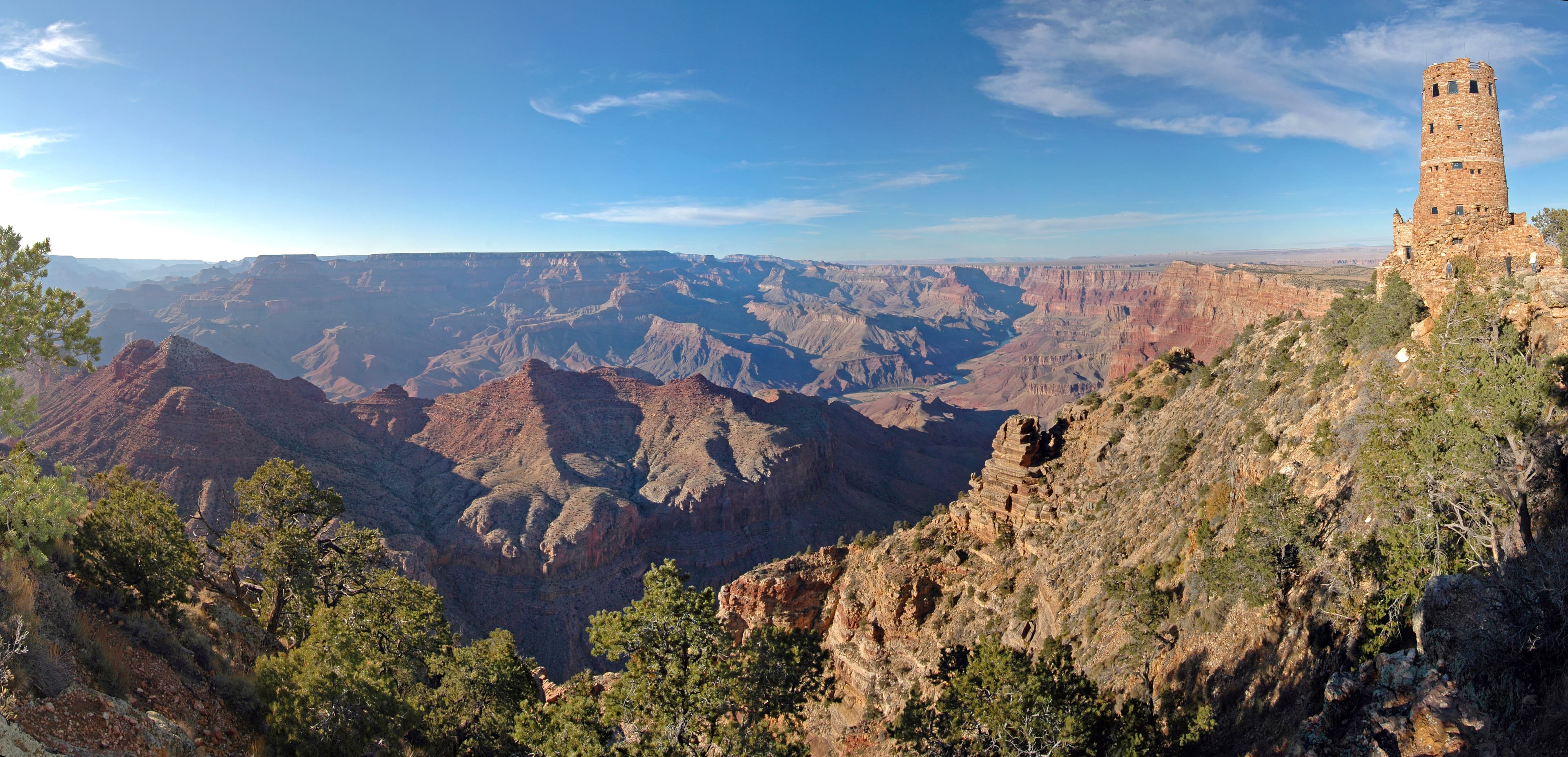
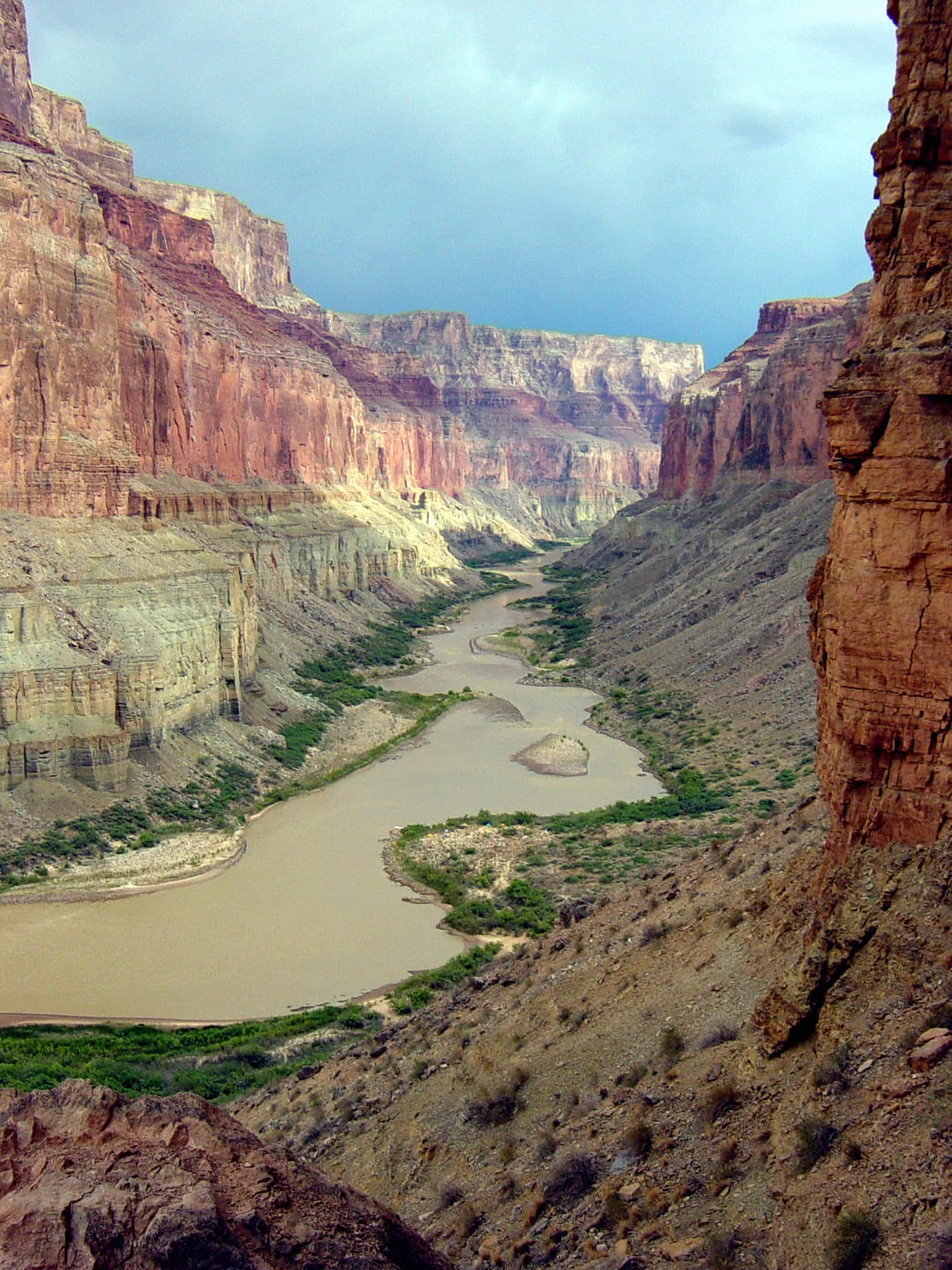
Stay near this park
No horse-friendly stays listed near Grand Canyon National Park yet. Know a great barn or property? Help fellow riders by listing it.
List your propertyDirections
South Rim: Open all year, is located 60 miles north of Williams, Arizona (via route 64 from Interstate 40) and 80 miles northwest of Flagstaff (via route 180). Grand Canyon lies entirely within the state of Arizona. ---- North Rim: Select areas are open to public access between Oct 1 and Nov 14. View the park's news releases for details. The North Rim entrance station is located 30 miles south of Jacob Lake, AZ, on Highway 67; the actual rim of the canyon is an additional 14 miles south.
Source: nps.gov