
Information
Theodore Roosevelt National Park moves to cashless fee collection
Starting May 1, Theodore Roosevelt National Park will accept only credit cards, debit cards, or digital payments for entrance fees, campground fees, and Interagency Passes. Cash and check payments will no longer be accepted.
More infoInformation
South Unit Address for Mobile Maps – Theodore Roosevelt NP
On all maps used on mobile devices, use the following address to reach the South Unit Visitor Center and Entrance Station 201 East River Road N. Medora, ND 58645
Information
Petrified Forest Trailhead Access Update: Use Approved Route
Directions to the Petrified Forest trailhead have changed. Please use the approved legal route from I-94, Exit 10 toward Camels Hump Lake and follow the clearly marked posts. This update helps maintain good cooperation with neighbors and respect park boundaries. For precise directions, use the link provided.
More infoTheodore Roosevelt National Park
ND · Belfield
When Theodore Roosevelt came to Dakota Territory to hunt bison in 1883, he was a skinny, young, spectacled dude from New York. He could not have imagined how his adventure in this remote and unfamiliar place would forever alter the course of the nation. The rugged landscape and strenuous life that TR experienced here would help shape a conservation policy that we still benefit from today.
Riding guide
Highlights
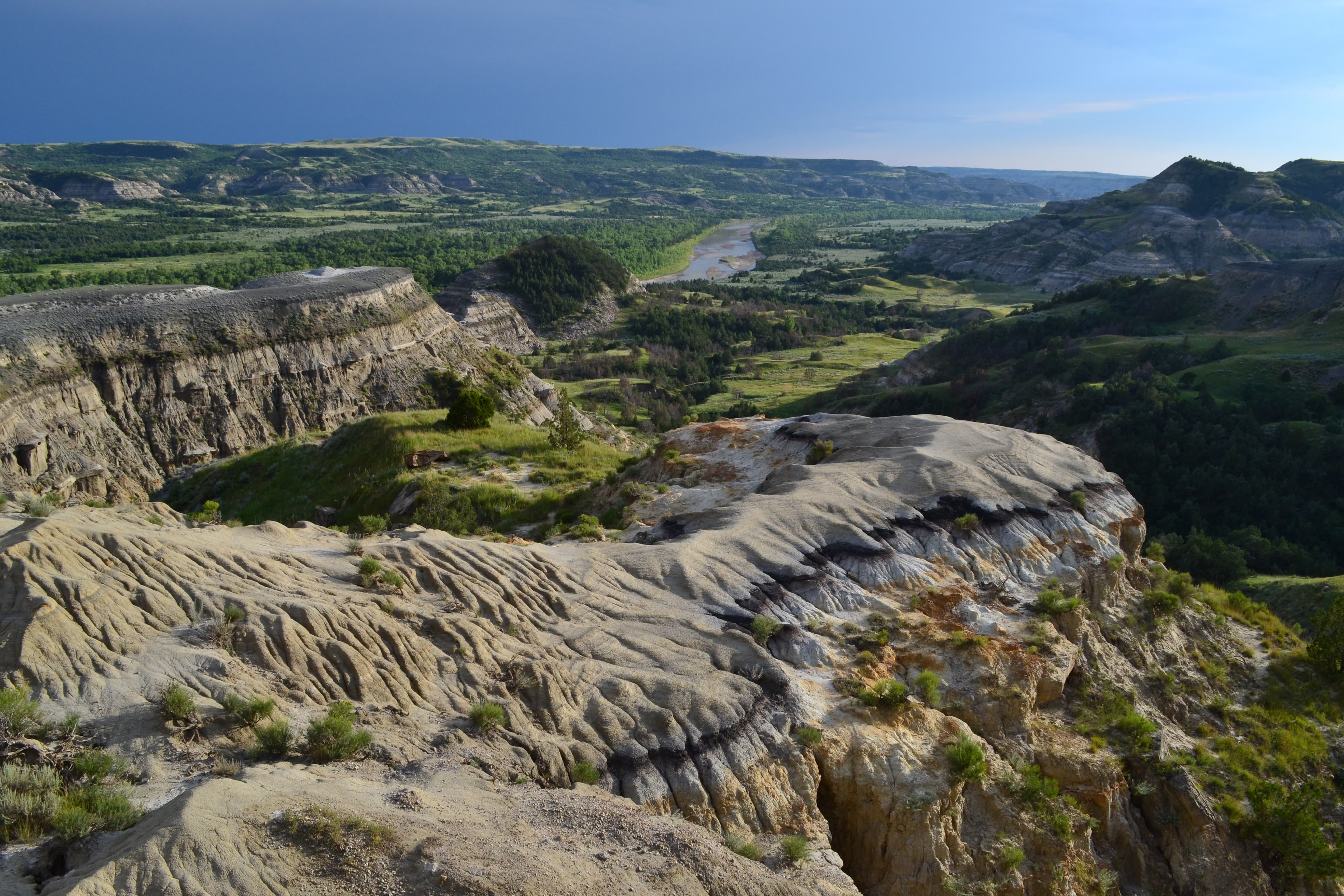
Theodore Roosevelt National Park protects one of the most striking landscapes of the northern Great Plains, where colorful…
Riding
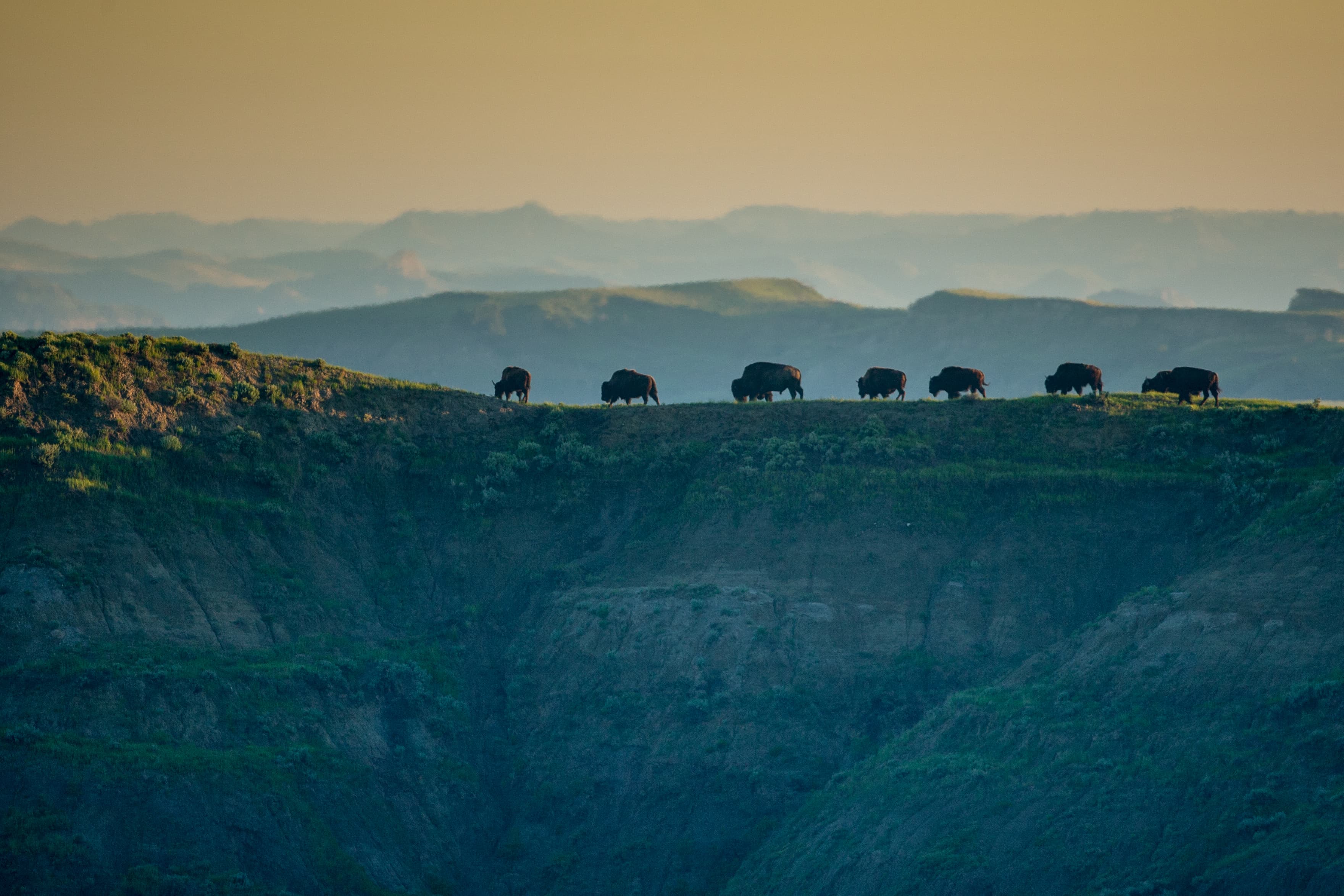
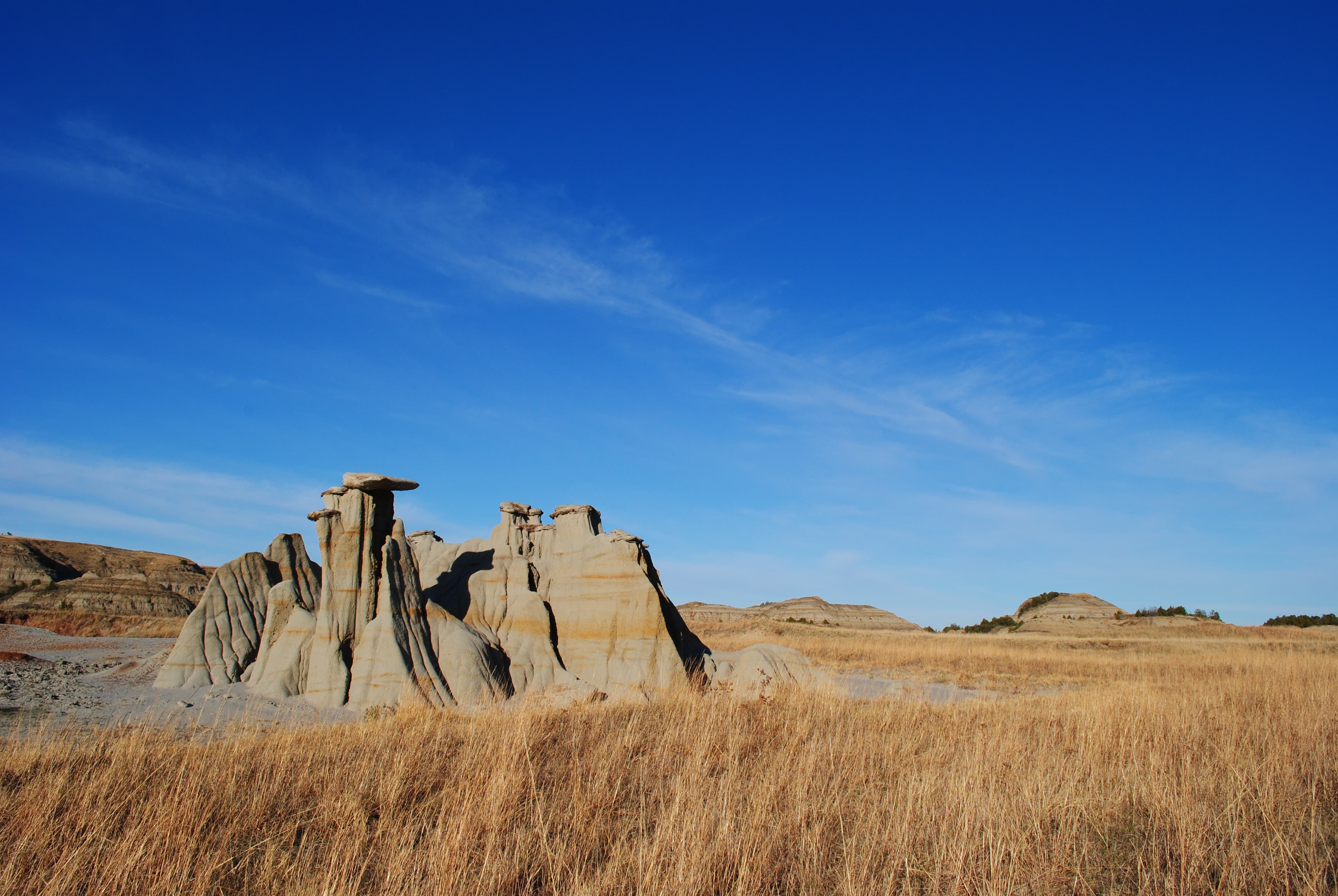
Rideable terrain here is noted as 100 miles, giving riders a clearer sense of scale before they ever unload. For equestrians, the park offers a classic Great Plains riding experience, where open landscapes and expansive views make it possible to explore wide horizons and dramatic Badlands formations from horseback. Riders travel through rolling prairie, clay buttes, and winding draws carved by the Little Missouri River, often encountering wildlife such as bison, wild horses, prairie dogs, and mule deer along the way.
Rideable terrain
100 miles
Trailer parking
Peaceful Valley Ranch (South Unit) This is one of the most commonly used staging areas for riders. Why it works well Large parking area suitable for trailers Direct access to several backcountry riding routes Close to trails such as the Lower Paddock Creek and Paddock Creek routes This area is also near some of the park’s most scenic Badlands terrain. Lower Jones Creek Trailhead (South Unit) Another recommended trailer staging location. Features Trailhead parking that can accommodate larger rigs Access to backcountry routes through prairie and Badlands formations Less crowded than some other trailheads Painted Canyon Visitor Center (South Unit) A convenient and accessible staging point. Benefits Large paved parking area with room for trailers Easy highway access from I-94 Access to nearby Badlands trails and scenic overlooks Cannonball Concretions Pullout (North Unit) One of the better staging areas in the North Unit. Features Roadside parking area large enough for trailers Access to trails exploring the unique geological formations in this unit Oxbow Overlook Area (North Unit) Another North Unit option. Why riders use it Larger parking turnout compared to other overlooks Access to backcountry riding routes
Horse regulations
Horse Use Regulations Horseback riding is permitted in designated areas of Theodore Roosevelt National Park, primarily within the park’s backcountry trail system. Riders must follow regulations intended to protect the Badlands ecosystem, wildlife, and fragile prairie soils. Riding Areas Horses are allowed on designated trails and backcountry routes in both the North Unit and South Unit of the park. Most horseback riding occurs in the South Unit, where the majority of the park’s horse-accessible trails are located. Riders must remain on established routes where stock use is permitted. Stock Definition For park regulations, stock animals include: Horses Mules Burros Other animals are not permitted for stock travel in the park. Feed Requirements To prevent the spread of invasive plant species, riders are required to use: Certified weed-free hay or feed Trailers, tack, and animals should also be cleaned before entering the park to minimize the introduction of non-native seeds. Group Size Groups traveling with horses are generally limited to a reasonable size to reduce environmental impact. Riders should confirm current group limits with park staff before visiting, especially for larger riding parties. Stock Camping Overnight camping with horses is allowed only at designated equestrian campsites. The primary location is: Roundup Group Horse Camp in the South Unit This campground provides space for horse trailers and direct access to nearby riding trails. Protecting Park Resources To preserve the park’s fragile Badlands environment, riders must: Stay on designated trails Avoid riding during extremely muddy conditions Keep horses away from sensitive vegetation and water sources Properly dispose of manure and pack out trash These practices help protect prairie soils and native plant communities. Trail Courtesy On shared trails, riders should: Yield appropriately to hikers Slow to a walk when approaching other visitors Maintain control of horses around wildlife Wildlife encounters are common, including bison and wild horses, so riders should remain alert and give animals plenty of space.
Getting here
Use Exit 32, Belfield, North Dakota as your primary planning reference before you haul in. Peaceful Valley Ranch (South Unit) This is one of the most commonly used staging areas for riders. Why it works well Large parking area suitable for trailers Direct access to several backcountry riding routes Close to trails such as the Lower Paddock Creek and Paddock Creek routes This area is also near some of the park’s most scenic Badlands terrain. Lower Jones Creek Trailhead (South Unit) Another recommended trailer staging location. Features Trailhead parking that can accommodate larger rigs Access to backcountry routes through prairie and Badlands formations Less crowded than some other trailheads Painted Canyon Visitor Center (South Unit) A convenient and accessible staging point. Benefits Large paved parking area with room for trailers Easy highway access from I-94 Access to nearby Badlands trails and scenic overlooks Cannonball Concretions Pullout (North Unit) One of the better staging areas in the North Unit. Features Roadside parking area large enough for trailers Access to trails exploring the unique geological formations in this unit Oxbow Overlook Area (North Unit) Another North Unit option. Why riders use it Larger parking turnout compared to other overlooks Access to backcountry riding routes
Planning your visit
Most Riding Occurs in the South Unit While horses are allowed in both park units, the South Unit contains the largest network of horse-accessible trails and the park’s only dedicated horse campground. Most riders stage their trips from this area. The primary staging location is Roundup Group Horse Camp, which provides space for trailers and direct access to nearby trails. Badlands Terrain Can Be Challenging The park’s landscape is made up of clay buttes, steep draws, and rugged Badlands formations. Riders should expect: Narrow ridge trails Loose clay soils that become extremely slick when wet Steep hills and sharp terrain changes After rain, trails can become muddy and difficult to travel, sometimes requiring temporary closures. Weather and Exposure Unlike forested parks, Theodore Roosevelt National Park offers very little tree cover. Visitors should prepare for: Strong prairie winds Intense sun exposure Rapid weather changes Summer temperatures can be hot, while spring and fall may bring sudden storms. Wildlife Encounters Are Common The park supports large populations of wildlife that riders may encounter on the trail. Common animals include: Bison Wild horses Prairie dogs Mule deer Coyotes Bison in particular can be unpredictable, and riders should keep a safe distance and avoid approaching wildlife. Water Sources Are Limited Reliable water sources are not always available throughout the Badlands. Riders should plan ahead and may need to: Carry water for themselves and their horses Identify water access points along their route Avoid relying solely on natural sources Limited Services in the Backcountry Once riders leave developed areas, services become minimal. Travelers should prepare for: Primitive trail conditions Limited cell service Few facilities along trails Carrying navigation tools and emergency supplies is recommended for longer rides.
Where to stay
Painted Canyon Visitor Center is the main visitor-contact point tied to this destination, which is helpful when you want current conditions, maps, and stock-use updates before riding. Horse camping is allowed, so this destination can work as more than a quick in-and-out ride if you want to build a longer federal-land stay around it. For a polished trip plan, pair the ride with lodging, fuel, and resupply planning in or near Belfield before heading deeper into federal-land access points.
Entrance fees & passes
- $30.00
Entrance - Private Vehicle
Valid for 7 days for all persons traveling in a single, private, non-commercial vehicle.
- $25.00
Entrance - Motorcycle
Valid for 7 days. Admits up to 2 private, non-commercial motorcycles with up to 4 total passengers.
- $15.00
Entrance - Per Person
Valid for 7 days for a visitor traveling on foot, bicycle, horse, or other non-motorized means of travel.
- $50.00
Commercial Entrance - Van
Based upon the total capacity of a vehicle that can carry 7-15 passengers, regardless of the actual number of passengers. A commercial tour is defined as consisting of one or more persons traveling on an itinerary that has been packaged, priced, or sold for leisure or recreational purposes by an organization that realizes financial gain through the provision of the service. Pass is good for seven days as long as it's the same passenger group.
- $60.00
Commercial Entrance - Mini-bus
Based upon the total capacity of a vehicle that can carry 16-25 passengers, regardless of the actual number of passengers. A commercial tour is defined as consisting of one or more persons traveling on an itinerary that has been packaged, priced, or sold for leisure or recreational purposes by an organization that realizes financial gain through the provision of the service. Pass is good for seven days as long as it's the same passenger group.
- $150.00
Commercial Entrance - Motor Coach
Based upon the total capacity of a vehicle that can carry 26 or more passengers, regardless of the actual number of passengers. A commercial tour is defined as consisting of one or more persons traveling on an itinerary that has been packaged, priced, or sold for leisure or recreational purposes by an organization that realizes financial gain through the provision of the service. Pass is good for seven days as long as it's the same passenger group.
- $55.00
Annual Entrance - Park
The Theodore Roosevelt National Park Annual Park Pass is valid for one year from month of purchase. The pass admits the purchaser and passengers in a single, private, non-commercial vehicle, or the pass holder and his/her immediate family (spouse, children, parents) when entry is by other means (foot, bicycle).
Park map
Trails
No trails synced for this park yet.
Campgrounds
Cottonwood Campground
76 sites
Cottonwood Campground lies inside the park, about 5 miles from Medora, ND. It is the South Unit's only campground. Beginning May 1, 2026 all sites are by reservation at recreation.gov. Most sites are suitable for tents and RVs (no hookups). Cottonwood Campground fills to capacity each afternoon, mid-May through mid-September.
Reserve a siteJuniper Campground
50 sites
Juniper Campground is 5 miles from Hwy 85 and is the only campground in the park's North Unit. All sites are open to tent camping and most can also be used by vehicles/RVs (no hookups). Beginning May 1, 2026 all sites are only available by reservation at recreation.gov. Due to limited cell service in the North Unit, it is recommended to make reservations before arriving at the park. See the RESERVATIONS section below.
Reserve a siteRoundup Group Horse Camp
1 sites · 1 horse-friendly
Roundup is the park's only camping facility in which horses are permitted. This private campsite is located 12 miles from Medora, ND in the park's South Unit. It is reserved by one group at a time; space is not be shared among different parties. Reservations for Roundup begin each season on the first business day in March at 8:00 am MST. See the RESERVATIONS section below. Roundup can accommodate up to 20 people and 20 horses or 30 people if camping without horses.
Reserve a site
Points of interest
A Business Proposal
POIThird stop on the Elkhorn Ranch Audio Tour
Active Slump
POI16th stop on the Caprock Coulee Nature Trail
A Growing Ranch
POIThe 5th stop on the Elkhorn Ranch Audio Tour.
A Home on the Little Missouri
POIThe 6th stop on the Elkhorn Ranch Audio Tour.
Audio Tour Conclusion
POIBadlands Overlook
POIGet a new perspective on the badlands of Theodore Roosevelt National Park's South Unit from this scenic vista.
Badlands Slopes
POIStop 5 on the Caprock Coulee Nature Trail
Badlands Spur Trail
POIBeef Corral Bottom
POIBentonite
POIThe 9th stop on the Caprock Coulee Nature Trail.
Bentonitic Clay Overlook
POIBighorn Sheep
POIBoicourt Overlook
POIStop at this overlook to enjoy the awesome vista that is the Little Missouri Badlands.
Boicourt Trail
POITake a short hike above the badlands on one of the South Unit of Theodore Roosevelt National Park's accessible trails.
Buck Hill
POIOne of the highest points in the South Unit of Theodore Roosevelt National Park, Buck Hill offers incredible, 360° views.
Buckhorn Trailhead
POIBuilding the Elkhorn
POICannonball Concretions
POIThese unusual, round rock formations stand out against the broken landscape of the North Dakota badlands.
Caprock Coulee Trailhead
POIChokecherry
POIStop 4 on the Caprock Coulee Nature Trail
Coal Vein Trailhead
POIThe trailhead for the Coal Vein Guided Nature Trail.
Coal Vein Trail Post 10: Seasonal Stream
POITrail post 10 on the Coal Vein Guided Nature Trail
Coal Vein Trail Post 11: Ignition
POITrail post 11 on the Coal Vein Guided Nature Trail
Coal Vein Trail Post 12: Clinker Overlook
POITrail post 12 on the Coal Vein Guided Nature Trail
Coal Vein Trail Post 13: Slumping
POITrail post 13 on the Coal Vein Guided Nature Trail
Coal Vein Trail Post 14: Grassland
POITrail post 14 on the Coal Vein Guided Nature Trail
Coal Vein Trail Post 15: The Big Picture
POITrail post 15 on the Coal Vein Guided Nature Trail
Coal Vein Trail Post 16: Chimney
POITrail post 16 on the Coal Vein Guided Nature Trail
Coal Vein Trail Post 1: Layers
POITrail post 1 on the Coal Vein Guided Nature Trail
Coal Vein Trail Post 2: Collapse
POITrail post 2 on the Coal Vein Guided Nature Trail
Coal Vein Trail Post 3: Bentonite
POITrail post 3 on the Coal Vein Guided Nature Trail
Coal Vein Trail Post 4: Caprocks
POITrail post 4 on the Coal Vein Guided Nature Trail
Coal Vein Trail Post 5: Dry Climate
POITrail post 5 on the Coal Vein Guided Nature Trail
Coal Vein Trail Post 6: Seasonal Pool
POITrail post 6 on the Coal Vein Guided Nature Trail
Coal Vein Trail Post 7: Burn Out
POITrail post 7 on the Coal Vein Guided Nature Trail
Coal Vein Trail Post 8: Hills Overlook
POITrail post 8 on the Coal Vein Guided Nature Trail
Coal Vein Trail Post 9: Clinker
POITrail post 9 on the Coal Vein Guided Nature Trail
Coal Vein Trail Turn
POICoulees
POIFirst stop on the Caprock Coulee Nature Trial
Differential Erosion
POIThe 6th stop on the Caprock Coulee Nature Trail
Elkhorn Ranch Cabin Site
POIThe original location of Theodore Roosevelt's Elkhorn Ranch Cabin.
Elkhorn Ranch Trailhead
POITake a short trail to reach the location where Theodore Roosevelt's Elkhorn Ranch once stood. While the cabin is no longer standing, some of the foundation stones remain.
Forest Litter
POIStop 18 on the Caprock Coulee Nature Trail.
Grasses
POIStop 3 on the Caprock Coulee Nature Trail.
Green Ash
POIStop 19 on the Caprock Coulee Nature Trail
Johnson's Plateau Roadside Pulloff
POIStop on the South Unit Audio Tour
Lichens
POIStop 20 on the Caprock Coulee Trail
Life at the Elkhorn
POIThe 7th stop on the Elkhorn Ranch Audio Tour.
Lignite
POI8th Stop on the Caprock Coulee Nature Trail
Maltese Cross Cabin
POIThe first home of Theodore Roosevelt in the Little Missouri badlands of North Dakota.
Medora Overlook
POINorth-facing Slopes
POI14th stop on the caprock Coulee Nature Trail
Old East Entrance
POIThe original entrance station for the South Unit of Theodore Roosevelt National Park.
Oxbow Overlook
POIEnjoy a stunning scenic vista of the meandering Little Missouri River surrounded by tall cottonwood trees and impressive buttes.
Painted Canyon Nature Trail
POIPainted Canyon Overlook
POIPainted Canyon Trail
POIPeaceful Valley Ranch
POIOnce a dude ranch, the Peaceful Valley Ranch house and other buildings have served wide and varied purposes since first being built in the late 19th century.
Petrified Forest - North
POITake a hike on the northern fork of the petrified forest trail, and experience the dramatic otherworldly topography and scattered stumps of Theodore Roosevelt National Park's petrified forest.
Petrified Forest - South
POITheodore Roosevelt National Park contains one of the highest concentrations of petrified wood in the country, and the rolling badlands offer unique opportunities to hike amongst these geological wonders.
Petrified Wood
POIThe 11th stop on the Caprock Coulee Trail
Piping
POIThe 13th stop on the Caprock Coulee Nature Trail
Prairie Dog Colony Pulloff
POIPrairie Ecosystems
POIPrairie Grasslands
POIPrickly Pear Cactus
POIThe 10th stop on the Caprock Coulee Trail
Rabbitbrush
POI15th stop on the Caprock Coulee Nature Trail
Ridgeline Nature Trail
POIRiver Bend Overlook
POIA shelter built by the CCC at River Bend Overlook, with a beautiful view of the surrounding badlands.
Rivulet Erosion
POIThe second stop on the Caprock Coulee Nature trail guide.
Roosevelts Returns to the Badlands
POISecond stop on Elkhorn Ranch Audio Tour
Sagebrush
POIThe 7th stop on the Caprock Coulee Nature Trail
Scoria Point Overlook
POISkyline Vista
POISkyline Vista Trail is a great accessible introduction to Theodore Roosevelt National Park.
Slump Formations
POI12th stop on the Caprock Coulee Nature Trail
Talkington Trail Roadside Pulloff
POIThe Long X Trail
POITrail's End
POIThe end of the Caprock Coulee Nature Trail
Turn to Buck Hill
POIUpper Jones Creek Trailhead
POIWildlife Tracks
POIStop 17 on the Caprock Coulee Nature Trail.
Wind Canyon
POIThe gusty winds that give Wind Canyon its name have also carved it into a beautiful and fascinating place.
Things to do
Become a Theodore Roosevelt National Park Junior Ranger
Visit one of the park's visitor centers to pick up a Junior Ranger Field Journal, and start your journey to becoming a Junior Ranger!
Bike the North Unit Scenic Drive
Bike the 14-mile scenic drive of Theodore Roosevelt National Park's remote North Unit!
Bike the South Unit Scenic Drive
Hop on your mountain bike and experience the South Unit Scenic Drive in a whole new way.
Birding in Theodore Roosevelt National Park
The badlands of North Dakota are home to more than 180 species of birds. Take a moment and see which ones you can spot!
Drive the North Unit Scenic Drive
The North Unit scenic drive provides access to the more rugged North Unit of Theodore Roosevelt National Park.
Drive the South Unit Scenic Drive
The South Unit scenic drive is the gateway to the South Unit of Theodore Roosevelt National Park.
Explore the Cannonball Concretions
The cannonball concretions are an arresting and unusual geological formation. Stop at this pullout to explore their mysteries!
Duration: 5-15 Minutes
Hike Boicourt Trail
This short hike, with its elevated perspective and accessible trail, offers a unique view of the Little Missouri Badlands that the whole family can enjoy.
Duration: 15-30 Minutes
Hike Coal Vein Trail
Take a hike on this 0.8-mile loop and learn about the geology of Theodore Roosevelt National Park.
Duration: 30-45 Minutes
Hike Skyline Vista Trail
Skyline Vista Trail is a great accessible introduction to Theodore Roosevelt National Park.
Duration: 5-15 Minutes
Hike The Little Mo Nature Trail
Take a short hike along the Little Mo Nature Trail and learn about the nature and geology of Theodore Roosevelt National Park!
Duration: 30-45 Minutes
Hike the Painted Canyon Nature Trail
Painted Canyon Trail is a 1-mile loop trail located just off Interstate 94 near the Painted Canyon Visitor Center. It offers a great introduction to Theodore Roosevelt National Park, whether visitors are just passing through or planning on a multi-day stay.
Duration: 30-80 Minutes
Hike up Buck Hill
Hike to the top of Buck Hill, one of the highest points in the park, and get an amazing 360° view of the surrounding badlands!
Duration: 5-30 Minutes
Hike Wind Canyon Trail
Wind Canyon trail is a short, moderate-difficulty trail that rewards hikers with incredible views of the Little Missouri river and the surrounding badlands.
Duration: 5-30 Minutes
Hiking in the North Unit
Nature Trails in the North Unit are perfect for casual hikers and nature enthusiasts, but the backcountry trails really steal the show! The Buckhorn, Caprock Coulee, and famed Achenbach Trails traverse the park's vast wilderness areas. Check out all the options and what will fit your trip best.
Hiking in the South Unit
From paved paths to strenuous backcountry trails – the hiking trails in the South Unit have a little something for everyone. Explore a sampling of park terrain with trail options to fit all levels of hikers.
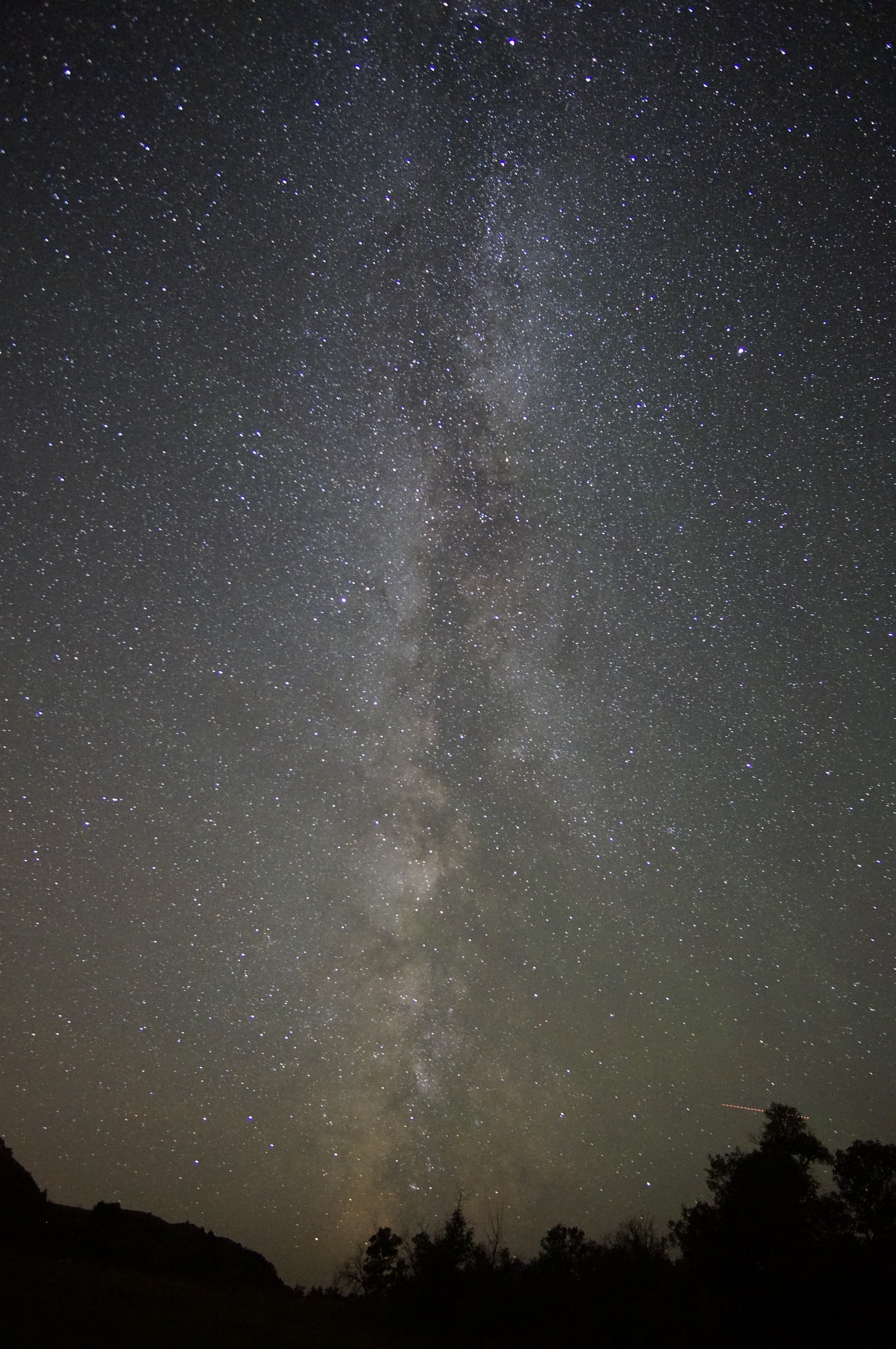
See the Stars in Theodore Roosevelt National Park
Theodore Roosevelt National Park offers incredible night skies for amateur and expert stargazers alike to enjoy year round.
Visit the Elkhorn Ranch Unit
Visit the location of Theodore Roosevelt's home ranch, the Elkhorn, and experience the solitude of the North Dakota badlands.
Duration: 3-6 Hours
Visit Theodore Roosevelt's Maltese Cross Cabin
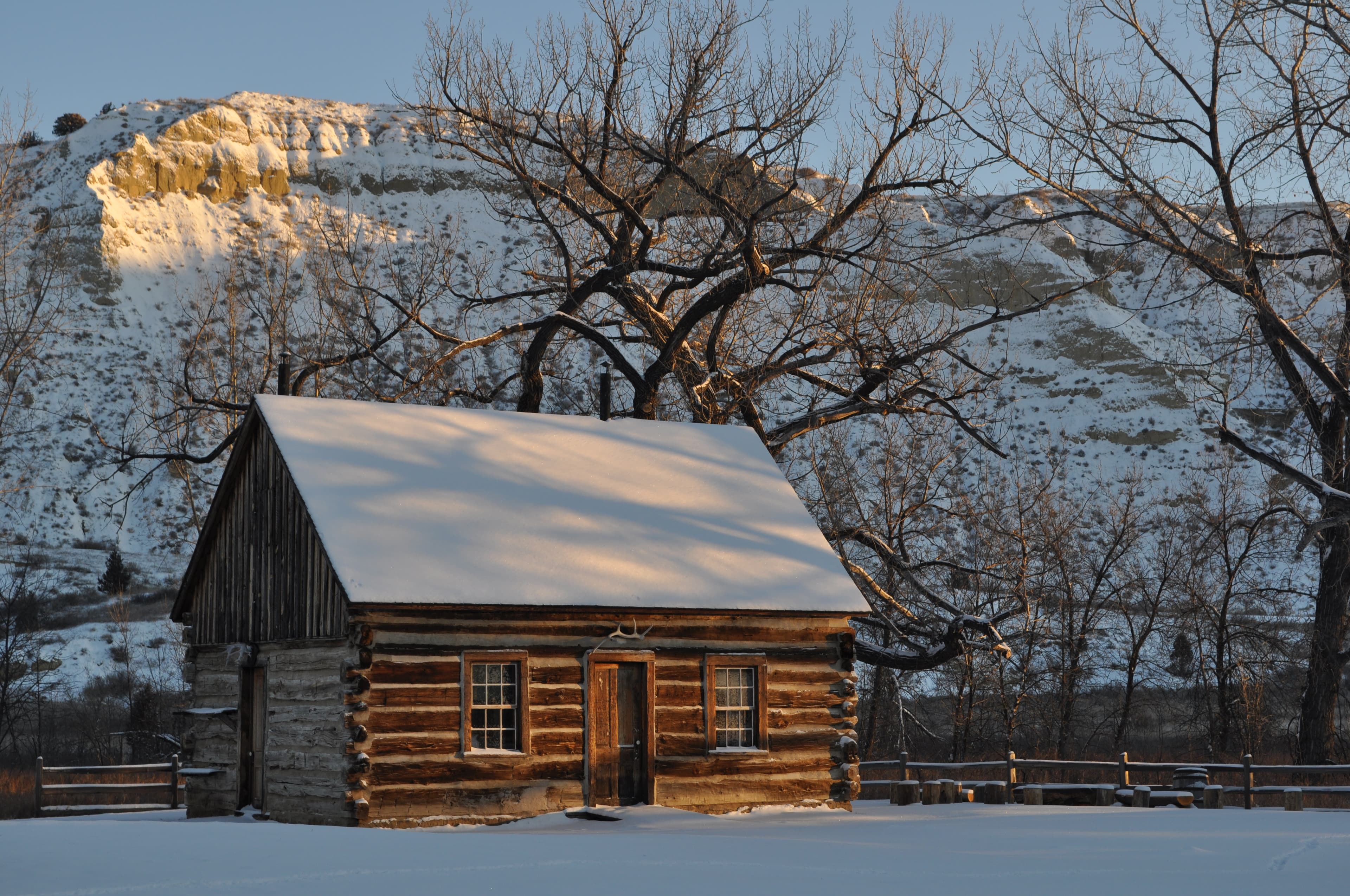
The Maltese Cross Cabin was Theodore Roosevelt's first home in Dakota territory. Step inside and learn about how he lived during his time in the badlands where the romance of his life began.
Duration: 5-20 Minutes
Watch the Theodore Roosevelt National Park Film: Refuge of the American Spirit
Visit one of the visitor centers and watch the Theodore Roosevelt National Park film, Refuge of the American Spirit.
Duration: 17 Minutes
Wildlife Viewing - North Unit
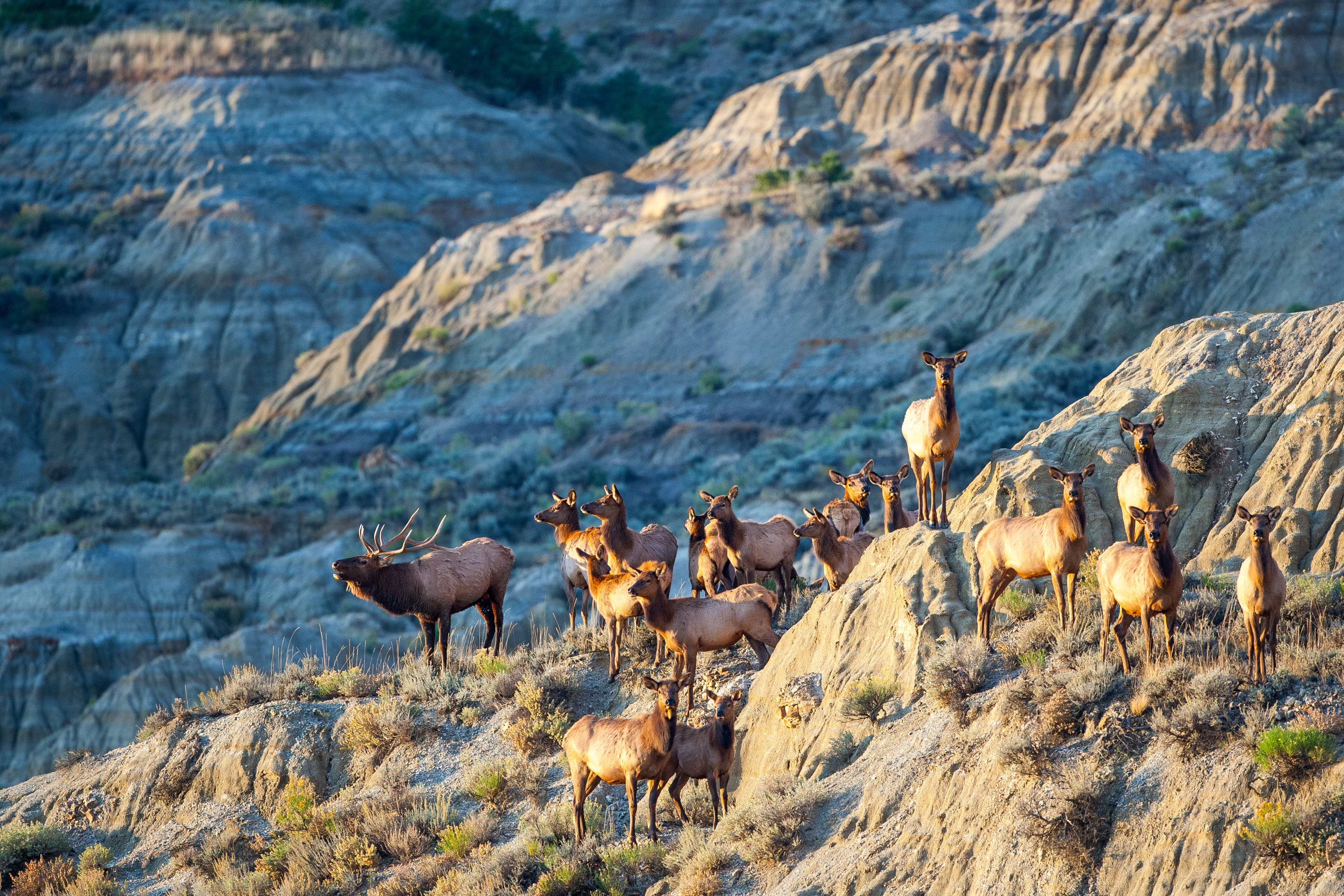
Explore the North Unit of Theodore Roosevelt National Park and see the wide variety of wildlife that lives there.
Wildlife Viewing - South Unit
Explore the South Unit of Theodore Roosevelt National Park and see the wide variety of wildlife that lives there.
Visitor centers
North Unit Visitor Center
A small visitor center is located at the park entrance for visitors to the North Unit. Speak with a ranger, receive assistance with any trip planning needs, obtain a backcountry permit, purchase a souvenir at the bookstore, or watch the park film, Refuge of the American Spirit. Restrooms are available at this location.
Get directionsPainted Canyon Visitor Center
Features: Panoramic views, wildlife viewing, hiking trails, staffed information desk, exhibits and displays, gift shop, picnic shelters, drinking fountain, vending machines, public telephone, and restrooms are wheelchair accessible.
Get directionsSouth Unit Visitor Center
Rangers staff the desk, assist visitors with trip planning, and issue backcountry permits. Theodore Roosevelt's Maltese Cross Cabin, located just outside, is open for self-guided tours year-round. Ranger-led cabin tours are offered in the summer. The park film, Refuge of the American Spirit, shows in the theater. A bookstore sells books, postcards, and more. A museum houses artifacts from Theodore Roosevelt's presidency and time in the badlands.
Get directions
Hours of operation
Theodore Roosevelt National Park
Theodore Roosevelt National Park is open 24 hours a day, every day of the year. This applies to all units of the park; North Unit, South Unit, and Elkhorn Ranch Unit. Even when entrance stations and visitor centers are closed, the park itself remains open. Remember to check current conditions for any weather related closures.
Mon
All Day
Tue
All Day
Wed
All Day
Thu
All Day
Fri
All Day
Sat
All Day
Sun
All Day
Activities
Weather
In winter, some or all park roads may be closed due to snow.
Contact
Photos
Stay near this park
No horse-friendly stays listed near Theodore Roosevelt National Park yet. Know a great barn or property? Help fellow riders by listing it.
List your propertyDirections
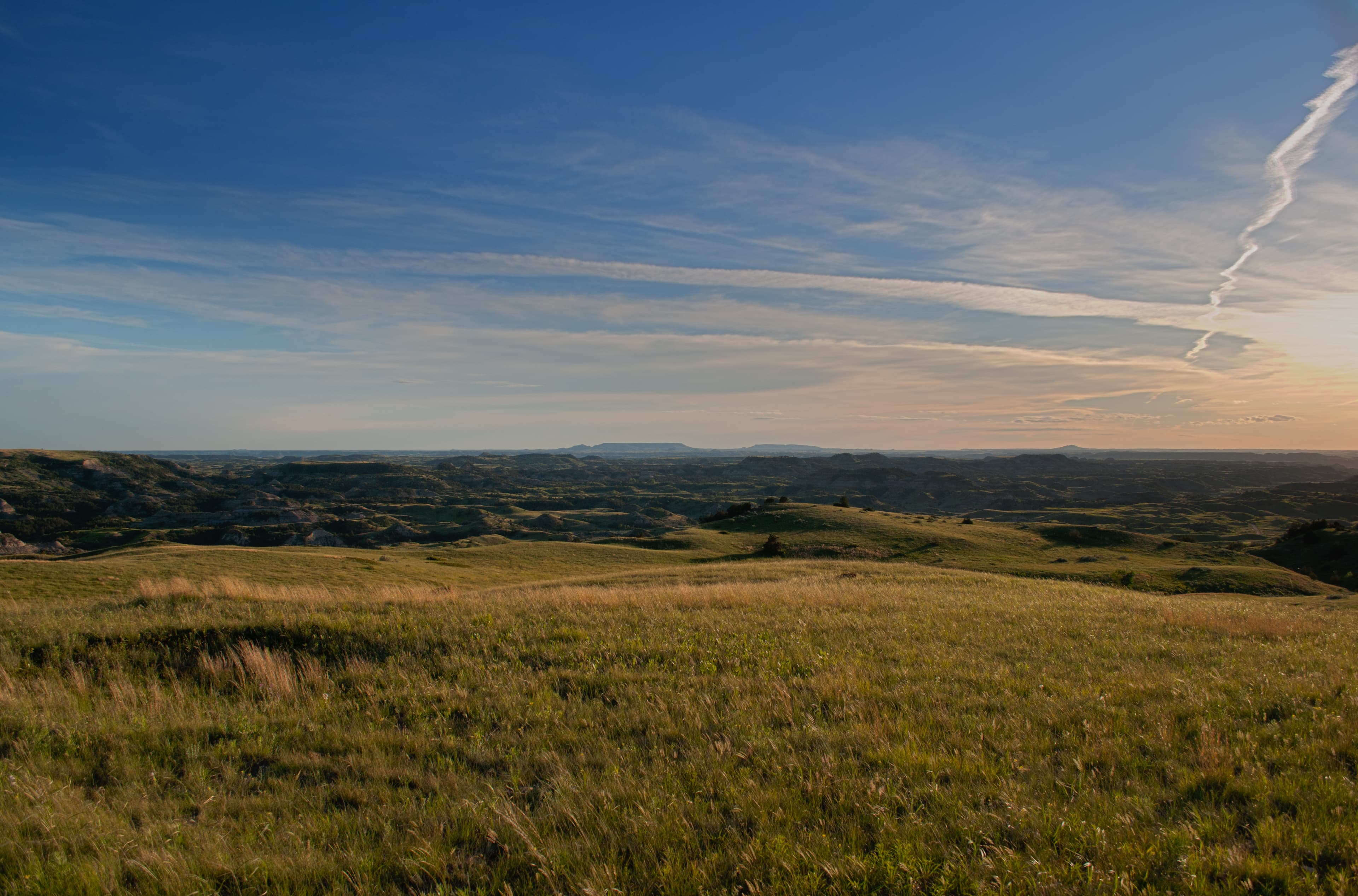
Theodore Roosevelt National Park is located in the Badlands of western North Dakota. There are three units to the park. The South Unit entrance is in the town of Medora, ND off of Interstate 94 exits 24 and 27. The North Unit entrance is on Highway 85 approximately 14 miles south of Watford City, ND. The remote Elkhorn Ranch Unit sits roughly in the middle of the North and South Units and is accessed via gravel roads. Consult park staff for directions to the Elkhorn Ranch Unit.
Source: nps.gov